Section 2 · Applications
Role of Reverse Osmosis in Semiconductor Water Systems
Semiconductor facilities require consistent water quality.
Reverse osmosis (RO) removes much of the
dissolved ionic load and protects downstream
ultrapure water (UPW) treatment stages,
including EDI, ion exchange and final polishing.
Feedwater Analysis
- Evaluate hardness, silica and dissolved salts.
- Check iron, manganese, organics and suspended solids.
- Identify oxidants and seasonal water variations.
- Define pretreatment and membrane requirements.
Process Applications
- UPW system pretreatment.
- Rinsing and component cleaning.
- Chemical dilution and cleanroom utilities.
- Humidification and cooling water preparation.
Key consideration:
RO permeate is not automatically ultrapure water.
Final quality depends on additional polishing,
storage and distribution requirements.
Section 3 · Engineering
Engineering Criteria for Reliable RO Performance
Semiconductor RO design must balance
salt rejection, membrane flux, recovery
and operational reliability.
Excessive recovery increases scaling risk,
while aggressive flux can accelerate fouling.
System Configuration
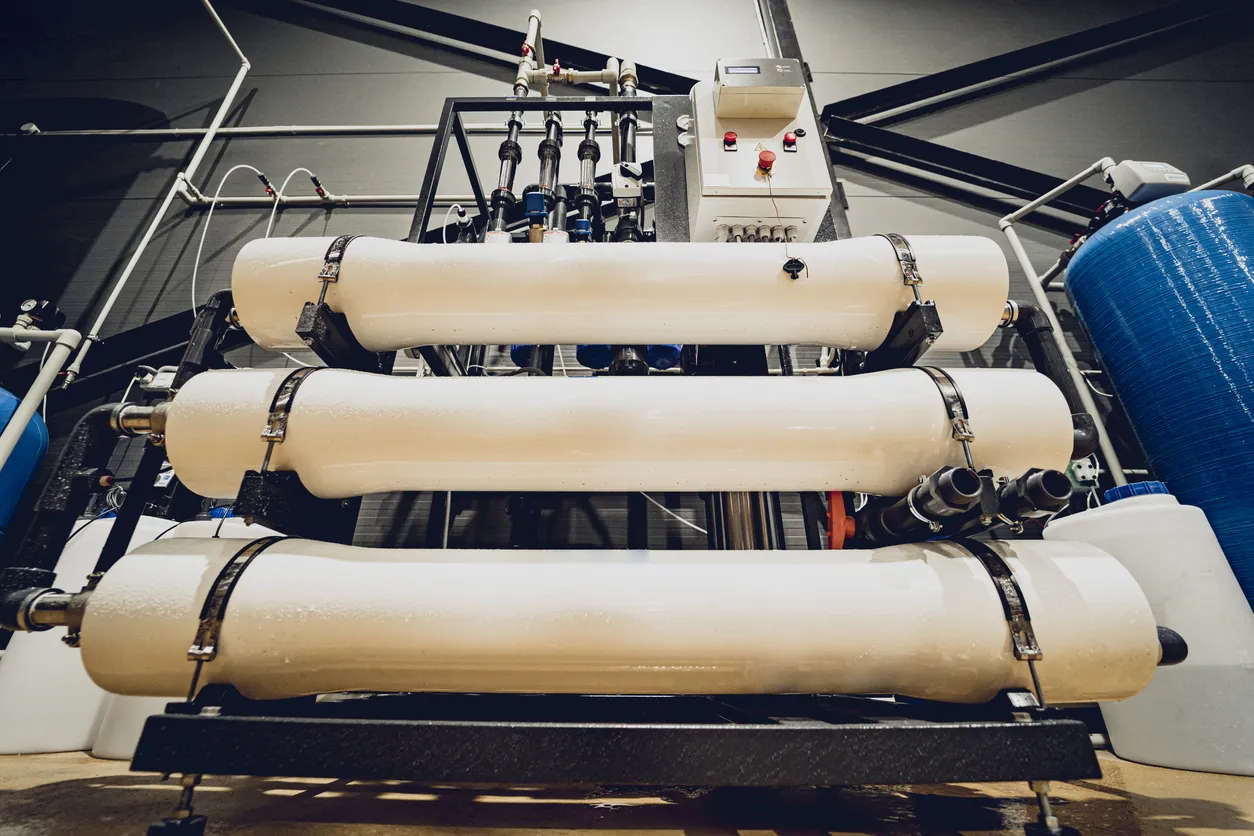
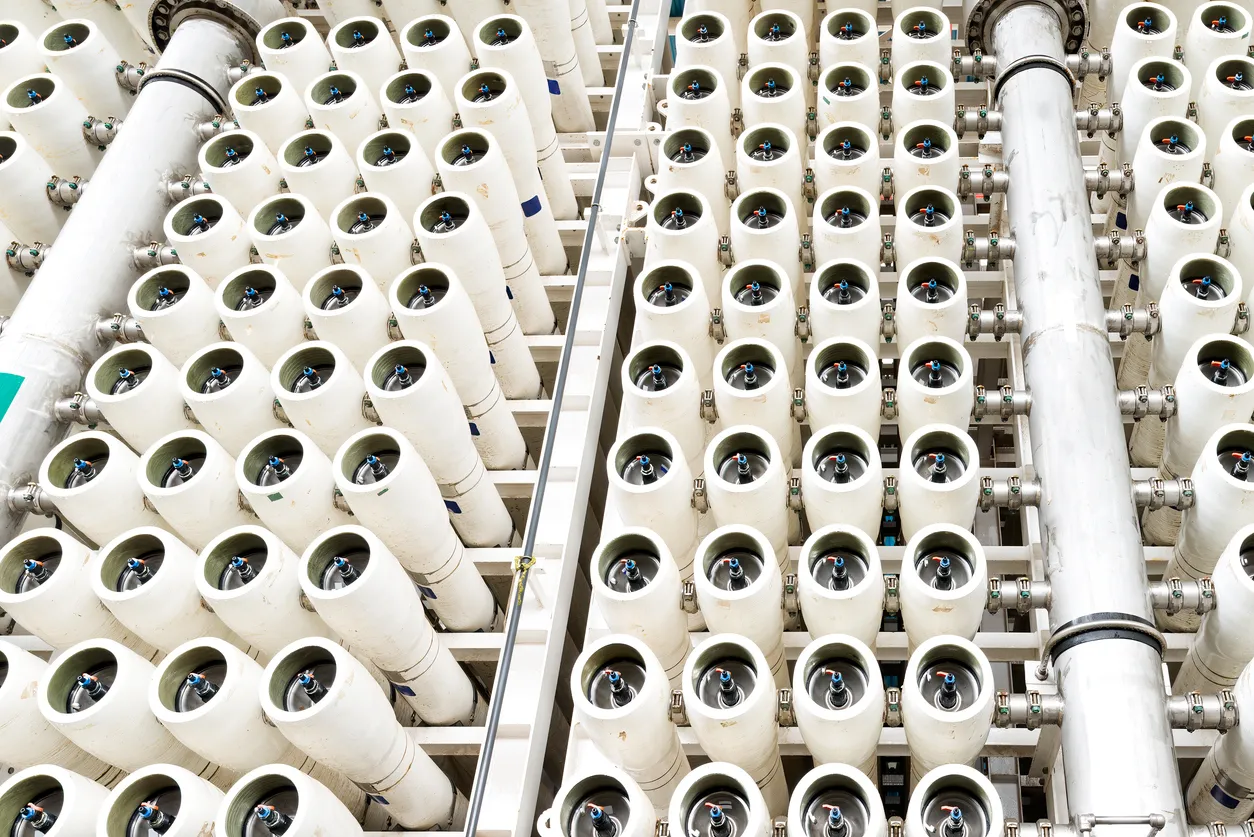
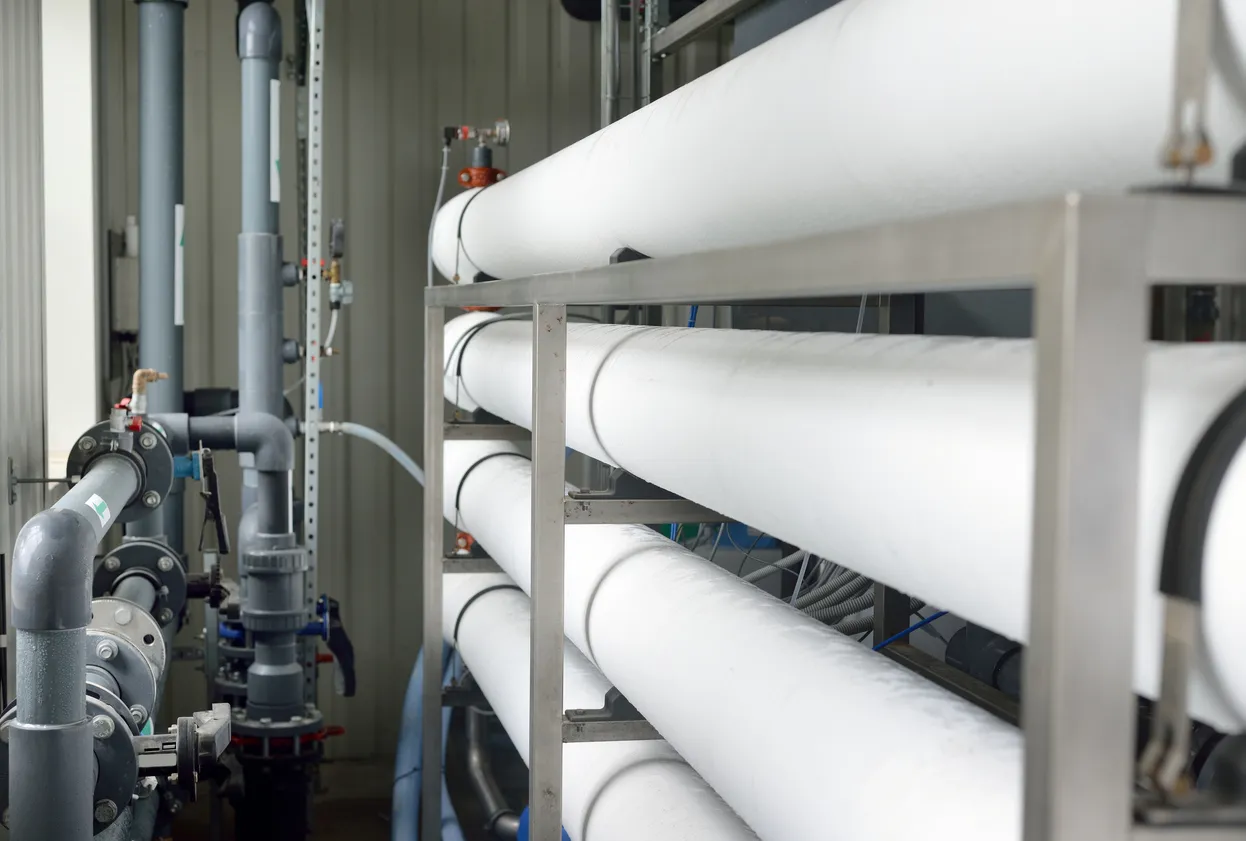
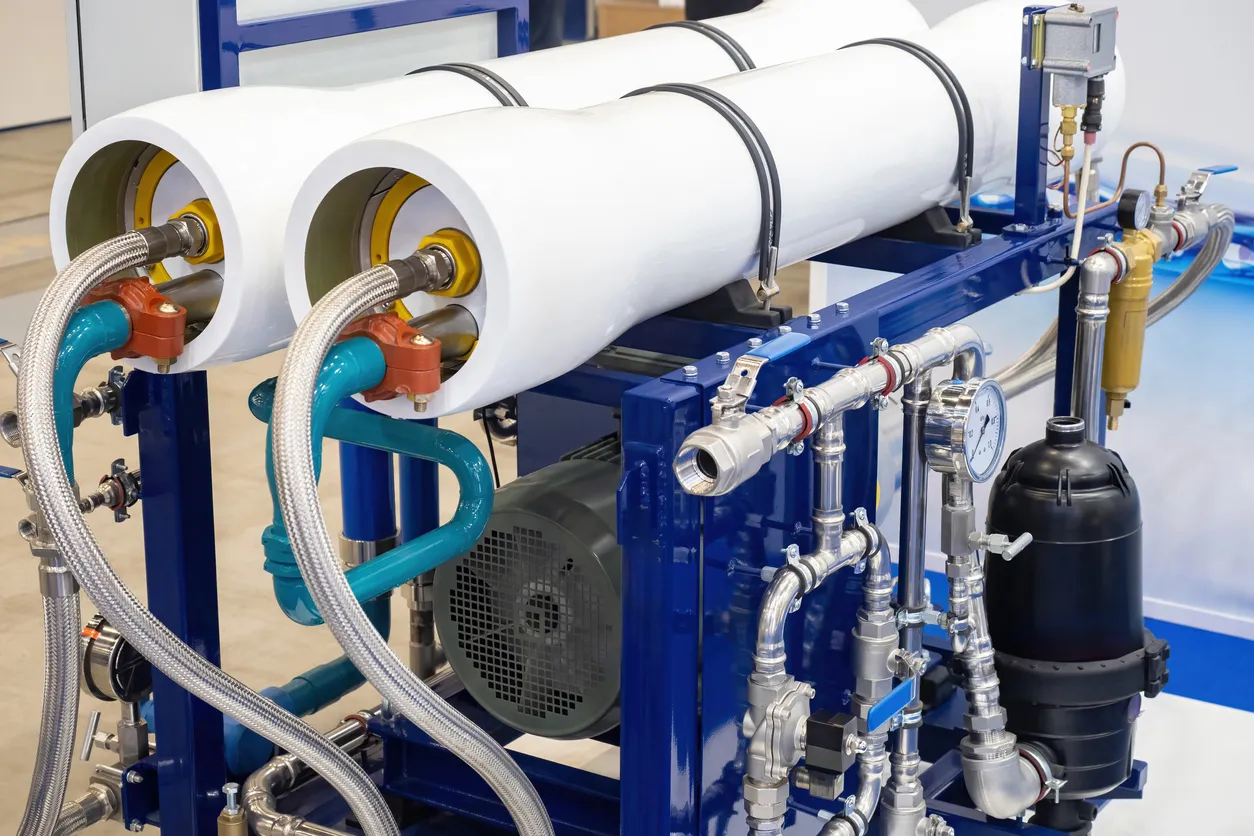
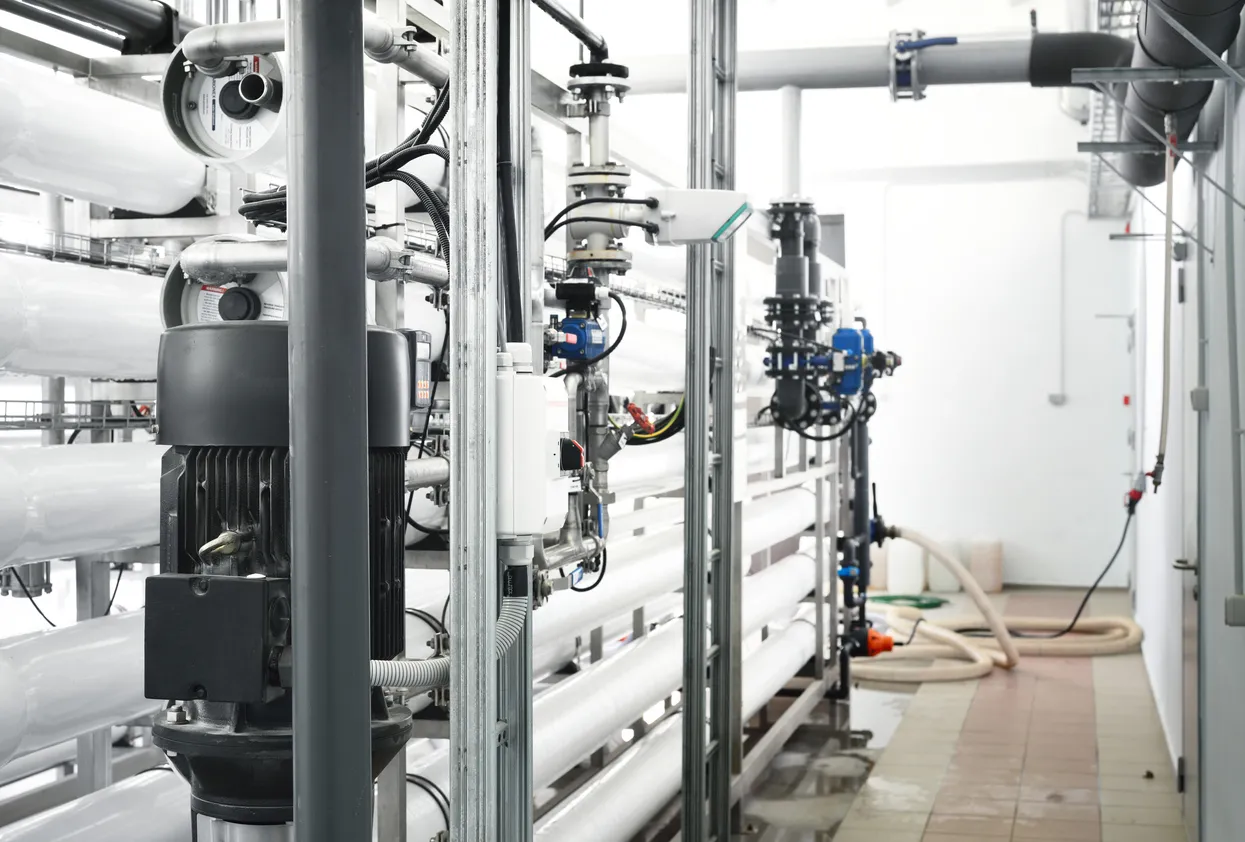
- Membrane arrays and staged pressure vessels.
- Duty/standby pumps where continuity requires them.
- Automatic flushing and start-up controls.
- Conductivity, flow and differential pressure sensors.
Automation and Scalability
- Alarms for conductivity, pressure and recovery.
- Monitoring of tanks and operating conditions.
- Capacity for future production expansion.
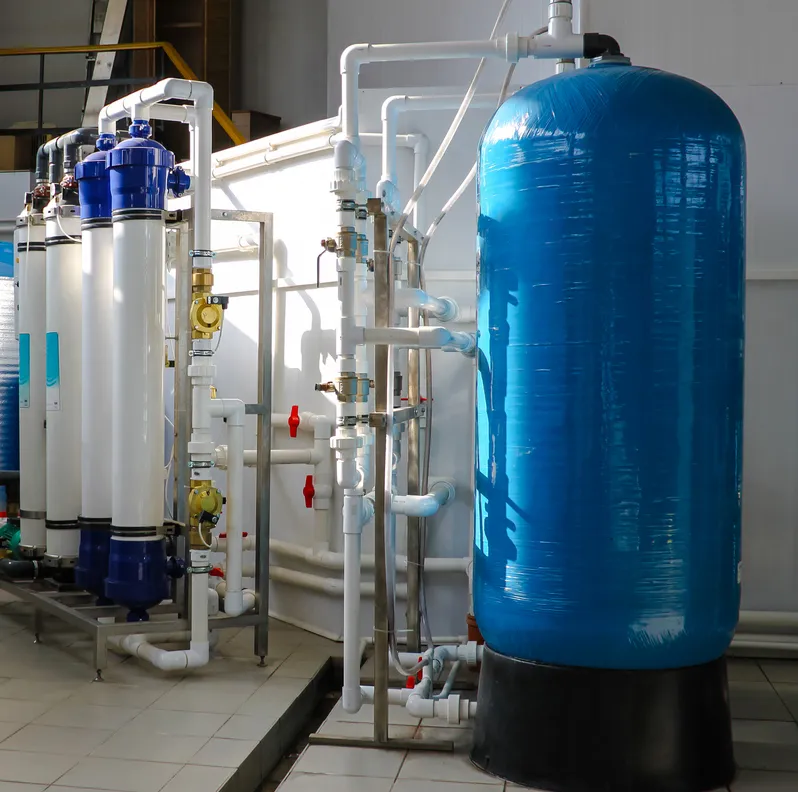
- Integration with polishing and distribution systems.
Engineering priority:
select recovery and flux using actual water chemistry,
temperature and operating requirements—not equipment
capacity alone.
Explore
reverse osmosis systems,
RO engineering
and
technical services
for system integration and support.
Section 4 · Operations
Operation, Monitoring and Maintenance Practices
Consistent RO performance requires continuous monitoring,
preventive maintenance and traceable operating records.
Normalized data helps distinguish membrane deterioration
from changes in temperature or feed pressure.
Performance Monitoring
- Normalized permeate flow and salt passage.
- Feed and permeate conductivity.
- Differential pressure and recovery.
- Chemical consumption and operating trends.
Preventive Maintenance
- Cartridge replacement and membrane CIP triggers.
- Instrument calibration and pump inspection.
- Valve, dosing and microbial risk checks.
- Cleaning, alarm and service documentation.
Quality control:
maintain operating logs, water analyses,
membrane identification and cleaning records
to support troubleshooting and audits.
Specialized
reverse osmosis services
can support diagnostics, maintenance and optimization.
Section 5 · Purchasing
How to Evaluate RO Suppliers and Proposals
Compare suppliers based on
technical compatibility, water quality,
reliability and lifecycle cost,
rather than equipment price alone.
Technical Proposal Checklist
- Feedwater analysis and design assumptions.
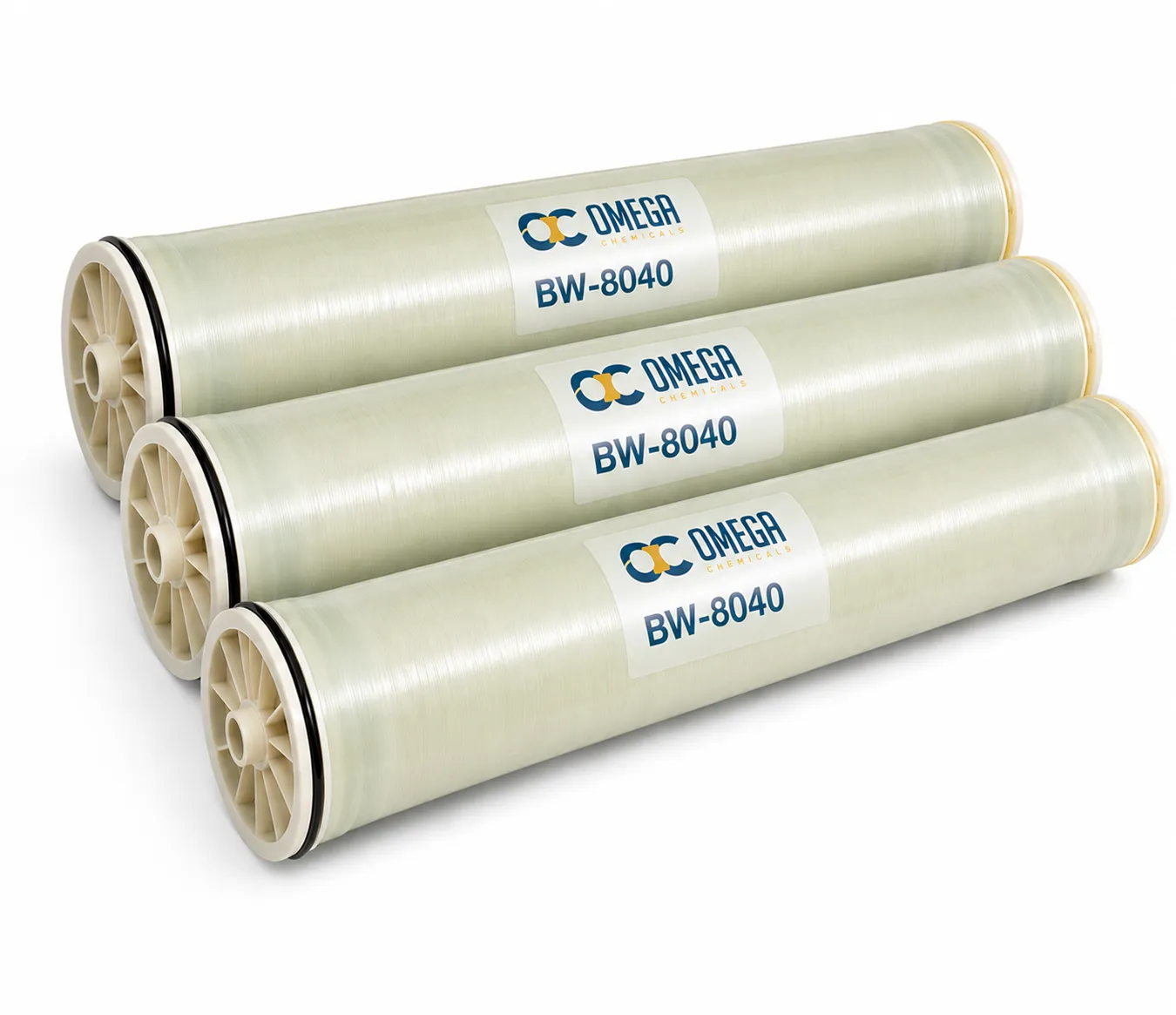
- Membrane model, recovery and permeate quality.
- Pretreatment, controls and instrumentation.
- Utility requirements and integration.
- Commissioning and maintenance scope.
Lifecycle and Process Fit
- Energy, chemicals and consumables.
- Membrane replacement and cleaning costs.
- Downtime risk and technical support.
- Scalability and production requirements.
- Compatibility with UPW polishing stages.
Final recommendation:
define measurable water quality, flow and reliability
targets for the actual semiconductor application
before selecting an RO system.