Productos
Segunda mano
Servicios
Reverse osmosis systems for hidroponía


Reverse osmosis for hidroponía designed to control salinity, protect crops and stabilize nutrient recipes
In hydroponic production, water is not only a utility; it is the base of the nutrient solution. A reverse osmosis system helps reduce dissolved salts, hardness, chlorides, sulfates and conductivity variations that may interfere with fertigation programs. When the incoming water changes by season, well behavior or municipal supply conditions, the nutrient formula can become inconsistent. A properly engineered RO system gives growers a more predictable starting point, allowing agronomists to dose nutrients with greater confidence and maintain stable electrical conductivity targets.
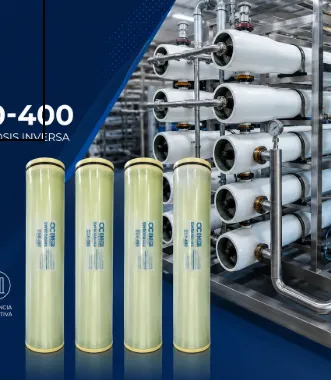
This page focuses on how reverse osmosis supports hidroponía operations that require consistent process water for lettuce, berries, tomatoes, herbs, ornamentals and controlled-environment agriculture. The objective is not to oversimplify the application, but to show how water quality, pretreatment, membrane selection, instrumentation, recovery, reject management and service planning work together. For projects that need a complete sistema de ósmosis inversa, the technical design should start from water analysis, crop sensitivity and daily water demand.
Commercial value for hydroponic operations
Lower variability in feed water helps maintain EC and pH management routines.
Lower hardness and dissolved solids can reduce deposits in emitters, lines and storage tanks.
Conductivity, pressure, flow and permeate quality become measurable operating indicators.
Feed analysis, target permeate quality and daily irrigation demand.
Monitoring of conductivity, pressure drop, recovery and flow balance.
Consistent water quality for crop planning, irrigation reliability and reduced corrective work.
Estos productos podrian interesarte
Water quality variables that determine whether reverse osmosis is appropriate for hidroponía
Hydroponic systems depend on a predictable relationship between water, nutrients, oxygen and root-zone conditions. When feed water contains high dissolved solids, bicarbonates, calcium, magnesium, sodium, chlorides or sulfates, the grower may lose flexibility when formulating nutrient recipes. Reverse osmosis reduces many dissolved ions before fertilizers are added, which allows the agronomy team to build the solution from a cleaner baseline instead of compensating for unwanted salts already present in the water.
The decision should be based on analysis, not on a generic assumption. A water report should include conductivity, TDS, pH, alkalinity, hardness, silica, iron, manganese, chlorides, sulfates, sodium, boron and microbiological indicators when the source requires it. In some greenhouses, seasonal well changes can create major variations; in others, the problem is scaling in emitters or unstable nutrient uptake. For projects that require a complete technical review, ingeniería de ósmosis inversa helps convert laboratory data into a practical design.
Conductivity control
Electrical conductivity in feed water directly affects how much room remains for fertilizer salts. Lower and more stable permeate conductivity improves dosing consistency.
Hardness reduction
High calcium and magnesium can form deposits in irrigation lines, filters, emitters and tanks. RO reduces the load that contributes to scaling.
Sodium and chloride management
Sensitive crops may be affected by sodium and chloride accumulation. Reverse osmosis helps reduce these ions before recirculation or nutrient blending.
Bicarbonate and pH behavior
Alkalinity impacts pH adjustment and acid demand. Lowering bicarbonate load supports more stable pH correction strategies.
How quality targets should be defined
For reverse osmosis hidroponía projects, the target is not always “the lowest possible TDS.” In many operations, the better objective is a stable permeate quality that supports the crop recipe, avoids excessive operating cost and protects irrigation infrastructure. A design that is too small may cause production bottlenecks, while a design that is oversized can increase capital cost, storage requirements and maintenance complexity. The correct balance comes from daily water consumption, peak irrigation cycles, fertigation schedule, storage volume and the acceptable range of permeate conductivity.
The grower should also decide whether permeate will be used alone, blended with raw water or used as a controlled percentage in the irrigation mix. Blending can reduce operating cost and increase mineral balance when raw water contains useful ions in acceptable amounts. However, blending must be monitored because feed conditions may change. The system should include conductivity instruments, pressure gauges and sampling points so operators can verify both permeate quality and blended water stability.
Engineering criteria for a reliable reverse osmosis system in hydroponic production
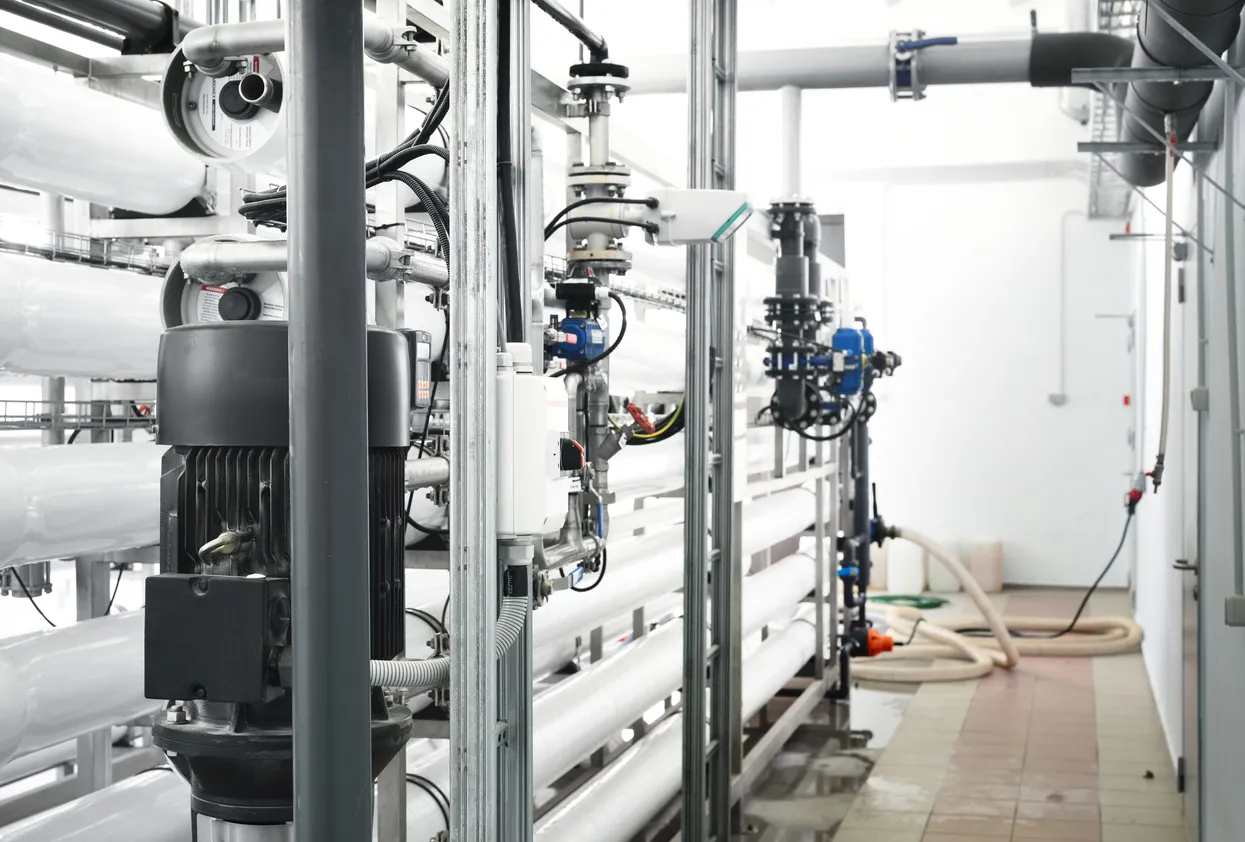
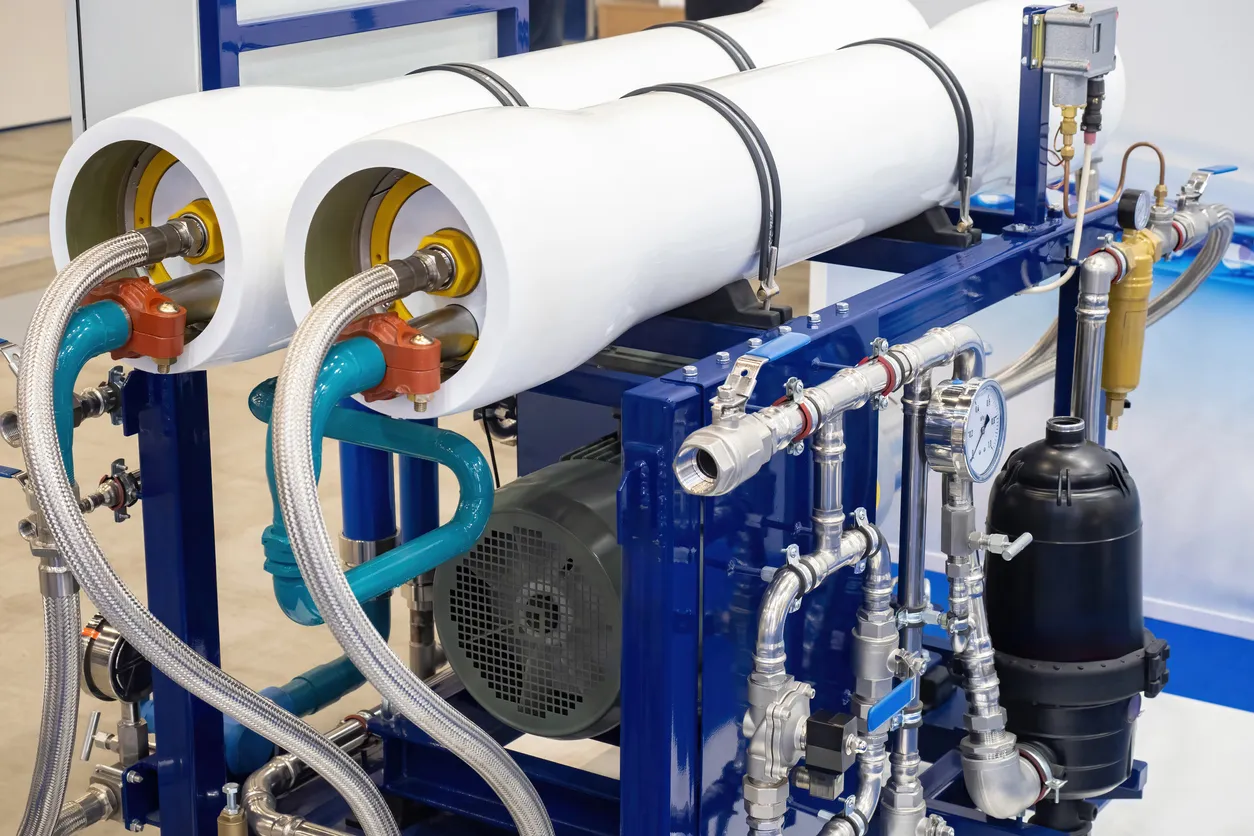
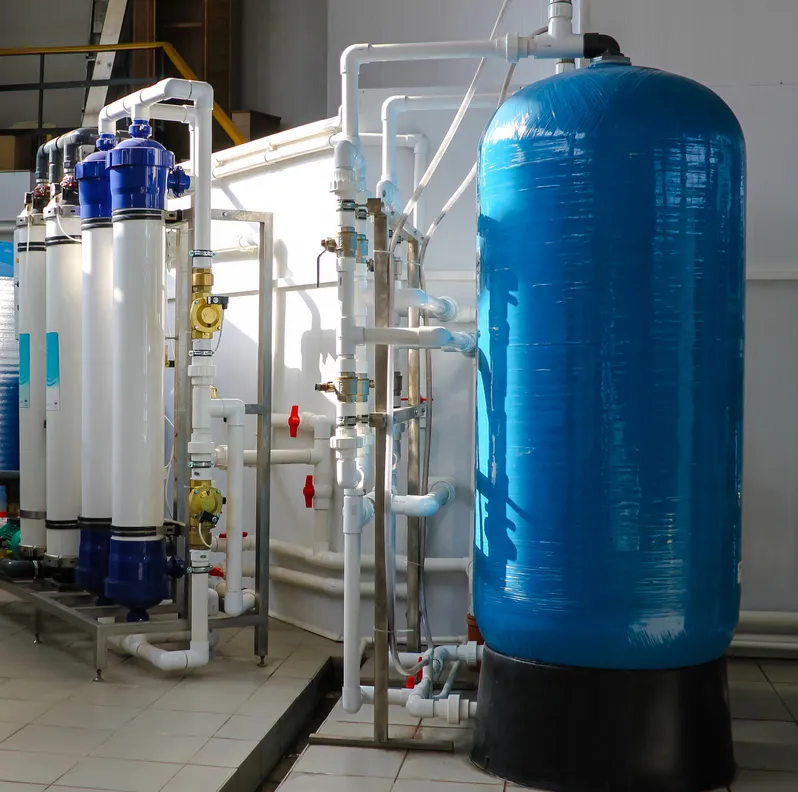
The RO system must be designed as part of the irrigation and fertigation infrastructure, not as an isolated equipment skid. The design should consider the source water, pump capacity, pretreatment, membrane array, chemical dosing, permeate storage, reject discharge, instrumentation and service access. A robust sistema de ósmosis inversa makes it easier to maintain production continuity when irrigation demand increases during warm days or high transpiration periods.
Pretreatment
Sediment filtration, carbon filtration, antiscalant dosing, softening or oxidation may be needed depending on turbidity, chlorine, hardness, iron, manganese and microbiological risk. Good pretreatment protects membranes and reduces unplanned cleaning frequency.
Membrane selection
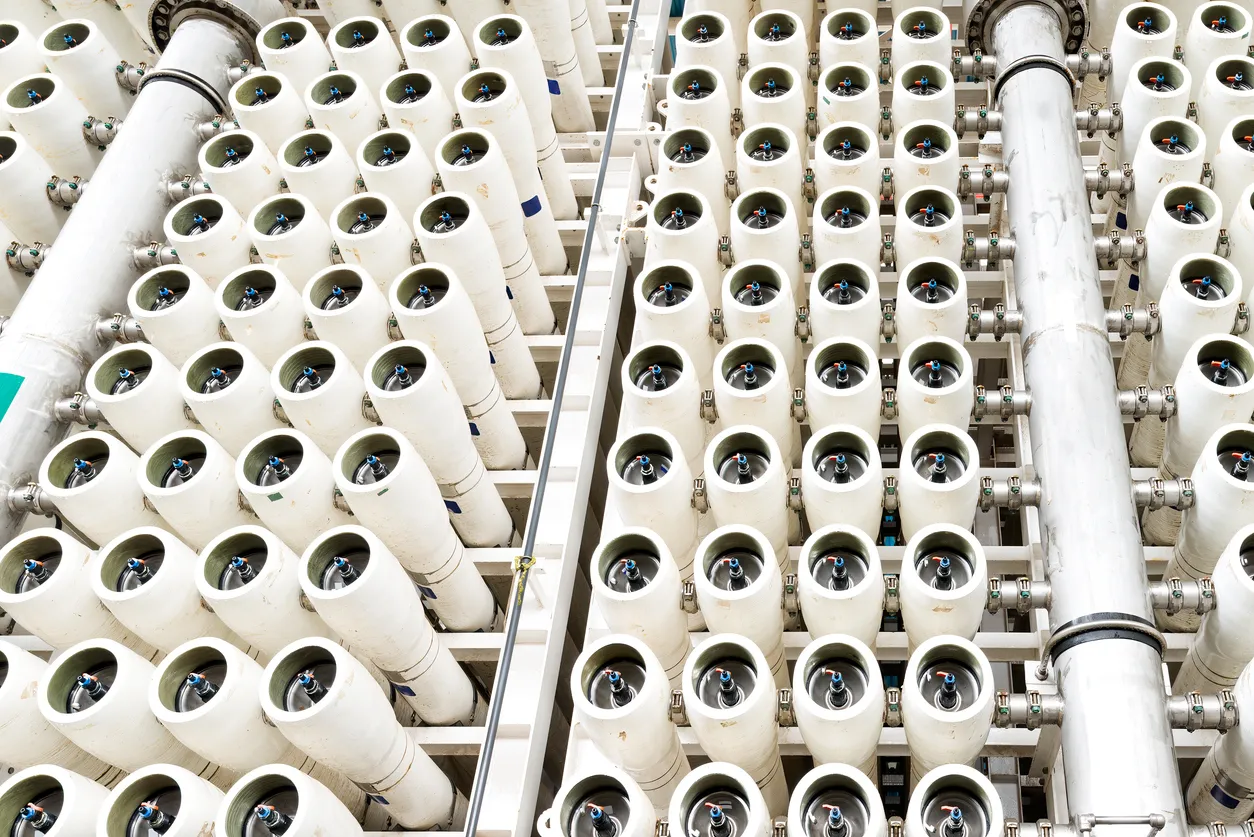
Membrane type, surface area and configuration should match salinity, temperature, pressure and target rejection. A design based only on nominal flow can fail when water temperature drops or fouling conditions increase.
Hydraulic balance
Feed flow, concentrate flow, permeate flow and recovery percentage must remain within membrane manufacturer limits. Excessive recovery may increase scaling risk, while low recovery may waste water unnecessarily.
Storage and distribution
Permeate tanks should be sized for peak irrigation cycles and protected from contamination. Distribution pumps must deliver stable pressure to fertigation equipment without causing short cycling or dead zones.
Why process integration matters
Hydroponic operations often use irrigation pulses throughout the day. If the RO unit is not coordinated with storage volume, permeate demand and fertigation controls, the system may experience pressure instability, insufficient tank level or unnecessary start-stop cycles. A better design uses a realistic water balance: total daily demand, maximum hourly demand, permeate production rate, storage autonomy and reject management. This is especially important when production grows by adding greenhouse bays or changing crop cycles.
Instrumentation should include feed pressure, concentrate pressure, permeate pressure, flow meters, conductivity meters and low/high-level controls. Automated shutdowns should protect the pump and membranes from low feed pressure, high pressure, tank overflow, poor permeate quality or abnormal operating conditions. When the system is intended for continuous production, the control philosophy should be documented so operators understand alarms, interlocks, flushing routines and sampling points.
Operating practices that protect permeate quality and membrane life
Once a reverse osmosis system is installed, performance depends on consistent operation. Operators should record feed conductivity, permeate conductivity, pressures, flows, recovery, temperature and filter differential pressure. These values allow the team to recognize fouling, scaling, membrane damage or pretreatment failure before crop production is affected. In hydroponic applications, delayed response can cause nutrient imbalance, emitter plugging or inconsistent irrigation quality.
Preventive service is not limited to changing cartridge filters. It includes verifying chemical dosing, checking pressure switches, sanitizing storage tanks when required, inspecting pumps, confirming permeate conductivity, documenting normalized flow and evaluating when membrane cleaning is justified. A specialized servicio de ósmosis inversa helps maintain reliability when water production is part of the daily crop routine.
Recommended monitoring logic
- Daily checks: permeate conductivity, tank level, feed pressure, operating pressure and visible leaks.
- Weekly checks: prefilter differential pressure, concentrate flow, recovery percentage and cleaning log review.
- Monthly checks: instrument calibration review, pump inspection, antiscalant inventory and trend evaluation.
- Seasonal checks: feed water analysis, membrane performance normalization and pretreatment adjustment.
Membrane cleaning
Cleaning should be based on performance indicators such as normalized permeate flow decline, increased pressure drop or salt passage increase. Cleaning too late can reduce recovery, increase energy use and shorten membrane life. Cleaning too frequently without diagnosing the cause may hide pretreatment problems.
Operational documentation
Logs are essential for identifying trends. A simple record of flows, pressures, conductivity and maintenance activities can show whether the system is stable, gradually fouling or affected by a sudden feed water change.
Risk points in hydroponic RO operation
One of the most common problems is assuming that permeate quality will remain stable without monitoring. If chlorine reaches the membranes, if antiscalant dosing stops, if prefilters plug or if the recovery setting is changed without calculation, the RO unit may produce less water or allow more salts to pass. Another risk is insufficient storage capacity during peak irrigation windows, forcing the grower to blend unplanned raw water into the nutrient solution. These issues can be reduced through alarms, preventive service and clear operating procedures.
The system should also be protected during shutdown periods. If production cycles stop, membranes may require preservation, flushing or sanitation depending on downtime duration and site conditions. Hydroponic facilities that operate seasonally should plan startup and shutdown procedures so microbial growth, deposits or stagnant water do not compromise the next cycle.
How to evaluate a reverse osmosis supplier for hydroponic production
A supplier should be evaluated by the quality of the engineering proposal, not only by the equipment price. A strong proposal explains the feed water assumptions, target permeate quality, design flow, recovery percentage, pretreatment, membrane configuration, instrumentation and maintenance plan. It should also clarify what is included in installation support, startup, operator training and after-sales service. When growers compare servicios de ósmosis inversa, the best value often comes from the provider that reduces operational uncertainty.
For hydroponic operations, the provider should understand that water quality affects crop performance, nutrient recipes and irrigation hardware. The proposal should consider future expansion, water source variability and the need for rapid service. A low-cost unit without adequate pretreatment, instrumentation or service access can create higher costs through downtime, membrane replacement and inconsistent water quality.
Key purchasing questions
Technical deliverables that should be requested
Before selecting a reverse osmosis hidroponía solution, the buyer should request a process description, equipment datasheet, flow diagram, pretreatment description, instrumentation list, operating limits and maintenance recommendations. The proposal should explain expected recovery, reject flow and any chemical dosing requirements. If the system will feed an existing fertigation skid, the integration points should be reviewed in advance to avoid mismatched pressures, tank control problems or insufficient permeate flow.
It is also useful to request startup criteria: initial rinse, permeate conductivity verification, pressure adjustment, recovery confirmation, operator training and baseline operating log. These values become the reference for future maintenance. A professional project should leave the site with documented baseline performance so the operator can detect changes over time.
Finally, the buyer should consider total cost of ownership: cartridge filters, chemicals, membrane cleaning, energy, reject water handling, spare parts and service response time. In agriculture, downtime can affect irrigation scheduling, so reliability and support may be more important than small differences in initial equipment cost.
Heat transfer fluids for data centers, HVAC and industrial applications
Omega Chemicals offers solutions such as DOWFROST™ LC, KOSTChill PG XL, OMEGA DO LC30 and OMEGA DO LC25 for reliable thermal performance in critical applications.
- DOWFROST™ LC for data centers.
- KOSTChill PG XL for HVAC and computing.
- PG fluids for heat transfer.
- OMEGA DO LC30 PG 30 heat transfer fluid.
- OMEGA DO LC25 for industrial engines.
- Guidance in selecting the right product.
Frequently asked questions about reverse osmosis for hidroponía
Why is reverse osmosis useful in hydroponic production?
Reverse osmosis is useful because it reduces dissolved salts that interfere with nutrient formulation. In hidroponía, the grower needs to control the composition of the nutrient solution. If raw water already contains high conductivity, hardness, sodium, chlorides or bicarbonates, it becomes harder to maintain a stable recipe. RO provides a cleaner base water so the agronomy team can add nutrients intentionally and monitor the solution more accurately.
Does every hydroponic greenhouse need reverse osmosis?
No. The need depends on feed water quality, crop sensitivity, irrigation method and production objectives. Some water sources are acceptable with filtration and pH correction, while others require RO because salinity, hardness or specific ions create operational or agronomic problems. A water analysis and a review of crop requirements should define whether reverse osmosis is technically justified.
What parameters should be monitored after installation?
Operators should monitor feed conductivity, permeate conductivity, feed pressure, concentrate pressure, permeate flow, concentrate flow, recovery percentage, temperature and prefilter differential pressure. These values help identify fouling, scaling, membrane damage, pretreatment failure or abnormal operation before water quality affects the nutrient program.
Can permeate be blended with raw water?
Yes, blending is possible when raw water contains acceptable minerals and the final target conductivity remains stable. However, blending must be controlled and monitored because feed water can change over time. Conductivity instruments and clear operating procedures are necessary to avoid inconsistent nutrient preparation.
What information is needed to quote a system?
A supplier should request feed water analysis, daily water demand, peak irrigation schedule, target permeate conductivity, storage requirements, available utilities, installation conditions and reject water handling options. With this information, the proposal can define flow capacity, pretreatment, membrane configuration, controls and maintenance requirements.
How does maintenance affect membrane life?
Maintenance directly affects membrane life. Good pretreatment, filter replacement, chemical dosing control, monitoring and timely cleaning reduce fouling and scaling. Poor maintenance can increase pressure, reduce permeate flow, allow higher salt passage and shorten membrane service life. Baseline operating data should be recorded during startup to compare future performance.
Temas que te pueden interesar
Estos productos podrian interesarte