Productos
Segunda mano
Servicios
Reverse osmosis systems for plantas termoeléctricas


Contenido de la guía
Navega por los criterios técnicos para evaluar ósmosis inversa en plantas termoeléctricas.
Reverse osmosis for thermal power plants with reliable water quality and stable operation
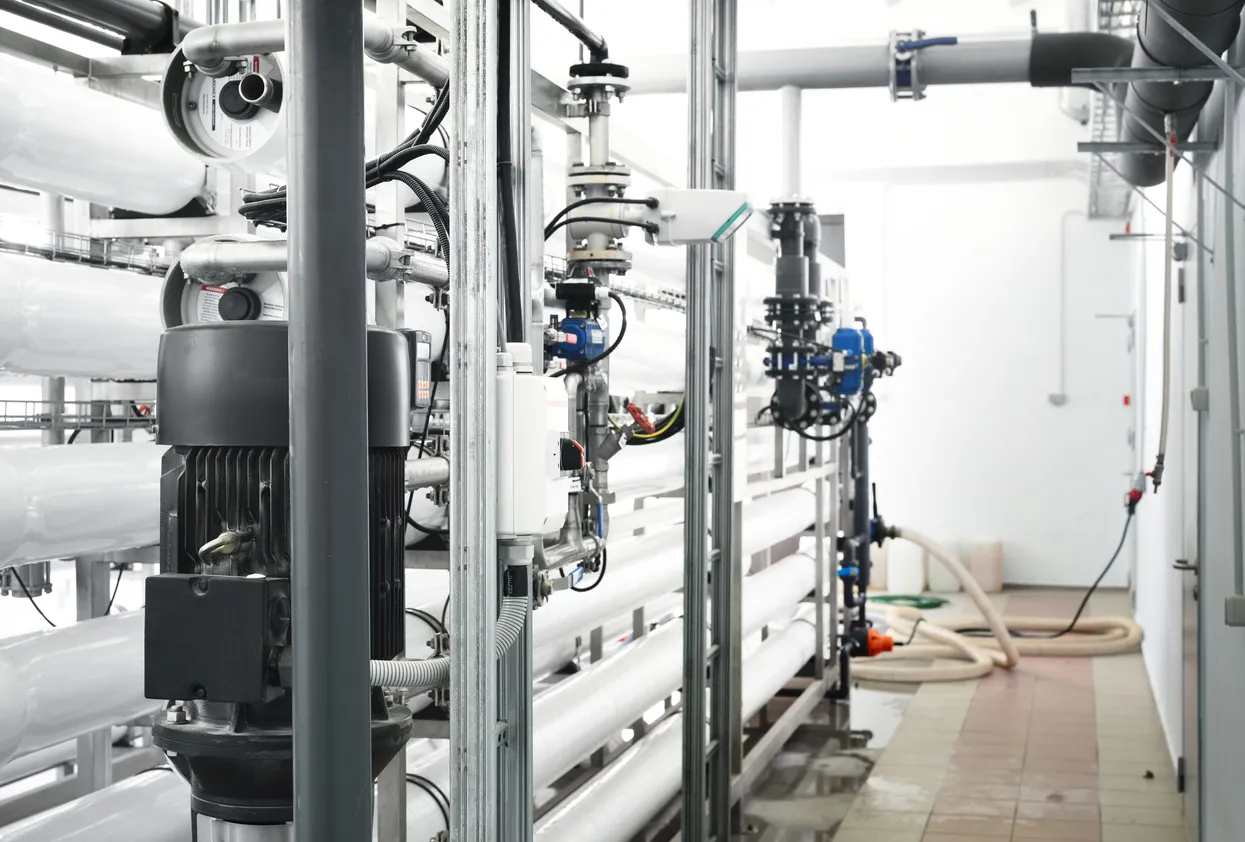
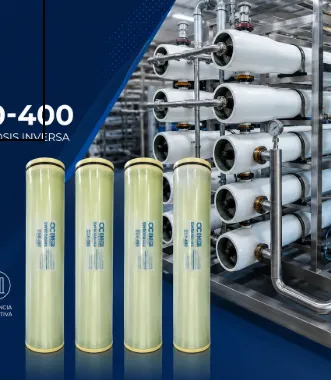
In thermal power generation, water quality is not a secondary utility: it directly affects boiler reliability, steam cycle efficiency, cooling systems, chemical consumption and maintenance frequency. A well engineered reverse osmosis system helps reduce dissolved solids, hardness, silica, chlorides and other ionic contaminants before the water reaches downstream polishing, demineralization or boiler make-up treatment.
For plantas termoeléctricas, the value of reverse osmosis is not only the production of permeate. The real objective is to create a controllable water platform that supports uninterrupted generation, predictable chemistry and lower risk of scale, corrosion and fouling. This requires correct pretreatment, membrane selection, pressure control, recovery calculation, instrumentation, alarms and service planning.
The solution must be evaluated around feedwater variability, required permeate conductivity, boiler pressure, silica tolerance, cooling tower cycles, seasonal temperature and operating hours. When these variables are aligned, reverse osmosis becomes a strategic asset for continuity, not just a filtration skid.
Commercial focus for industrial buyers
Choosing reverse osmosis for plantas termoeléctricas should support lower operational risk, fewer emergency cleanings, improved water balance and more consistent make-up quality for critical equipment. The project should integrate engineering, supply, installation, startup and service support.
variable salinity, silica and hardness
stable quality for process needs
continuous duty and monitoring
maintenance and membrane care
Related resources: sistema de ósmosis inversa, ingeniería de ósmosis inversa and servicio de ósmosis inversa.
Estos productos podrian interesarte

Contenido de la guía
Navega por los criterios técnicos para evaluar ósmosis inversa en plantas termoeléctricas.
Water quality objectives in thermal power generation
Reverse osmosis must be designed from the required water quality backwards, not from a generic flow rate.
In plantas termoeléctricas, water quality requirements vary depending on whether the permeate will feed boilers, cooling tower make-up, auxiliary services, laboratory use, gas turbine washing or additional demineralization trains. A reverse osmosis unit can reduce the ionic load significantly, but the final design must consider the complete treatment line and the tolerance of every downstream process.
Key contaminants include hardness, alkalinity, silica, chlorides, sulfates, iron, manganese, organics, suspended solids and microbiological activity. Hardness and alkalinity can promote scaling in membranes and heat transfer equipment. Silica is especially important because it can limit recovery and create difficult deposits in high temperature systems. Chlorides can increase corrosion risk when not controlled, while iron can foul membranes and shorten cleaning intervals.
For boiler make-up, reverse osmosis typically works as a primary desalination barrier before mixed beds, electrodeionization or other polishing systems. This reduces the load on polishing equipment and helps stabilize conductivity. For cooling towers, reverse osmosis can allow higher cycles of concentration by lowering mineral content in make-up water, although concentration limits, blowdown strategy and corrosion control must be evaluated.
A successful project defines influent characterization, permeate targets, peak and average flow, recovery rate, concentrate disposal, pretreatment requirements and allowable cleaning frequency. These parameters help determine whether the system should operate with single pass, double pass, partial recycle, antiscalant dosing, softening, media filtration, ultrafiltration or cartridge protection.
Typical quality drivers
Conductivity, silica, hardness, chlorides, alkalinity, iron and organic load define membrane stress and final process suitability.
Operational relevance
Stable permeate reduces chemical consumption, unplanned maintenance and risk of scale formation in critical thermal equipment.
When evaluating reverse osmosis plantas termoeléctricas, buyers should request an engineering review based on water analysis rather than a generic equipment quote. Feedwater chemistry changes with season, well operation, surface water blending, rainfall and industrial reuse. The treatment plant must absorb these variations without compromising the quality required by the power facility.
Internal references such as sistema de ósmosis inversa help define the basic configuration, while ingeniería de ósmosis inversa supports the technical calculations needed to determine capacity, recovery and pretreatment.
Volver al índiceContenido de la guía
Navega por los criterios técnicos para evaluar ósmosis inversa en plantas termoeléctricas.
Engineering configuration for reverse osmosis in power plants
Pretreatment and membrane protection
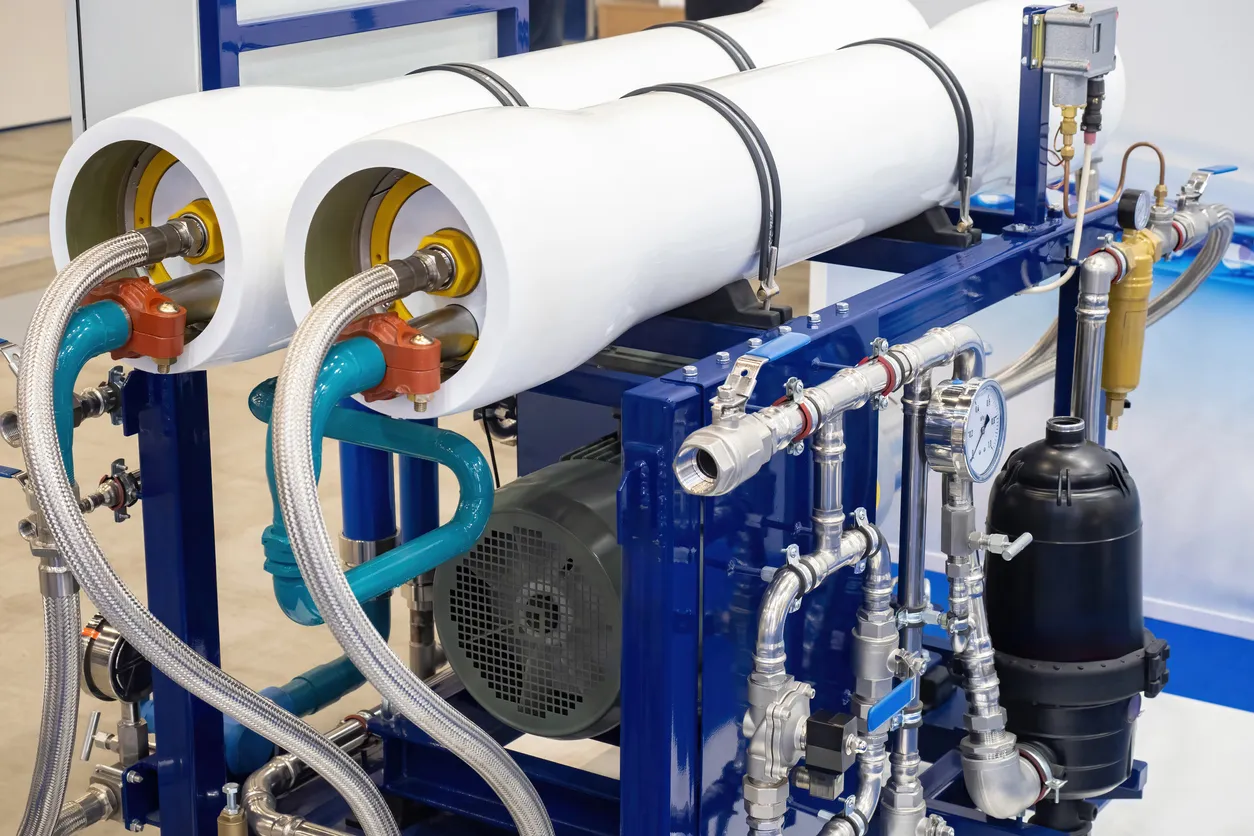
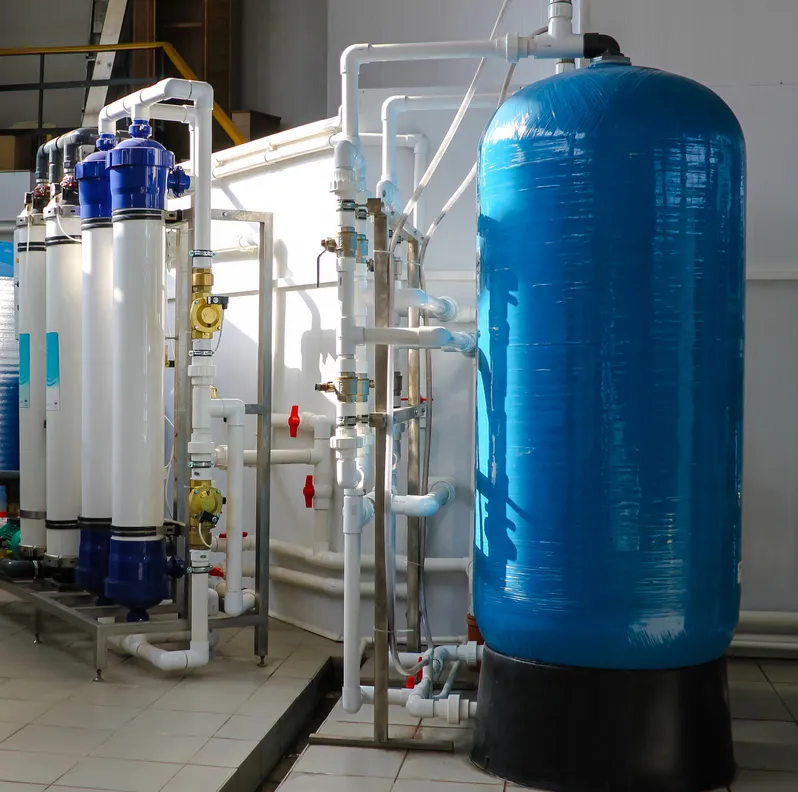
Pretreatment is decisive for membrane life and operating stability. In thermal power applications, the feed stream may contain suspended solids, colloids, biological matter, oxidants or scaling ions that must be managed before the high-pressure pump. A robust design may include multimedia filters, activated carbon, softening, ultrafiltration, chemical dosing, pH adjustment, antiscalant injection and cartridge filters.
The correct pretreatment depends on silt density index, turbidity, free chlorine, iron, manganese, hardness, alkalinity and silica. If oxidants are present, membrane compatibility must be protected because polyamide elements are sensitive to chlorine. If iron is present, oxidation and precipitation must be controlled upstream to avoid rapid fouling.
Cartridge filtration alone should not be considered sufficient pretreatment when the water source is variable. The design must reduce particulate load and stabilize chemistry so the reverse osmosis skid operates within the recommended pressure, differential pressure and normalized flow ranges.
Hydraulic design and recovery
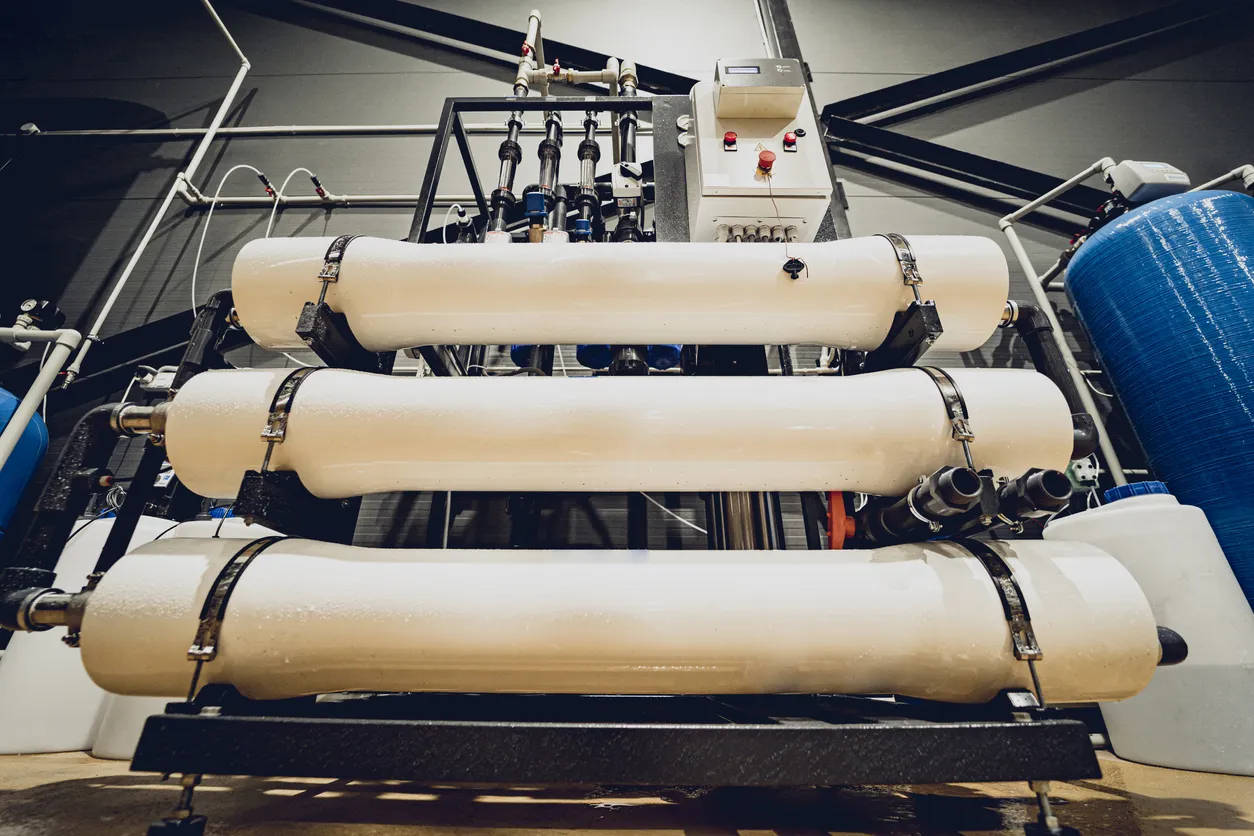
Hydraulic design determines how water passes through pressure vessels, stages and membrane elements. Recovery must be calculated with scaling risk, concentrate chemistry and available reject handling capacity. Higher recovery can reduce wastewater, but it also increases concentration of salts at the membrane surface and may raise scaling potential.
In plantas termoeléctricas, the design must consider production peaks, redundancy requirements, cleaning downtime and the possibility of modular operation. A system with duty and standby trains may provide operational flexibility when generation demand changes. Proper instrumentation for feed pressure, concentrate pressure, permeate flow, concentrate flow, temperature and conductivity is essential for control.
Pressure vessel arrangement, membrane type and flux rate should be selected to avoid aggressive operation. A lower design flux can improve reliability when feedwater quality is challenging. This is particularly relevant when the plant expects continuous operation and cannot tolerate frequent shutdowns.
Integration with downstream polishing
Reverse osmosis often forms part of a multi-barrier treatment train. For high-purity boiler feedwater, RO permeate may be sent to electrodeionization, mixed bed ion exchange or additional polishing. The goal is to reduce ionic load before polishing so resin regeneration, chemical consumption and conductivity excursions are minimized.
Where ultrapure or very low conductivity water is required, double-pass reverse osmosis can be considered. Second-pass design is useful when boron, silica, carbon dioxide or conductivity targets are stringent. Degassing or pH adjustment can also be part of the solution depending on final chemistry goals.
Integration should include storage tank design, recirculation, UV disinfection if required, distribution loop materials and sanitation strategy. A good design protects permeate quality after production, because poor storage and distribution can compromise the benefit achieved by the membrane system.
Engineering documentation
For industrial purchasing, technical documentation is as important as equipment supply. The buyer should request process flow diagrams, equipment datasheets, membrane projection, mass balance, instrumentation list, control philosophy, electrical requirements, footprint, operating manual and maintenance recommendations.
Documentation allows the operations team to evaluate whether the system fits plant utilities, available space, power supply, automation level and maintenance resources. It also helps compare suppliers on equivalent technical grounds rather than only price.
Use ingeniería de ósmosis inversa to evaluate design assumptions and servicios de ósmosis inversa when the project requires installation, commissioning, cleaning, diagnostics or operational support.
Contenido de la guía
Navega por los criterios técnicos para evaluar ósmosis inversa en plantas termoeléctricas.
Operation, monitoring and maintenance strategy
A reverse osmosis system in a power plant must be monitored as a critical utility, not as isolated equipment.
Reliable operation depends on daily data. Operators should track feed conductivity, permeate conductivity, pressure drop, feed pressure, concentrate pressure, permeate flow, recovery, temperature, pH, oxidation-reduction potential when relevant and chemical dosing rates. These values should be normalized to identify real membrane performance trends rather than confusing temperature or pressure changes with fouling.
Normalized permeate flow, salt rejection and differential pressure provide early indicators of fouling, scaling, compaction or mechanical damage. A decline in normalized flow can indicate fouling or scaling. An increase in differential pressure may suggest particulate loading, biological growth or channel blockage. A loss of salt rejection can point to membrane damage, seal issues, oxidation or excessive operating stress.
Maintenance planning should include cartridge replacement, pretreatment backwash verification, antiscalant dosing checks, calibration of conductivity and flow instruments, inspection of pumps and valves, membrane cleaning criteria and post-cleaning performance review. Cleaning should be triggered by operating indicators, not only by calendar dates. This approach avoids both premature cleaning and excessive fouling accumulation.
For plants with continuous power generation needs, remote monitoring and alarm thresholds can improve response time. Integration with PLC, SCADA or plant control systems allows faster detection of abnormal conditions. However, digital monitoring must be based on correct instrumentation and good sampling practices. A poorly calibrated sensor can create false confidence or unnecessary alarms.
Service support through servicio de ósmosis inversa is useful when the plant needs diagnosis, membrane cleaning, troubleshooting, performance audits or operator training. A service program should include data review, field inspection, recommendations and follow-up after corrective actions.
Monitor
Flow, pressure, conductivity, pH and temperature.
Normalize
Compare data under equivalent conditions.
Diagnose
Identify fouling, scaling or membrane damage.
Act
Clean, adjust dosing or correct pretreatment.
Contenido de la guía
Navega por los criterios técnicos para evaluar ósmosis inversa en plantas termoeléctricas.
Technical purchasing criteria for reverse osmosis in plantas termoeléctricas
Define the duty clearly
The first purchasing criterion is clarity of duty. The buyer should define feed source, daily operating hours, peak permeate demand, storage capacity, redundancy, permeate quality target, concentrate disposal options and downstream treatment. Without these inputs, suppliers may quote equipment that looks adequate on paper but does not fit the operating reality of the plant.
It is also important to define whether the system supports boiler make-up, cooling tower make-up, auxiliary process water or a high-purity loop. Each use case changes the design priorities.
Compare engineering, not only price
Two reverse osmosis quotations can have very different assumptions. Membrane flux, recovery, pretreatment, instrumentation, automation and materials of construction can change long-term cost significantly. A lower initial price may result in more cleaning, higher chemical consumption or shorter membrane life.
Compare membrane projection, cleaning access, skid construction, spare parts, local support, commissioning scope and training. The strongest proposal usually explains why each component is included and how it protects the system.
Plan lifecycle support
Reverse osmosis systems require a lifecycle approach. The project should include installation supervision, startup validation, operator training, preventive maintenance, periodic performance reviews and access to replacement membranes and consumables.
For plantas termoeléctricas, lifecycle support protects water quality continuity and reduces risk of unplanned shutdowns. Related services can be reviewed in servicios de ósmosis inversa.
Decision checklist
Before selecting a supplier, verify that the proposal includes a complete water analysis, design basis, pretreatment recommendation, membrane calculation, expected permeate quality, recovery rate, concentrate flow, electrical requirements, instrumentation package, control logic, cleaning procedure and maintenance recommendations. The supplier should also clarify limitations, assumptions and responsibilities for civil works, utilities, drains and chemical storage.
A strong reverse osmosis project for thermal power generation balances capital cost, operating cost, reliability, water recovery and serviceability. The objective is not simply to install equipment; the objective is to secure a stable source of treated water that supports power production over time.
Heat transfer fluids for data centers, HVAC and industrial applications
Omega Chemicals offers solutions such as DOWFROST™ LC, KOSTChill PG XL, OMEGA DO LC30 and OMEGA DO LC25 for reliable thermal performance in critical applications.
- DOWFROST™ LC for data centers.
- KOSTChill PG XL for HVAC and computing.
- PG fluids for heat transfer.
- OMEGA DO LC30 PG 30 heat transfer fluid.
- OMEGA DO LC25 for industrial engines.
- Guidance in selecting the right product.
Contenido de la guía
Navega por los criterios técnicos para evaluar ósmosis inversa en plantas termoeléctricas.
FAQ about reverse osmosis for plantas termoeléctricas
For additional technical context, review sistema de ósmosis inversa, ingeniería de ósmosis inversa, servicio de ósmosis inversa and servicios de ósmosis inversa. These resources support evaluation of equipment, engineering and service requirements for industrial water treatment projects.
In summary, reverse osmosis plantas termoeléctricas should be specified as a complete engineered solution. The buyer should evaluate water chemistry, plant duty, redundancy, pretreatment, membrane configuration, instrumentation, service access and long-term support. A properly designed system helps protect critical assets and supports stable water quality for energy generation.
Temas que te pueden interesar
Estos productos podrian interesarte