Productos
Segunda mano
Servicios
Reverse osmosis systems for cocinas industriales


High-purity reverse osmosis for kitchens that cannot stop production.
In cocinas industriales, water quality affects steam generation, dishwashing, food preparation, ice equipment, coffee extraction, boiler protection, cleaning routines and final product consistency. A properly engineered reverse osmosis system reduces dissolved solids and helps stabilize the water feeding key utilities, allowing operators to control scaling, reduce maintenance disruptions and protect equipment that runs continuously during service windows.
The commercial value of reverse osmosis cocinas industriales is not only lower conductivity. The value is repeatable operation: consistent permeate quality, suitable pretreatment, reliable instrumentation, efficient recovery, sanitary handling where required, and a service plan that supports daily production. For buyers comparing vendors, the strongest proposal should explain feed-water analysis, expected permeate quality, membrane selection, pretreatment scope, automation level, alarms, space requirements and operating responsibilities.
Where reverse osmosis creates operational value
Industrial kitchens often depend on hot water, steam, washers, humidification, rinsing, beverage preparation and ingredient handling. When incoming water has elevated hardness, chlorides, alkalinity or TDS, equipment may show scale, stains, inconsistent rinse results and more frequent service. Reverse osmosis supports better control by reducing dissolved minerals before they enter sensitive points of use.
For a stronger technical evaluation, connect the solution with a complete sistema de osmosis inversa, review the design basis through ingenieria de osmosis inversa, and compare the service scope available through servicio de osmosis inversa. This keeps the purchase decision tied to performance instead of only equipment price.
Estos productos podrian interesarte

How water quality affects industrial kitchen performance
Reverse osmosis for cocinas industriales should start with a practical quality target, not with a generic equipment list.
Industrial kitchens are water-intensive facilities with multiple points of use operating at different temperatures, pressures and cleaning frequencies. The same feed water may be used for steamers, combi ovens, utensil washers, glass washers, ice machines, coffee equipment, beverage dispensers, ingredient preparation, dilution, rinsing and general sanitation. Each point of use responds differently to dissolved solids, hardness, alkalinity, silica, chlorides, iron and residual disinfectants. For that reason, a reverse osmosis proposal must translate the water analysis into operational risks and quality objectives.
Hardness and alkalinity are common drivers of scale in hot surfaces. When calcium and magnesium precipitate, heat transfer becomes less efficient, nozzles can obstruct, valves may require more frequent attention and cleaning cycles may become less predictable. High total dissolved solids can also affect spotting after rinsing, flavor perception in beverages and the reliability of equipment that depends on consistent water chemistry. In kitchens serving hotels, hospitals, restaurants, central food plants or institutional cafeterias, these variations can create direct service interruptions.
A properly designed reverse osmosis system reduces dissolved minerals before the water reaches critical equipment. However, the system must be sized according to real demand. Peak preparation periods, dishwashing cycles, tank refill time, recirculation needs and storage capacity should be reviewed together. A small system with insufficient storage may produce good water quality but fail during rush periods. A system that is oversized without understanding recovery, feed pressure and drainage can waste capital and utilities.
When the specification is related to reverse osmosis cocinas industriales, the phrase should be supported with measurable parameters. Typical parameters include conductivity, TDS, hardness reduction, permeate flow, recovery, operating pressure, temperature range and membrane configuration. The proposal should also clarify whether the water is for process use, utility protection, beverage quality support or a combination of applications. This separation helps avoid overpromising and allows the purchasing team to compare suppliers using the same criteria.
Return to indexDesign elements that should be evaluated before buying
The most reliable reverse osmosis projects connect pretreatment, membranes, controls, storage and service access into one operational system.
Pretreatment before the membrane
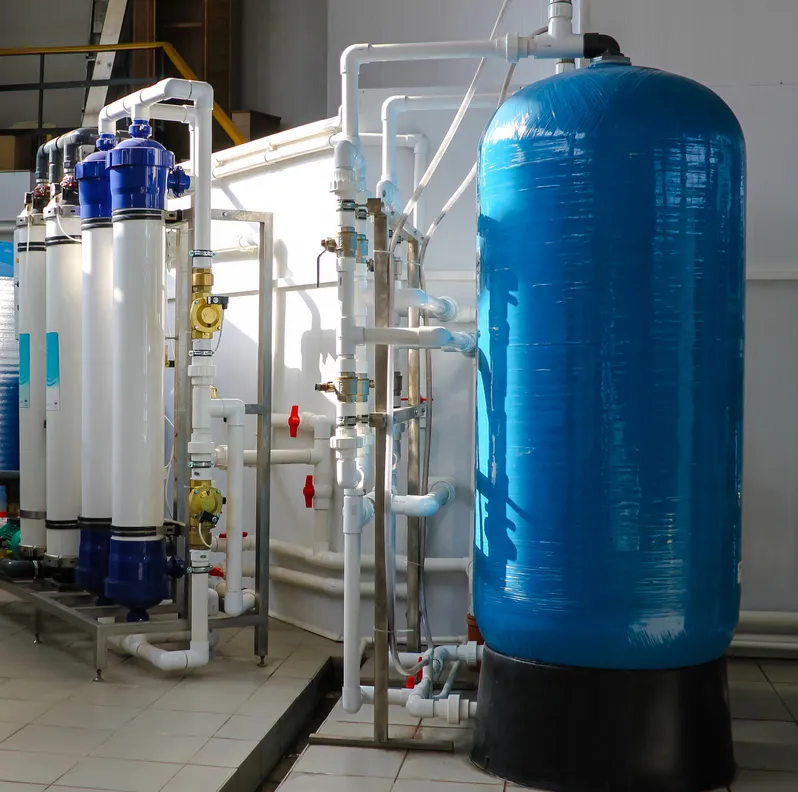
Pretreatment protects the membrane and stabilizes production. Depending on the feed-water profile, it may include sediment filtration, activated carbon, softening, antiscalant dosing, cartridge filtration, pressure regulation and chlorine removal. In kitchen environments, pretreatment must also be easy to service because downtime can affect food preparation schedules. The pretreatment train should be selected after reviewing hardness, turbidity, free chlorine, iron, manganese, silica, alkalinity and scaling potential.
Ignoring pretreatment usually increases membrane fouling, chemical cleaning frequency and loss of permeate flow. A low-cost equipment quote that does not specify pretreatment can become more expensive during operation.
Membrane configuration and recovery
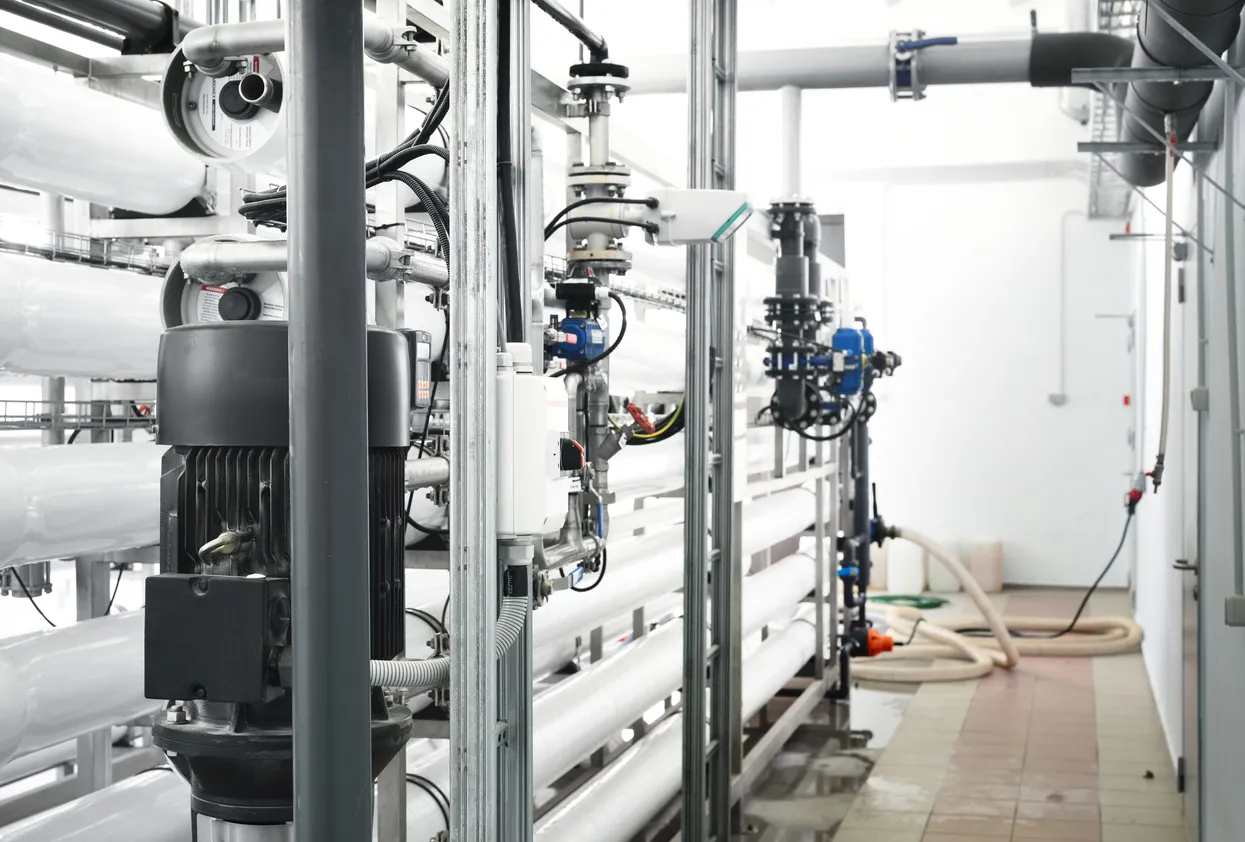
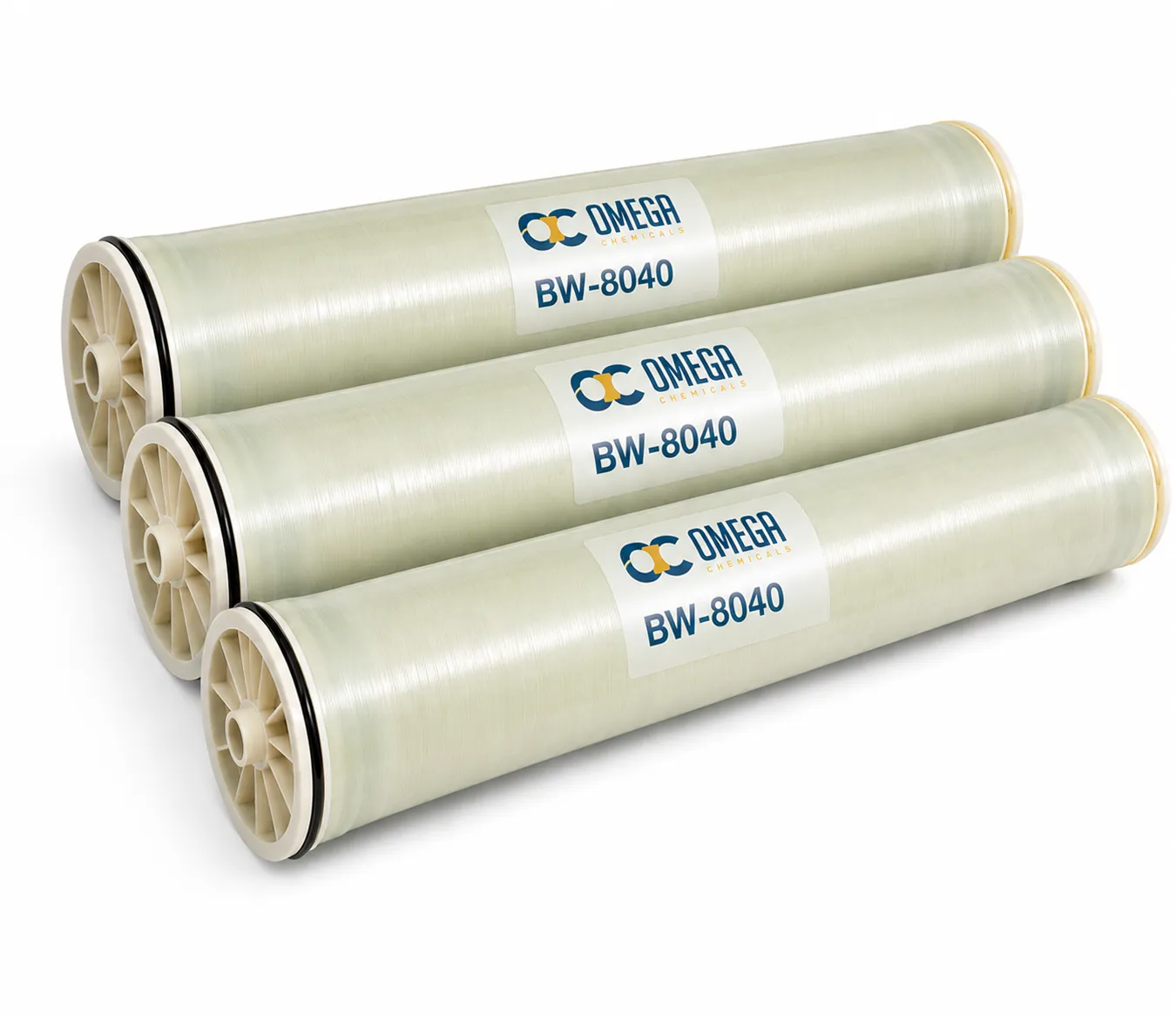
Membrane selection should match the required permeate quality, flow and available pressure. In many cocinas industriales, the goal is not ultrapure laboratory water but stable, low-mineral water that supports equipment performance. Recovery must be balanced against scaling risk and reject disposal capacity. Higher recovery may reduce water waste, but it can also concentrate salts and increase scaling if not controlled properly.
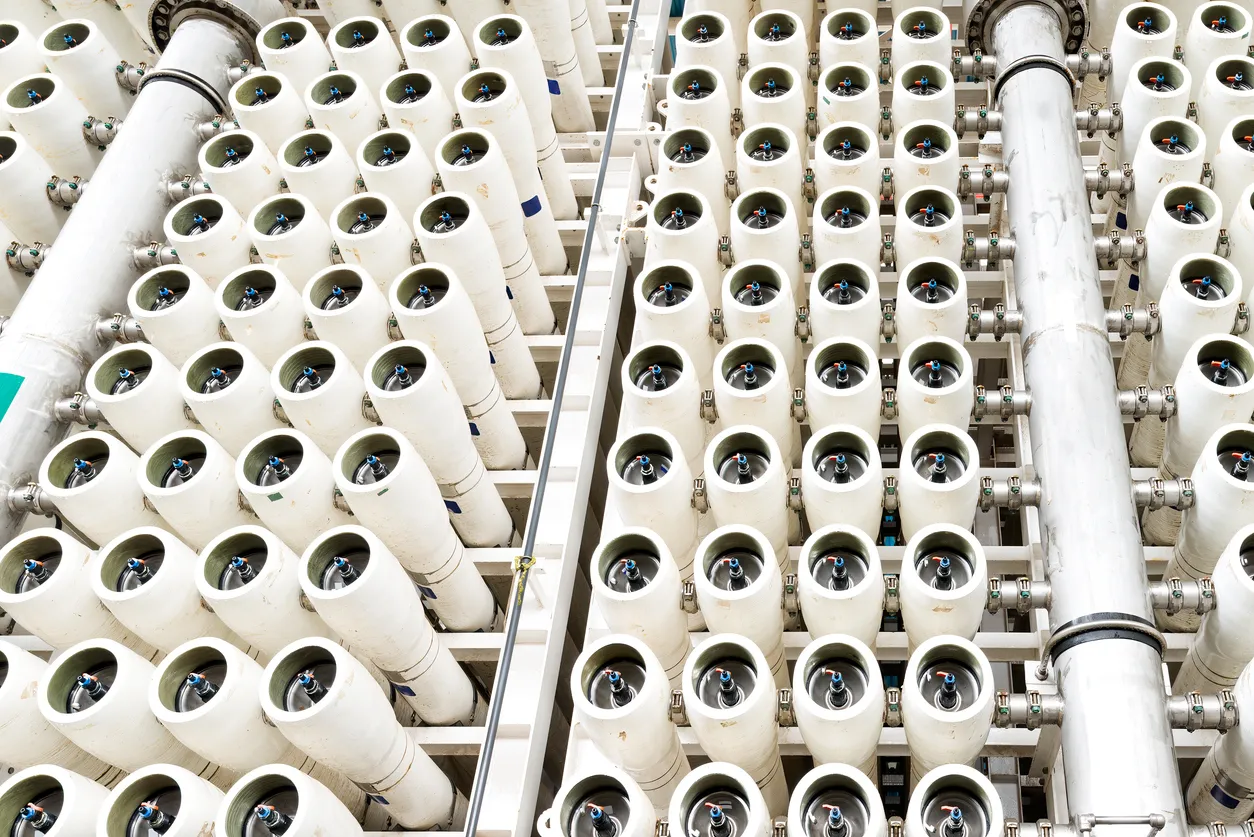
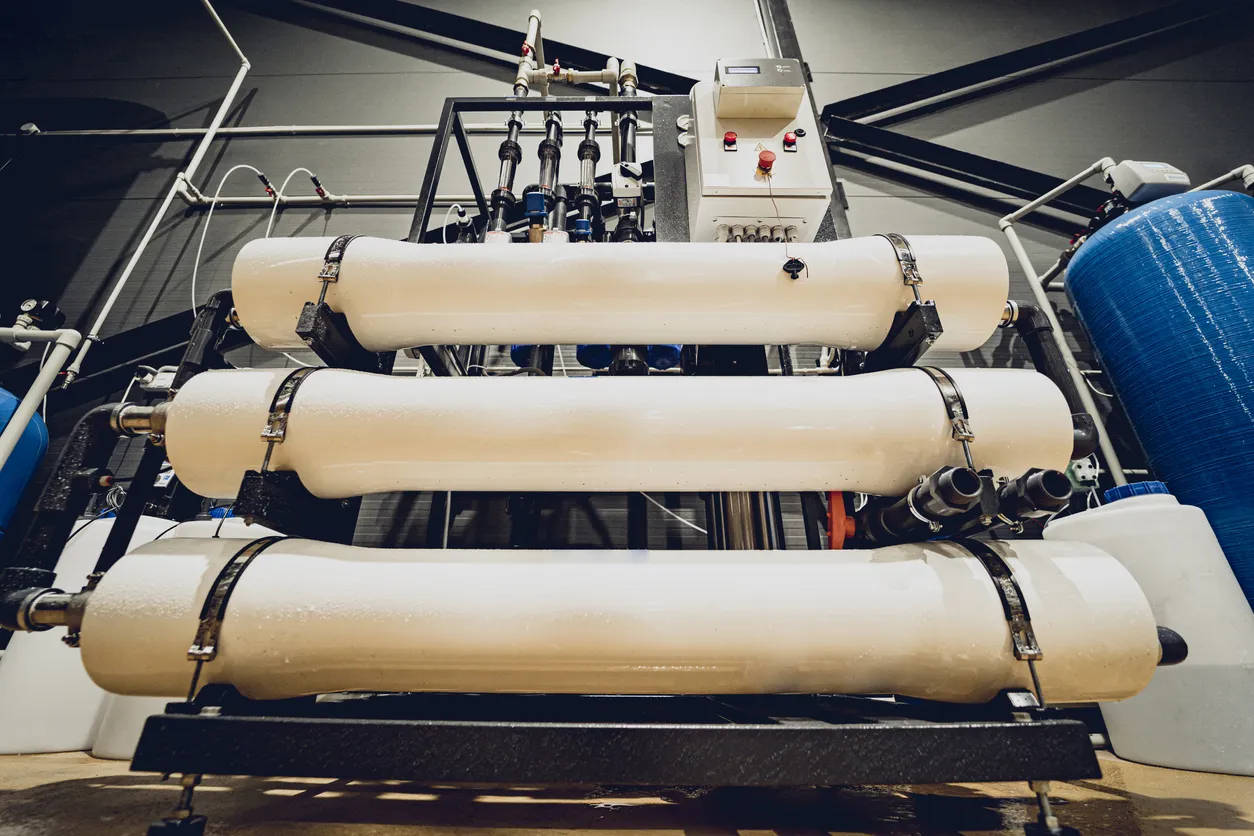
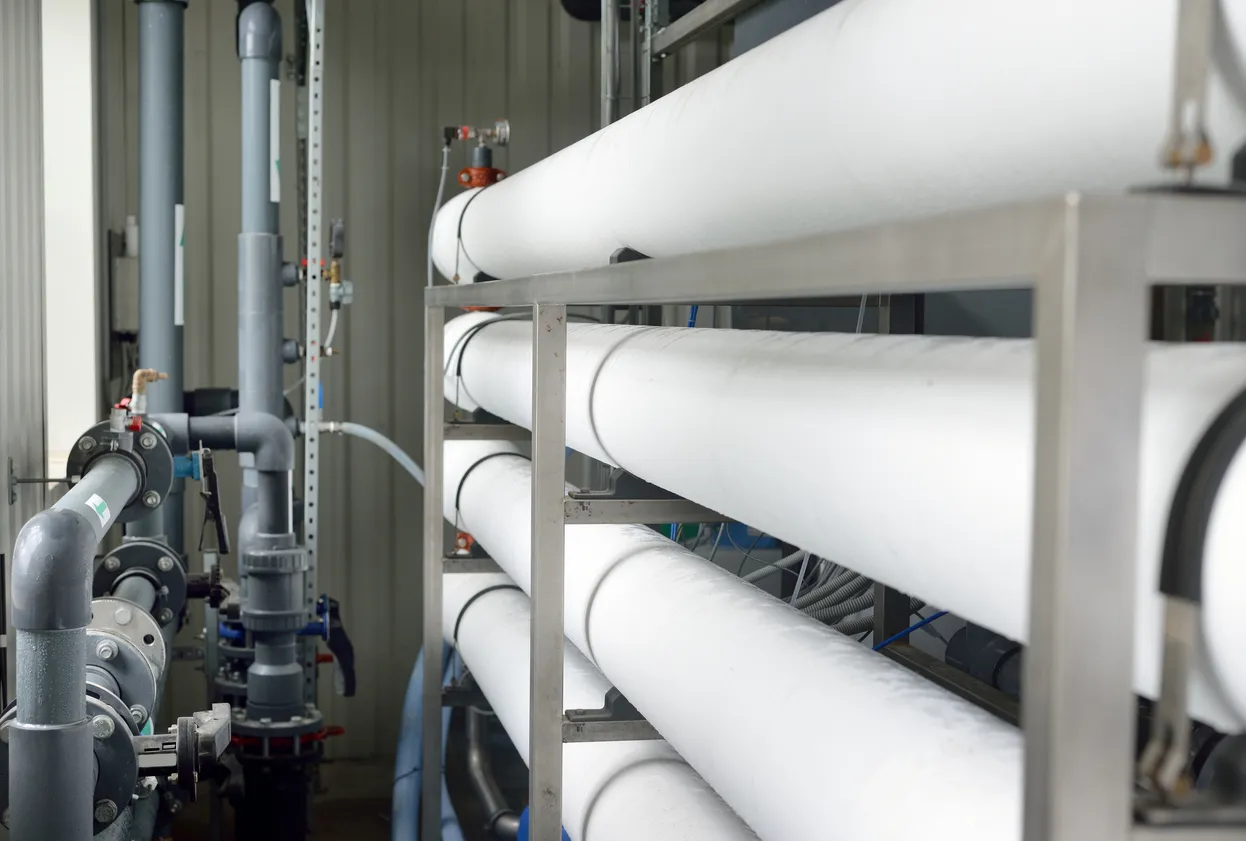
The engineering package should explain how many membranes are used, how vessels are arranged, what flow is expected at the design temperature and how performance will be monitored over time.
Storage and distribution
Industrial kitchens rarely consume water at a perfectly constant flow. Storage tanks, repressurization pumps and distribution loops help absorb demand peaks. The storage material, venting, level controls, pump logic and sanitary considerations must be appropriate for the application. If the water feeds steam equipment or beverage-related points, distribution should avoid stagnation and maintain sufficient pressure for the farthest points of use.
A complete sistema de osmosis inversa should integrate production and distribution, not only the membrane skid.
Controls, alarms and instrumentation
Instrumentation helps operators identify changes before they become failures. Conductivity meters, pressure gauges, flowmeters, low-pressure protection, tank level controls, automatic flush routines and alarm outputs are useful for reliable service. For centralized kitchens or multi-shift operations, simple monitoring can reduce dependency on visual inspections and help maintenance teams respond faster.
Controls should be accessible and understandable for local operators. A system that is technically advanced but difficult to interpret may not deliver the expected operational benefit.
Operational practices that keep the system stable
A reverse osmosis system performs best when operation, maintenance and monitoring are built into the purchase decision.
Once installed, reverse osmosis performance depends on routine observation. Operators should monitor feed pressure, concentrate pressure, permeate pressure, permeate flow, reject flow, conductivity, recovery, temperature and abnormal starts or stops. These readings allow the maintenance team to calculate normalized performance and identify fouling, scaling or membrane degradation before water quality becomes unacceptable.
For cocinas industriales, operational discipline is especially important because production windows are short and service interruptions create immediate consequences. A dishwasher, steamer, ice machine or beverage line may not have time to wait for a long diagnostic process. Clear logs, alarm thresholds and preventive visits make the difference between a system that simply exists and a system that supports continuity.
Cleaning and cartridge replacement should be based on pressure differential, feed-water conditions and manufacturer guidance. Carbon media or chemical dosing must be maintained so that oxidants do not damage membranes. If softening is used upstream, regeneration settings and brine availability must be checked. When antiscalant is used, dosing pumps and chemical levels need routine verification. These activities are often more important than the brand of a single component.
Suppliers should explain how the system will be commissioned, what parameters will be recorded at startup, what normal operating range is expected and how the service team will respond to changes. This is where servicio de osmosis inversa becomes relevant: maintenance, cleaning, troubleshooting and spare parts availability determine long-term value.
| Variable | Why it matters | Decision impact |
|---|---|---|
| Permeate conductivity | Shows water quality leaving the membrane. | Confirms if the system meets utility or process requirements. |
| Pressure differential | Indicates fouling, plugging or flow restriction. | Helps schedule cartridge replacement or cleaning. |
| Recovery percentage | Compares permeate flow against feed flow. | Balances water efficiency and scaling risk. |
| Feed temperature | Affects membrane productivity. | Prevents false interpretation of low flow. |
How to compare proposals for reverse osmosis in industrial kitchens
A strong technical-commercial proposal should make operating cost, reliability and service scope visible.
When comparing suppliers, the lowest equipment price is not always the best purchase. The buyer should review the complete scope: water analysis interpretation, pretreatment, membrane skid, automation, storage, distribution, installation requirements, commissioning, training, documentation, consumables and service response. In reverse osmosis cocinas industriales, the system must support daily operations, so a proposal that ignores demand profile or local maintenance capabilities can create risk after installation.
The proposal should define whether civil work, electrical connections, drain lines, feed tank, product tank, pumps, valves, sample ports and installation materials are included. It should also mention whether startup includes baseline data, permeate quality verification and operator training. If the water is used in food-contact or hygiene-sensitive applications, the buyer should ask about material compatibility, cleaning practices and documentation responsibilities.
Engineering support is important when the kitchen has multiple points of use or when a central system feeds several areas. A specialized evaluation through ingenieria de osmosis inversa can help determine whether the best approach is a dedicated RO for one application, a centralized skid with storage, or a staged solution that separates critical and non-critical uses. This decision affects capital cost, water efficiency, maintenance, spare parts and reliability.
It is also useful to review available servicios osmosis inversa before purchasing. Many failures are not caused by the RO concept itself; they are caused by poor startup, missing pretreatment, lack of monitoring or delayed maintenance. A supplier that can support diagnostics, replacement membranes, cartridge filters, chemical cleaning, instrumentation calibration and operational audits provides stronger long-term value.
A good buying decision should leave the operations team with clear expectations: what water quality will be produced, how much permeate is available, what maintenance is required, what alarms mean, what consumables must be stocked and who is responsible for service interventions. This clarity reduces uncertainty and helps the kitchen maintain continuity during high-demand periods.
Return to index
Heat transfer fluids for data centers, HVAC and industrial applications
Omega Chemicals offers solutions such as DOWFROST™ LC, KOSTChill PG XL, OMEGA DO LC30 and OMEGA DO LC25 for reliable thermal performance in critical applications.
- DOWFROST™ LC for data centers.
- KOSTChill PG XL for HVAC and computing.
- PG fluids for heat transfer.
- OMEGA DO LC30 PG 30 heat transfer fluid.
- OMEGA DO LC25 for industrial engines.
- Guidance in selecting the right product.
Frequently asked questions about reverse osmosis for industrial kitchens
These questions help purchasing, maintenance and operations teams evaluate reverse osmosis cocinas industriales with a technical and commercial perspective.
Reverse osmosis can be an effective solution for cocinas industriales when the system is designed around water analysis, peak consumption, storage, pretreatment and ongoing service. The following FAQ summarizes the main points that should be clarified before approving a project.
Why use reverse osmosis in cocinas industriales?
It helps reduce dissolved minerals that can cause scaling, spotting, inconsistent rinsing, flavor variation and premature service needs in equipment such as steamers, dishwashers, ice machines and beverage systems. The objective is to provide more stable water quality for critical utilities and process needs.
Is reverse osmosis always required for every kitchen?
No. The need depends on feed-water quality, equipment sensitivity, production volume and quality expectations. Some kitchens only require filtration or softening, while others benefit from a complete reverse osmosis system with pretreatment, storage and distribution. A water analysis is essential before selecting equipment.
What should be included in the technical proposal?
The proposal should include feed-water conditions, design flow, permeate quality target, recovery, membrane configuration, pretreatment, instrumentation, tank volume, pump requirements, installation limits, consumables, maintenance frequency and startup procedure. These details help compare suppliers fairly.
How does pretreatment affect membrane life?
Pretreatment reduces the contaminants and operating conditions that can damage or foul the membrane. Sediment, chlorine, hardness, iron and scaling potential must be controlled. Without proper pretreatment, the system may lose flow, require frequent cleaning or fail to maintain permeate quality.
How should the system be monitored?
Operators should track permeate conductivity, feed and concentrate pressure, permeate flow, reject flow, recovery, temperature and pressure differential. These readings support preventive maintenance and help identify fouling or scaling before the kitchen experiences service interruptions.
What is the most important buying criterion?
The most important criterion is operational fit. A system must match the kitchen’s peak demand, required water quality, available space, maintenance capability and service expectations. A low initial price can become expensive if storage, pretreatment or support are insufficient.
For a complete evaluation, buyers can compare the equipment scope against a full sistema de osmosis inversa, validate design details through ingenieria de osmosis inversa, and review support options through servicio de osmosis inversa. This ensures the final decision considers engineering, operation and long-term service.
Return to index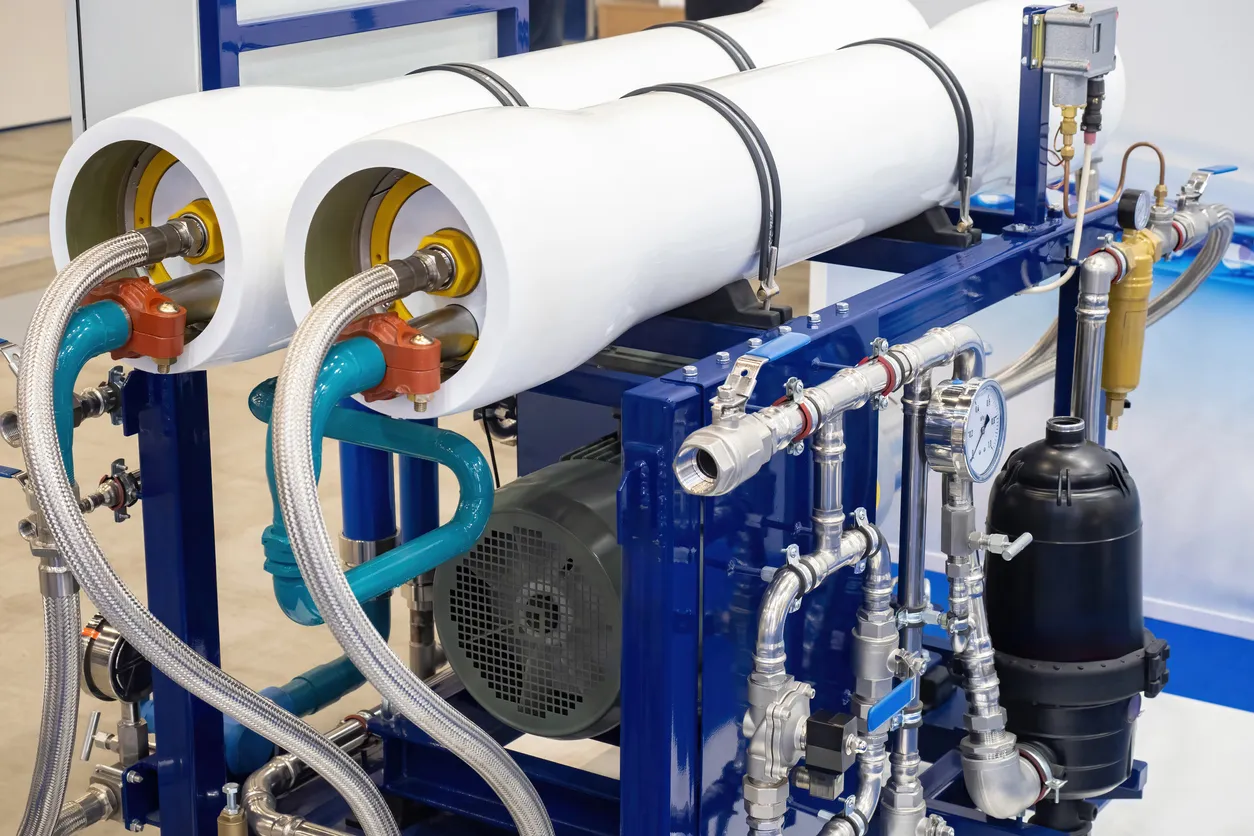
Temas que te pueden interesar
Estos productos podrian interesarte