Productos
Segunda mano
Servicios
Reverse osmosis systems for laboratorios


Reverse osmosis for laboratorios with stable quality, operational traceability and industrial reliability
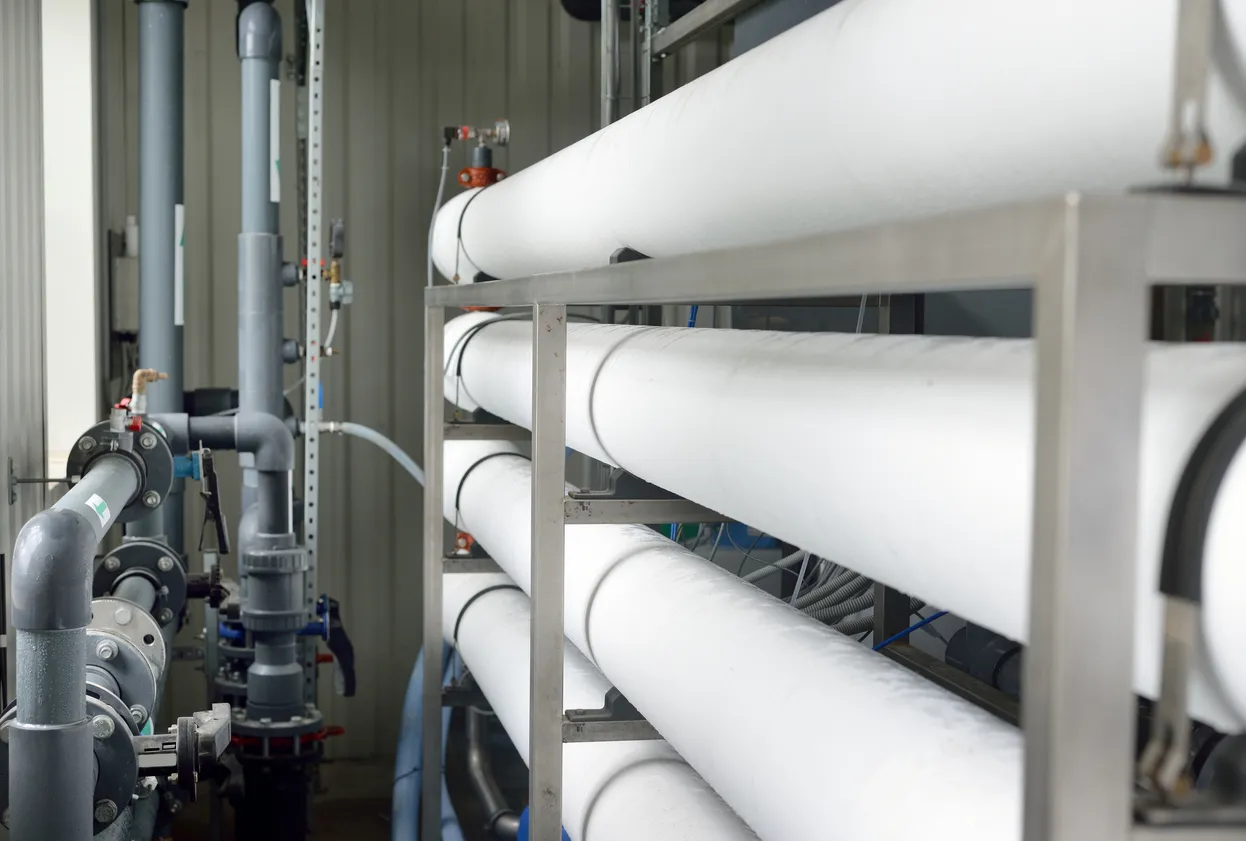
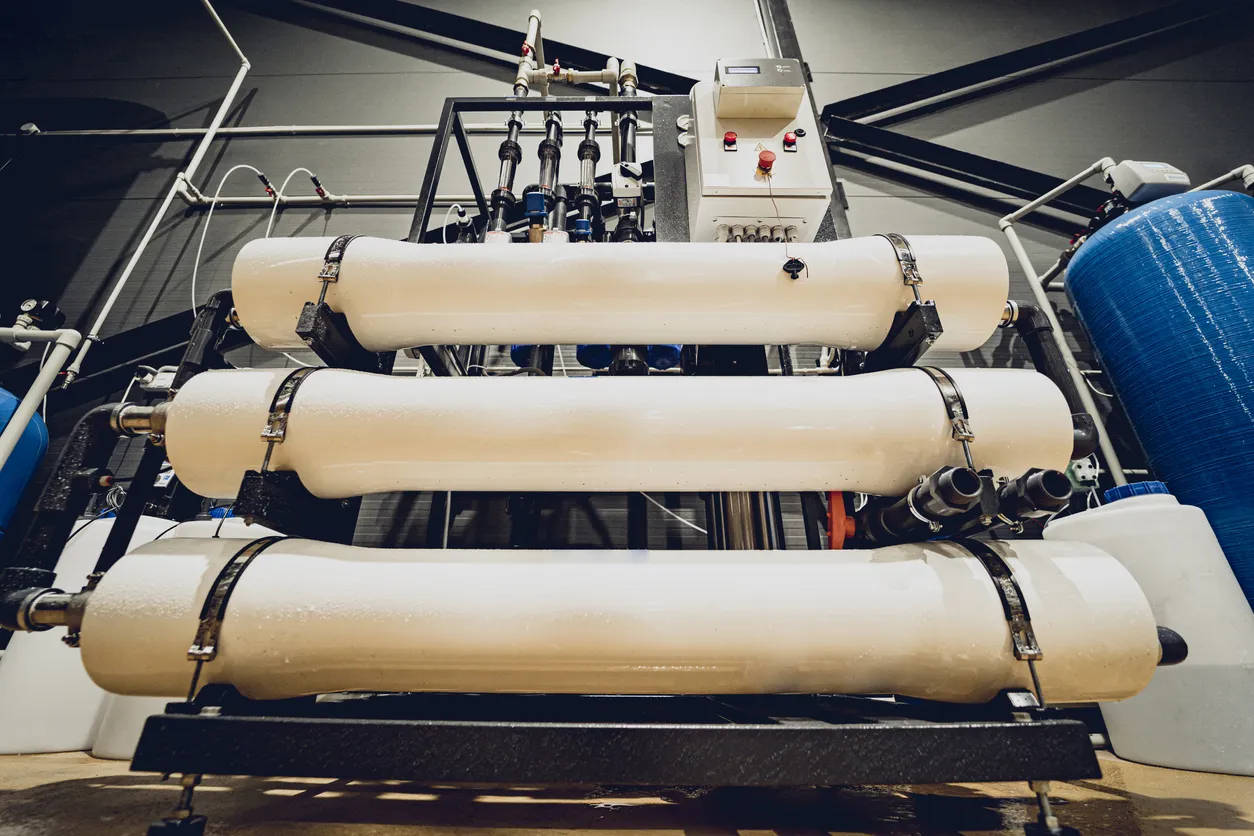
In laboratory environments, water quality is not only a utility; it is part of the reliability of analytical results, sample preparation, washing routines, humidification, sterilization support and sensitive process services. A reverse osmosis system designed for laboratorios helps reduce dissolved salts, hardness, silica, chlorides and conductivity variability before water reaches polishing, storage or distribution stages.
The objective is to build a dependable treatment train around the real feed water, daily consumption profile, peak demand, storage strategy and required permeate quality. For industrial laboratories, pharmaceutical support areas, quality control rooms, research spaces and testing facilities, reverse osmosis becomes a central barrier that protects downstream equipment, improves consistency and reduces the risk of deposits, scaling or unexpected conductivity excursions.
Controlled permeate
Consistent reduction of dissolved solids to support analytical and process water needs.
Protected equipment
Lower scaling tendency in washers, autoclave feeds, polishing cartridges and distribution loops.
Scalable operation
Engineering that adapts to single lab rooms, central plants or multi-area service networks.
A correct project connects pretreatment, membrane selection, instrumentation, sanitation access, storage and service response. That is why evaluating sistema de ósmosis inversa, ingeniería de ósmosis inversa and servicio de ósmosis inversa together is essential when the application serves laboratorios.
What a laboratory RO project should solve
- ✓Stable conductivity and reduced mineral load before final polishing or storage.
- ✓Compatibility with laboratory washers, autoclave support, reagent preparation and process utilities.
- ✓Instrumentation for pressure, flow, conductivity and operating alarms.
- ✓Maintenance access for cartridges, membranes, sanitization and performance verification.
Estos productos podrian interesarte
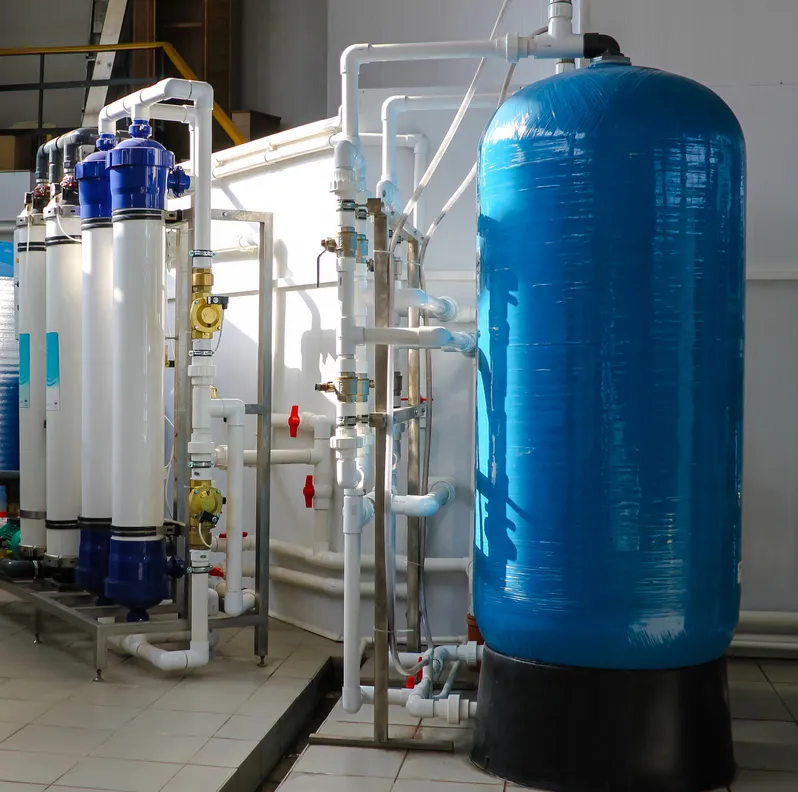
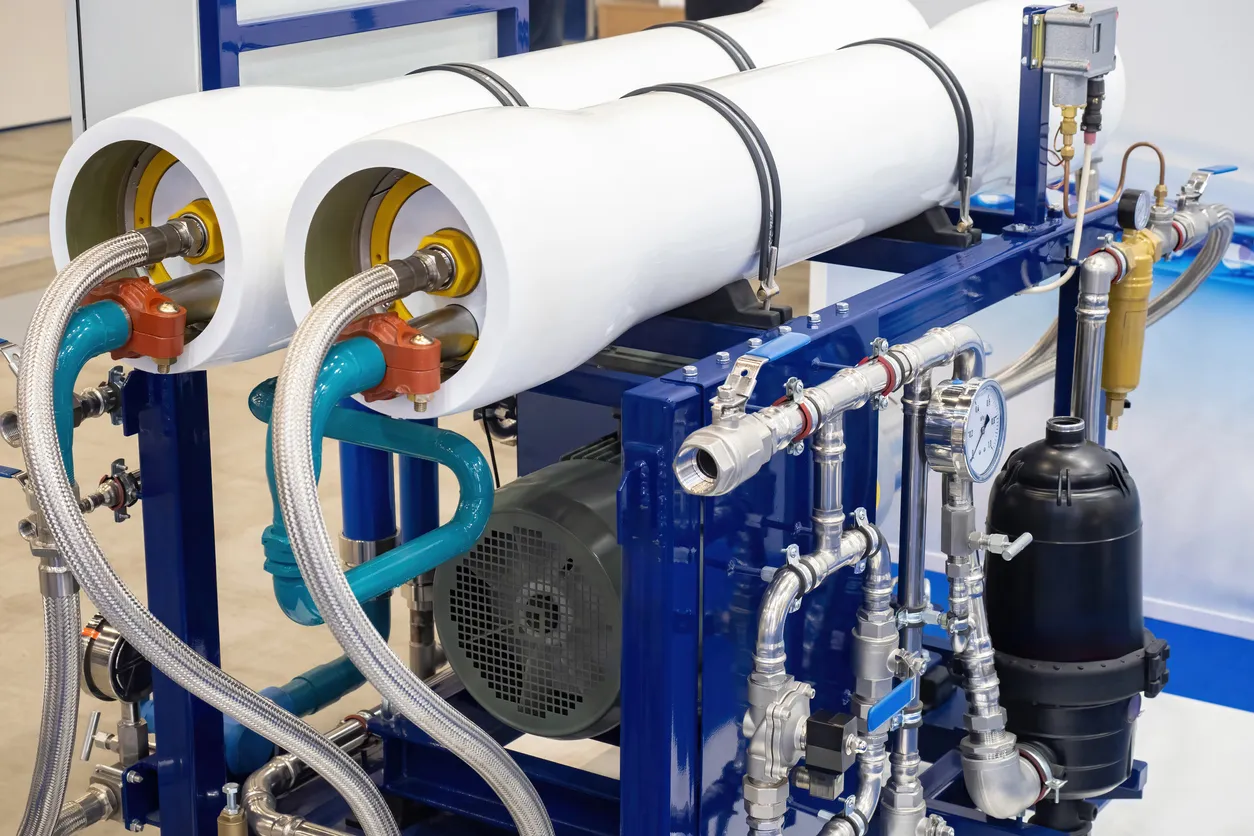
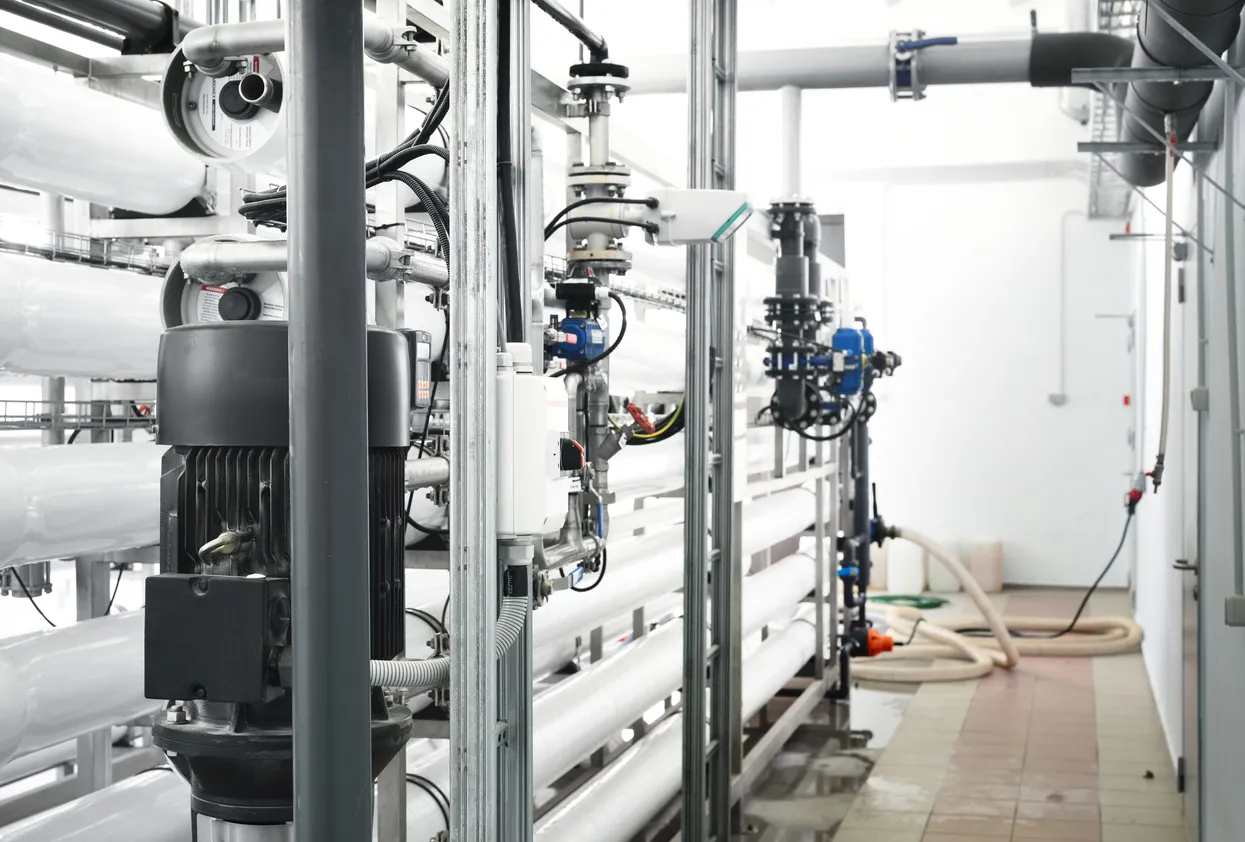
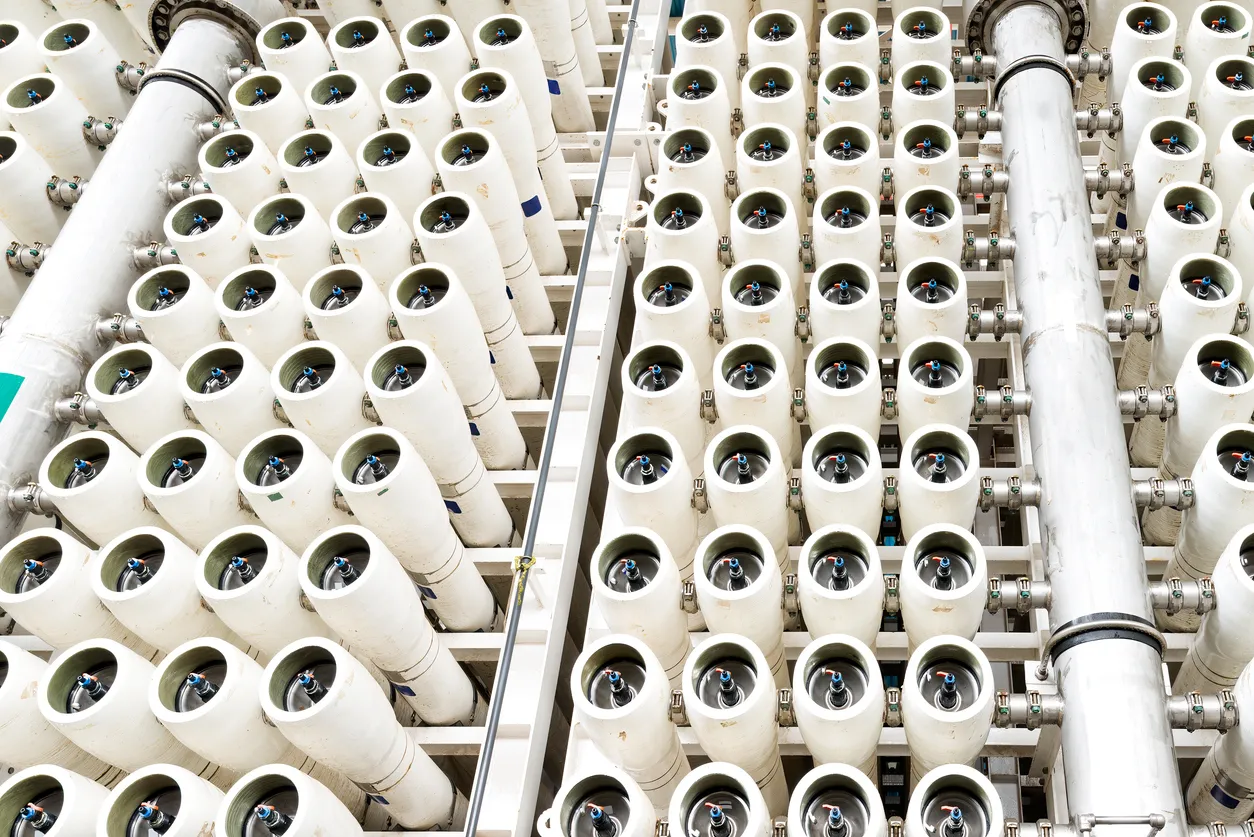
Water quality goals for reverse osmosis in laboratorios
Laboratory water quality depends on consistent control of dissolved ions and operating variability. Reverse osmosis reduces the mineral load before storage, polishing or distribution, making the final water system easier to stabilize and maintain.
- Conductivity control before final polishing.
- Reduction of hardness and scaling tendency.
- Lower load on deionization, UV or final filters.
- More predictable service intervals.
For laboratorios, reverse osmosis must be evaluated as an engineered barrier rather than a generic filtration package. The system has to match the incoming water analysis, expected daily consumption, maximum instantaneous demand, storage autonomy, discharge limitations, pretreatment requirements and the quality level required before any polishing stage. When the keyword reverse osmosis laboratorios is used in a purchasing process, the technical conversation should include conductivity, TDS, hardness, silica, chloride, alkalinity, microbiological control strategy, pressure stability and membrane protection. This prevents selecting a unit that looks sufficient by nominal flow but fails under real laboratory use.
For laboratorios, reverse osmosis must be evaluated as an engineered barrier rather than a generic filtration package. The system has to match the incoming water analysis, expected daily consumption, maximum instantaneous demand, storage autonomy, discharge limitations, pretreatment requirements and the quality level required before any polishing stage. When the keyword reverse osmosis laboratorios is used in a purchasing process, the technical conversation should include conductivity, TDS, hardness, silica, chloride, alkalinity, microbiological control strategy, pressure stability and membrane protection. This prevents selecting a unit that looks sufficient by nominal flow but fails under real laboratory use.
For laboratorios, reverse osmosis must be evaluated as an engineered barrier rather than a generic filtration package. The system has to match the incoming water analysis, expected daily consumption, maximum instantaneous demand, storage autonomy, discharge limitations, pretreatment requirements and the quality level required before any polishing stage. When the keyword reverse osmosis laboratorios is used in a purchasing process, the technical conversation should include conductivity, TDS, hardness, silica, chloride, alkalinity, microbiological control strategy, pressure stability and membrane protection. This prevents selecting a unit that looks sufficient by nominal flow but fails under real laboratory use.
For laboratorios, reverse osmosis must be evaluated as an engineered barrier rather than a generic filtration package. The system has to match the incoming water analysis, expected daily consumption, maximum instantaneous demand, storage autonomy, discharge limitations, pretreatment requirements and the quality level required before any polishing stage. When the keyword reverse osmosis laboratorios is used in a purchasing process, the technical conversation should include conductivity, TDS, hardness, silica, chloride, alkalinity, microbiological control strategy, pressure stability and membrane protection. This prevents selecting a unit that looks sufficient by nominal flow but fails under real laboratory use.
Critical variables
Feed TDS, hardness, silica, alkalinity, chlorine, temperature, pressure and microbiological risk define the configuration.
Useful links
Review sistema de ósmosis inversa and servicios de ósmosis inversa for related solutions.
Engineering design and treatment train
A laboratory RO project should be sized from data, not only from a nominal flow rate.
A robust design for laboratory water production begins with pretreatment. Multimedia filtration, activated carbon, softening, antiscalant dosing, cartridge filtration or dechlorination may be required depending on the feed water and membrane chemistry. After pretreatment, the RO skid must be sized by recovery, flux, rejection target, feed pressure, concentrate management and expected cleaning frequency. For laboratorios, instrumentation should include feed and permeate conductivity, pressure before and after cartridges, high-pressure pump protection, flow indication and operating alarms that help the technical team detect changes before quality is affected.
A robust design for laboratory water production begins with pretreatment. Multimedia filtration, activated carbon, softening, antiscalant dosing, cartridge filtration or dechlorination may be required depending on the feed water and membrane chemistry. After pretreatment, the RO skid must be sized by recovery, flux, rejection target, feed pressure, concentrate management and expected cleaning frequency. For laboratorios, instrumentation should include feed and permeate conductivity, pressure before and after cartridges, high-pressure pump protection, flow indication and operating alarms that help the technical team detect changes before quality is affected.
A robust design for laboratory water production begins with pretreatment. Multimedia filtration, activated carbon, softening, antiscalant dosing, cartridge filtration or dechlorination may be required depending on the feed water and membrane chemistry. After pretreatment, the RO skid must be sized by recovery, flux, rejection target, feed pressure, concentrate management and expected cleaning frequency. For laboratorios, instrumentation should include feed and permeate conductivity, pressure before and after cartridges, high-pressure pump protection, flow indication and operating alarms that help the technical team detect changes before quality is affected.
A robust design for laboratory water production begins with pretreatment. Multimedia filtration, activated carbon, softening, antiscalant dosing, cartridge filtration or dechlorination may be required depending on the feed water and membrane chemistry. After pretreatment, the RO skid must be sized by recovery, flux, rejection target, feed pressure, concentrate management and expected cleaning frequency. For laboratorios, instrumentation should include feed and permeate conductivity, pressure before and after cartridges, high-pressure pump protection, flow indication and operating alarms that help the technical team detect changes before quality is affected.
| Design element | Why it matters |
|---|---|
| Pretreatment | Protects membranes from fouling, chlorine attack and scaling. |
| Membrane array | Balances rejection, recovery, pressure and cleaning frequency. |
| Instrumentation | Supports troubleshooting and performance trending. |
| Storage | Stabilizes demand and avoids short cycling. |
Operation, monitoring and maintenance logic
Operation must be documented with clear routines: startup checks, conductivity trending, cartridge differential pressure, membrane normalized flow, rejection performance, storage tank inspection and sanitization intervals. In laboratory applications, small deviations can become operational problems because purified water may feed sensitive equipment or sample preparation routines. A preventive service program should define when to replace consumables, when to clean membranes, when to inspect valves and sensors, and how to validate that the system continues producing water within the expected operating window.
Operation must be documented with clear routines: startup checks, conductivity trending, cartridge differential pressure, membrane normalized flow, rejection performance, storage tank inspection and sanitization intervals. In laboratory applications, small deviations can become operational problems because purified water may feed sensitive equipment or sample preparation routines. A preventive service program should define when to replace consumables, when to clean membranes, when to inspect valves and sensors, and how to validate that the system continues producing water within the expected operating window.
Operation must be documented with clear routines: startup checks, conductivity trending, cartridge differential pressure, membrane normalized flow, rejection performance, storage tank inspection and sanitization intervals. In laboratory applications, small deviations can become operational problems because purified water may feed sensitive equipment or sample preparation routines. A preventive service program should define when to replace consumables, when to clean membranes, when to inspect valves and sensors, and how to validate that the system continues producing water within the expected operating window.
Operation must be documented with clear routines: startup checks, conductivity trending, cartridge differential pressure, membrane normalized flow, rejection performance, storage tank inspection and sanitization intervals. In laboratory applications, small deviations can become operational problems because purified water may feed sensitive equipment or sample preparation routines. A preventive service program should define when to replace consumables, when to clean membranes, when to inspect valves and sensors, and how to validate that the system continues producing water within the expected operating window.
Recommended monitoring
Feed pressure, reject flow, permeate flow, conductivity, cartridge pressure drop and tank level should be visible to operations.
Preventive
Replace cartridges and inspect sensors before performance loss becomes a quality event.
Corrective
Diagnose low flow, high conductivity, pressure imbalance, pump issues or membrane fouling.
Purchase criteria for laboratory reverse osmosis systems
To make a better buying decision, evaluate the full engineering and service package.
- Feed water analysis and sizing basis.
- Permeate quality expectation.
- Control panel and alarms.
- Access for maintenance.
- Documentation and service coverage.
When comparing suppliers, the buyer should ask for more than equipment capacity. The proposal should explain the treatment train, assumptions used for sizing, membrane model or equivalent performance, expected permeate quality, recovery estimate, utility requirements, control philosophy, alarms, service scope, documentation and recommended spare parts. A stronger offer connects engineering, installation, commissioning and after-sales service. This is especially important for laboratories where water interruptions can delay testing, washing cycles, preparation routines or quality control activities.
When comparing suppliers, the buyer should ask for more than equipment capacity. The proposal should explain the treatment train, assumptions used for sizing, membrane model or equivalent performance, expected permeate quality, recovery estimate, utility requirements, control philosophy, alarms, service scope, documentation and recommended spare parts. A stronger offer connects engineering, installation, commissioning and after-sales service. This is especially important for laboratories where water interruptions can delay testing, washing cycles, preparation routines or quality control activities.
When comparing suppliers, the buyer should ask for more than equipment capacity. The proposal should explain the treatment train, assumptions used for sizing, membrane model or equivalent performance, expected permeate quality, recovery estimate, utility requirements, control philosophy, alarms, service scope, documentation and recommended spare parts. A stronger offer connects engineering, installation, commissioning and after-sales service. This is especially important for laboratories where water interruptions can delay testing, washing cycles, preparation routines or quality control activities.
When comparing suppliers, the buyer should ask for more than equipment capacity. The proposal should explain the treatment train, assumptions used for sizing, membrane model or equivalent performance, expected permeate quality, recovery estimate, utility requirements, control philosophy, alarms, service scope, documentation and recommended spare parts. A stronger offer connects engineering, installation, commissioning and after-sales service. This is especially important for laboratories where water interruptions can delay testing, washing cycles, preparation routines or quality control activities.
For projects that require technical definition, review ingeniería de ósmosis inversa and servicio de ósmosis inversa as part of the evaluation.
Heat transfer fluids for data centers, HVAC and industrial applications
Omega Chemicals offers solutions such as DOWFROST™ LC, KOSTChill PG XL, OMEGA DO LC30 and OMEGA DO LC25 for reliable thermal performance in critical applications.
- DOWFROST™ LC for data centers.
- KOSTChill PG XL for HVAC and computing.
- PG fluids for heat transfer.
- OMEGA DO LC30 PG 30 heat transfer fluid.
- OMEGA DO LC25 for industrial engines.
- Guidance in selecting the right product.
FAQ about reverse osmosis for laboratorios
These questions help clarify how reverse osmosis should be evaluated for laboratory applications, high-purity process water and industrial support services.
The best answer depends on feed water quality, intended use, storage, polishing needs and the criticality of the process. Use this FAQ as a technical checklist before comparing suppliers.
Reverse osmosis reduces dissolved solids, hardness and conductivity variability before laboratory water is stored, polished or distributed. In laboratorios, it supports more consistent analytical preparation, equipment feeding, washing processes and process utilities. It is usually part of a treatment train, not the only purification step.
For purchasing decisions, connect the answer with the complete treatment train, the operating profile and the service capability. This helps avoid under-sized equipment and supports a more reliable reverse osmosis system for laboratorios.
Not always. Some uses may require additional polishing such as deionization, UV, ultrafiltration, sterile filtration or specific distribution materials. The correct configuration depends on the application, required conductivity, organic control expectations, microbiological strategy and the equipment connected to the water system.
For purchasing decisions, connect the answer with the complete treatment train, the operating profile and the service capability. This helps avoid under-sized equipment and supports a more reliable reverse osmosis system for laboratorios.
The basic inputs include feed water analysis, daily consumption, peak flow, number of use points, storage requirements, operating hours, expected permeate quality, pretreatment needs and available utilities. A good proposal should explain these assumptions clearly.
For purchasing decisions, connect the answer with the complete treatment train, the operating profile and the service capability. This helps avoid under-sized equipment and supports a more reliable reverse osmosis system for laboratorios.
Maintenance affects stability directly. Cartridge replacement, membrane cleaning, conductivity calibration, inspection of pumps and valves, sanitization and trend review help keep the system within its expected range. Without service, flow can decline, pressure can rise and permeate quality may become unstable.
For purchasing decisions, connect the answer with the complete treatment train, the operating profile and the service capability. This helps avoid under-sized equipment and supports a more reliable reverse osmosis system for laboratorios.
Laboratory operations need continuity. A supplier with engineering, commissioning, consumables and technical service can help prevent downtime, diagnose performance changes and keep the RO system aligned with operating needs. This is part of the value of reverse osmosis laboratorios projects.
For purchasing decisions, connect the answer with the complete treatment train, the operating profile and the service capability. This helps avoid under-sized equipment and supports a more reliable reverse osmosis system for laboratorios.
A complete evaluation should include sistema de ósmosis inversa, ingeniería de ósmosis inversa, servicio de ósmosis inversa and related servicios de ósmosis inversa.
Temas que te pueden interesar
Estos productos podrian interesarte