Productos
Segunda mano
Servicios
Reverse osmosis systems for clínicas


Reverse osmosis for clínicas with reliable water quality and operational control
Industrial reverse osmosis systems for clínicas help stabilize high-purity process water, protect equipment and support demanding daily operation where water quality cannot be left to chance.
For clínicas, a reverse osmosis system is not only a water treatment unit; it is a controlled utility that supports rinse water, laboratory preparation, sterilization support, humidification, service areas and auxiliary medical processes where stable mineral reduction is important. The objective is to reduce dissolved solids, hardness, chlorides, alkalinity and other ions that can affect equipment performance, cleaning consistency, steam generation, instruments, washers, autoclaves and general process reliability. A properly selected solution helps the clinic operate with predictable water quality instead of depending only on variable municipal or well water conditions.
For clínicas, a reverse osmosis system is not only a water treatment unit; it is a controlled utility that supports rinse water, laboratory preparation, sterilization support, humidification, service areas and auxiliary medical processes where stable mineral reduction is important. The objective is to reduce dissolved solids, hardness, chlorides, alkalinity and other ions that can affect equipment performance, cleaning consistency, steam generation, instruments, washers, autoclaves and general process reliability. A properly selected solution helps the clinic operate with predictable water quality instead of depending only on variable municipal or well water conditions.
What the system must deliver
Conductivity and TDS control for repeatable operation.
Less scaling risk in washers, boilers and utility loops.
Water aligned with cleaning, rinsing and preparation needs.
Design that allows monitoring, maintenance and future expansion.
A clinic usually needs more than a basic purifier: it needs engineering criteria, pretreatment, instrumentation, hygienic storage, distribution logic and a service plan that keeps water available during daily demand peaks.
Estos productos podrian interesarte
Quality targets for reverse osmosis in clinical applications
The first technical decision is to define what quality is needed at each point of use and how the reverse osmosis system will maintain it during daily operation.
Reverse osmosis for clínicas must be evaluated from the complete water path: source water analysis, pretreatment, membrane selection, hydraulic design, storage, distribution, monitoring, maintenance access and the quality target required by each point of use. In clinical environments, even when the application is not pharmaceutical-grade water, variability in hardness, conductivity, silica, iron, manganese, chlorine or organic load can produce operational problems. Scale can reduce heat transfer in boilers and sterilization support equipment; high dissolved solids can affect rinsing quality; suspended solids can plug filters; and uncontrolled disinfectant residual can shorten membrane life. This is why the design must begin with water characterization and not only with the nominal flow rate.
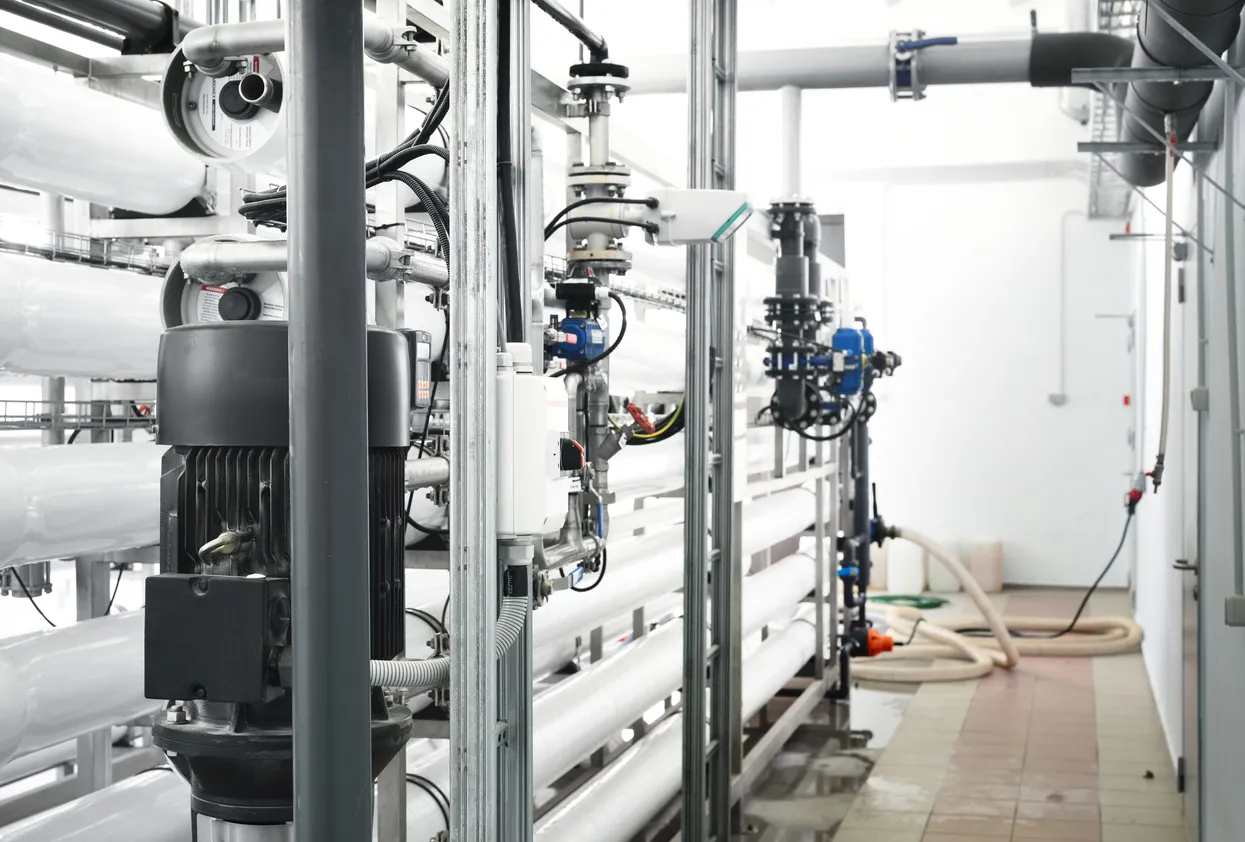
A well-designed system should include a practical pretreatment train. Typical elements include multimedia filtration or cartridge filtration for suspended solids, activated carbon or chemical dechlorination to protect polyamide membranes, softening or antiscalant dosing where hardness and recovery conditions justify it, pressure regulation, safety interlocks and conductivity measurement. For facilities comparing options, the anchor decision is not simply the size of the membrane skid. It is whether the entire system can deliver the required permeate quality under real clinic demand, with stable pressure, acceptable recovery, manageable reject flow and accessible service routines.
Integration is also important. A clinic may use RO water for laboratory equipment, washers, autoclaves, humidifiers, dental areas, rinsing stations, preparation rooms or central utilities. These points do not always require identical quality, so the system may need a central reverse osmosis unit with storage and distribution, or point-of-use polishing depending on risk and demand. Connecting the RO package with a sistema de ósmosis inversa strategy helps define capacity, redundancy and growth instead of treating the unit as an isolated machine.
Key variables
Conductivity, TDS, hardness, alkalinity, chlorides, silica, iron, turbidity, pH, temperature and chlorine residual define the operating risk and pretreatment need.
Operational impact
When these variables are uncontrolled, the clinic may face scaling, membrane fouling, inconsistent rinsing, higher chemical use, more downtime and shorter equipment life.
Engineering criteria and equipment configuration
The engineering phase defines the membranes, pumps, pressure vessels, instrumentation and control logic required for dependable performance.
For projects that require technical sizing, documentation and integration with existing utilities, ingeniería de ósmosis inversa is essential to avoid under-sizing, excessive recovery or insufficient pretreatment.
A well-designed system should include a practical pretreatment train. Typical elements include multimedia filtration or cartridge filtration for suspended solids, activated carbon or chemical dechlorination to protect polyamide membranes, softening or antiscalant dosing where hardness and recovery conditions justify it, pressure regulation, safety interlocks and conductivity measurement. For facilities comparing options, the anchor decision is not simply the size of the membrane skid. It is whether the entire system can deliver the required permeate quality under real clinic demand, with stable pressure, acceptable recovery, manageable reject flow and accessible service routines.
Reverse osmosis for clínicas must be evaluated from the complete water path: source water analysis, pretreatment, membrane selection, hydraulic design, storage, distribution, monitoring, maintenance access and the quality target required by each point of use. In clinical environments, even when the application is not pharmaceutical-grade water, variability in hardness, conductivity, silica, iron, manganese, chlorine or organic load can produce operational problems. Scale can reduce heat transfer in boilers and sterilization support equipment; high dissolved solids can affect rinsing quality; suspended solids can plug filters; and uncontrolled disinfectant residual can shorten membrane life. This is why the design must begin with water characterization and not only with the nominal flow rate.
A well-designed system should include a practical pretreatment train. Typical elements include multimedia filtration or cartridge filtration for suspended solids, activated carbon or chemical dechlorination to protect polyamide membranes, softening or antiscalant dosing where hardness and recovery conditions justify it, pressure regulation, safety interlocks and conductivity measurement. For facilities comparing options, the anchor decision is not simply the size of the membrane skid. It is whether the entire system can deliver the required permeate quality under real clinic demand, with stable pressure, acceptable recovery, manageable reject flow and accessible service routines.
Reverse osmosis for clínicas must be evaluated from the complete water path: source water analysis, pretreatment, membrane selection, hydraulic design, storage, distribution, monitoring, maintenance access and the quality target required by each point of use. In clinical environments, even when the application is not pharmaceutical-grade water, variability in hardness, conductivity, silica, iron, manganese, chlorine or organic load can produce operational problems. Scale can reduce heat transfer in boilers and sterilization support equipment; high dissolved solids can affect rinsing quality; suspended solids can plug filters; and uncontrolled disinfectant residual can shorten membrane life. This is why the design must begin with water characterization and not only with the nominal flow rate.
A well-designed system should include a practical pretreatment train. Typical elements include multimedia filtration or cartridge filtration for suspended solids, activated carbon or chemical dechlorination to protect polyamide membranes, softening or antiscalant dosing where hardness and recovery conditions justify it, pressure regulation, safety interlocks and conductivity measurement. For facilities comparing options, the anchor decision is not simply the size of the membrane skid. It is whether the entire system can deliver the required permeate quality under real clinic demand, with stable pressure, acceptable recovery, manageable reject flow and accessible service routines.
- Feed and permeate flow must be selected based on peak and average demand.
- Recovery percentage must match feed water chemistry to reduce scaling risk.
- Instrumentation should include pressure, flow and conductivity references.
- Controls should protect pumps and membranes from low pressure, dry run, high pressure and quality deviation.
- System layout should allow cartridge replacement, membrane changeout and cleaning access.
Monitoring, service and preventive care
A clinic needs predictable water availability. Operation should include routine readings, trend review, consumable planning and rapid corrective action when values move out of range.
Reverse osmosis for clínicas must be evaluated from the complete water path: source water analysis, pretreatment, membrane selection, hydraulic design, storage, distribution, monitoring, maintenance access and the quality target required by each point of use. In clinical environments, even when the application is not pharmaceutical-grade water, variability in hardness, conductivity, silica, iron, manganese, chlorine or organic load can produce operational problems. Scale can reduce heat transfer in boilers and sterilization support equipment; high dissolved solids can affect rinsing quality; suspended solids can plug filters; and uncontrolled disinfectant residual can shorten membrane life. This is why the design must begin with water characterization and not only with the nominal flow rate.
A well-designed system should include a practical pretreatment train. Typical elements include multimedia filtration or cartridge filtration for suspended solids, activated carbon or chemical dechlorination to protect polyamide membranes, softening or antiscalant dosing where hardness and recovery conditions justify it, pressure regulation, safety interlocks and conductivity measurement. For facilities comparing options, the anchor decision is not simply the size of the membrane skid. It is whether the entire system can deliver the required permeate quality under real clinic demand, with stable pressure, acceptable recovery, manageable reject flow and accessible service routines.
Integration is also important. A clinic may use RO water for laboratory equipment, washers, autoclaves, humidifiers, dental areas, rinsing stations, preparation rooms or central utilities. These points do not always require identical quality, so the system may need a central reverse osmosis unit with storage and distribution, or point-of-use polishing depending on risk and demand. Connecting the RO package with a sistema de ósmosis inversa strategy helps define capacity, redundancy and growth instead of treating the unit as an isolated machine.
A well-designed system should include a practical pretreatment train. Typical elements include multimedia filtration or cartridge filtration for suspended solids, activated carbon or chemical dechlorination to protect polyamide membranes, softening or antiscalant dosing where hardness and recovery conditions justify it, pressure regulation, safety interlocks and conductivity measurement. For facilities comparing options, the anchor decision is not simply the size of the membrane skid. It is whether the entire system can deliver the required permeate quality under real clinic demand, with stable pressure, acceptable recovery, manageable reject flow and accessible service routines.
Integration is also important. A clinic may use RO water for laboratory equipment, washers, autoclaves, humidifiers, dental areas, rinsing stations, preparation rooms or central utilities. These points do not always require identical quality, so the system may need a central reverse osmosis unit with storage and distribution, or point-of-use polishing depending on risk and demand. Connecting the RO package with a sistema de ósmosis inversa strategy helps define capacity, redundancy and growth instead of treating the unit as an isolated machine.
Service routines should include cartridge differential pressure checks, feed and permeate conductivity records, pump pressure verification, leak inspection, tank sanitation review, pretreatment regeneration or media condition checks, membrane normalization and periodic evaluation of rejection percentage. When these tasks are documented, the clinic gains evidence for maintenance planning and avoids reactive replacement of components. The relationship with a qualified servicio de ósmosis inversa helps convert readings into decisions: cleaning, antiscalant adjustment, membrane change, pretreatment correction or hydraulic balancing.
Daily
Visual check, pressure review, conductivity reading and alarm verification.
Monthly
Trend review, filter condition, chemical dosing and pretreatment performance.
Periodic
Membrane evaluation, sanitation, cleaning strategy and capacity confirmation.
Technical buying criteria for clínicas
The right purchase decision compares total performance, operating cost, service support and water quality stability, not only initial equipment price.
Integration is also important. A clinic may use RO water for laboratory equipment, washers, autoclaves, humidifiers, dental areas, rinsing stations, preparation rooms or central utilities. These points do not always require identical quality, so the system may need a central reverse osmosis unit with storage and distribution, or point-of-use polishing depending on risk and demand. Connecting the RO package with a sistema de ósmosis inversa strategy helps define capacity, redundancy and growth instead of treating the unit as an isolated machine.
Reverse osmosis for clínicas must be evaluated from the complete water path: source water analysis, pretreatment, membrane selection, hydraulic design, storage, distribution, monitoring, maintenance access and the quality target required by each point of use. In clinical environments, even when the application is not pharmaceutical-grade water, variability in hardness, conductivity, silica, iron, manganese, chlorine or organic load can produce operational problems. Scale can reduce heat transfer in boilers and sterilization support equipment; high dissolved solids can affect rinsing quality; suspended solids can plug filters; and uncontrolled disinfectant residual can shorten membrane life. This is why the design must begin with water characterization and not only with the nominal flow rate.
Reverse osmosis for clínicas must be evaluated from the complete water path: source water analysis, pretreatment, membrane selection, hydraulic design, storage, distribution, monitoring, maintenance access and the quality target required by each point of use. In clinical environments, even when the application is not pharmaceutical-grade water, variability in hardness, conductivity, silica, iron, manganese, chlorine or organic load can produce operational problems. Scale can reduce heat transfer in boilers and sterilization support equipment; high dissolved solids can affect rinsing quality; suspended solids can plug filters; and uncontrolled disinfectant residual can shorten membrane life. This is why the design must begin with water characterization and not only with the nominal flow rate.
Before selecting a supplier, confirm the expected permeate flow, feed water conditions, required redundancy, storage volume, sanitary design needs, installation footprint, electrical requirements, drain capacity, consumable costs, availability of replacement membranes, documentation and local service response. For a broader supplier category, the page for servicios de ósmosis inversa can support comparison between engineering, installation, maintenance and specialized support.
| Decision factor | What to verify | Why it matters |
|---|---|---|
| Water analysis | Complete feed chemistry | Prevents incorrect pretreatment |
| Capacity | Peak demand and storage | Avoids shortages during clinical operation |
| Instrumentation | Pressure, flow, conductivity | Supports diagnosis and maintenance |
| Service plan | Preventive visits and spare parts | Reduces downtime risk |
Heat transfer fluids for data centers, HVAC and industrial applications
Omega Chemicals offers solutions such as DOWFROST™ LC, KOSTChill PG XL, OMEGA DO LC30 and OMEGA DO LC25 for reliable thermal performance in critical applications.
- DOWFROST™ LC for data centers.
- KOSTChill PG XL for HVAC and computing.
- PG fluids for heat transfer.
- OMEGA DO LC30 PG 30 heat transfer fluid.
- OMEGA DO LC25 for industrial engines.
- Guidance in selecting the right product.
Frequently asked questions about reverse osmosis for clínicas
These questions help purchasing, maintenance and facility teams evaluate the technical scope of a reverse osmosis project.
Additional technical note
A well-designed system should include a practical pretreatment train. Typical elements include multimedia filtration or cartridge filtration for suspended solids, activated carbon or chemical dechlorination to protect polyamide membranes, softening or antiscalant dosing where hardness and recovery conditions justify it, pressure regulation, safety interlocks and conductivity measurement. For facilities comparing options, the anchor decision is not simply the size of the membrane skid. It is whether the entire system can deliver the required permeate quality under real clinic demand, with stable pressure, acceptable recovery, manageable reject flow and accessible service routines.
A well-designed system should include a practical pretreatment train. Typical elements include multimedia filtration or cartridge filtration for suspended solids, activated carbon or chemical dechlorination to protect polyamide membranes, softening or antiscalant dosing where hardness and recovery conditions justify it, pressure regulation, safety interlocks and conductivity measurement. For facilities comparing options, the anchor decision is not simply the size of the membrane skid. It is whether the entire system can deliver the required permeate quality under real clinic demand, with stable pressure, acceptable recovery, manageable reject flow and accessible service routines.
For purchasing decisions, reverse osmosis clínicas projects should be reviewed as a complete water utility. The best result comes from combining water analysis, engineering, installation quality, documentation, training and preventive maintenance. This makes the system easier to operate, easier to troubleshoot and more reliable for daily clinical service.

Temas que te pueden interesar
Estos productos podrian interesarte