Productos
Segunda mano
Servicios
Reverse osmosis systems for empacadoras de alimentos


Reverse osmosis content guide for food packaging plants
Use this index to review the commercial value, engineering criteria, pretreatment, operation, validation and FAQ for reverse osmosis empacadoras de alimentos.
Reverse osmosis for food packaging plants that need consistent, safe and controllable water quality
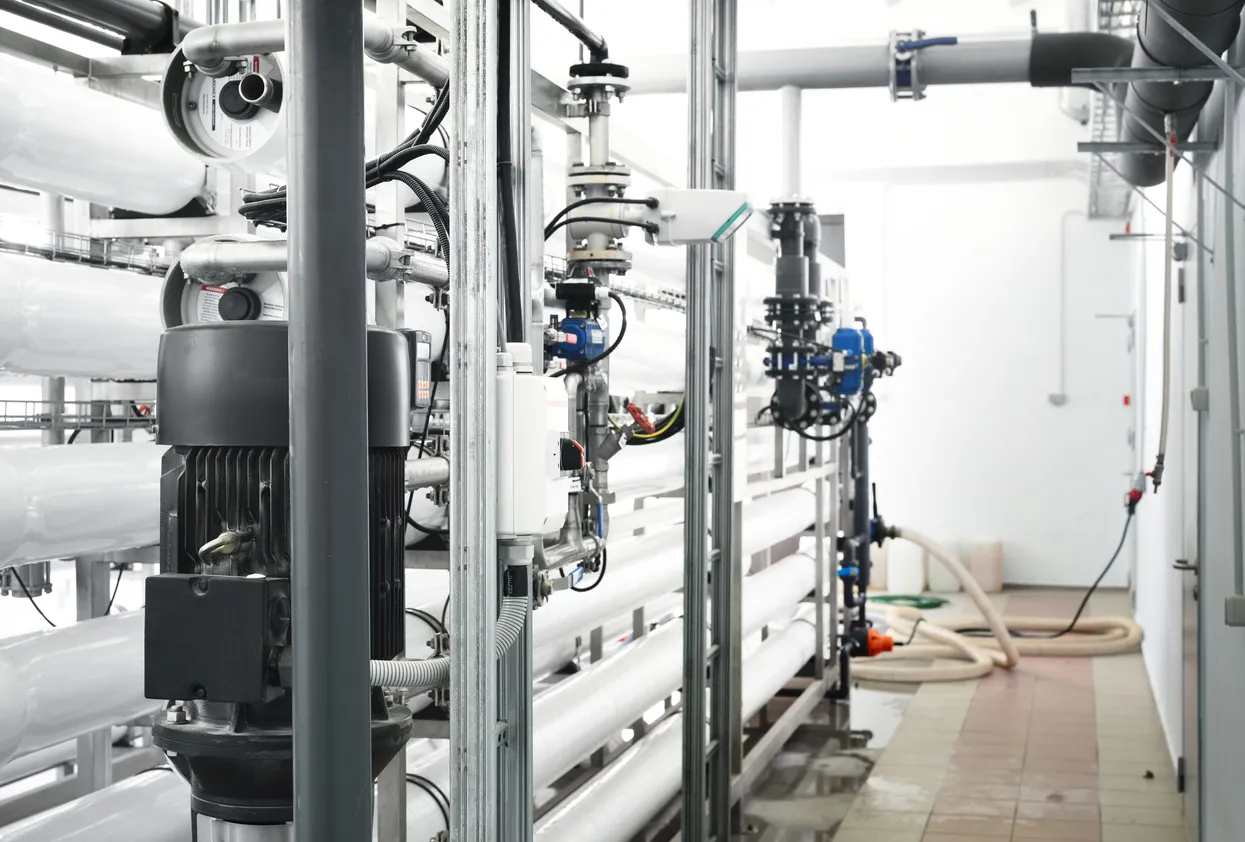
For empacadoras de alimentos, water is not only a utility; it influences washing, rinsing, ingredient contact, sanitation, steam generation, cooling circuits and final product protection. A properly engineered reverse osmosis system helps reduce dissolved salts, hardness, silica, chlorides, nitrates, conductivity variability and other ionic load that can affect process stability. This page explains how reverse osmosis empacadoras de alimentos can be planned as an industrial asset, not just as a filtration skid.
The goal is to connect technical design with commercial decision-making. A food packaging operation usually needs reliable permeate, predictable recovery, controlled pressure, stable flow, clear instrumentation and service support. When the system is sized only by nominal capacity, the plant can experience premature membrane fouling, sanitation difficulties, unstable conductivity or unnecessary downtime. When the system is specified through engineering, operating data and water analysis, reverse osmosis becomes a tool for continuity, product protection and cost control.
Where RO supports food packaging
- Ingredient water preparation and dilution control.
- Rinsing, washing and final-contact utilities.
- CIP make-up, boilers, humidification and cooling loops.
- Reduction of scaling potential in heat exchangers and nozzles.
- Support for documented quality programs and operational traceability.
Estos productos podrian interesarte

Reverse osmosis content guide for food packaging plants
Use this index to review the commercial value, engineering criteria, pretreatment, operation, validation and FAQ for reverse osmosis empacadoras de alimentos.
Define water quality objectives before selecting equipment
In food packaging, the most important design question is not the size of the skid; it is the permeate quality required by each process. Reverse osmosis can reduce dissolved solids, but the target must be translated into measurable parameters: conductivity, TDS, hardness leakage, silica, alkalinity, chloride, microbiological control strategy, pH adjustment and required flow during peak production.
For reverse osmosis empacadoras de alimentos, the feed water analysis must be reviewed together with production use points. A rinsing line may tolerate different conductivity than ingredient contact water, while boiler feed or humidification may require additional polishing after RO. The engineering evaluation should identify daily demand, instantaneous peak flow, storage volume, recirculation, sanitary design requirements and the consequences of off-spec water. This avoids overpromising with a generic system and helps define the correct pretreatment and membrane array.
Quality objectives should also consider seasonal variation. Wells, municipal supply and blended sources can change in temperature, hardness, alkalinity, turbidity, organic load and chlorine residual. If the RO is designed using only an average analysis, the plant may face scaling risk or low permeate production during warm months, high-demand periods or changes in supply. A robust specification includes design margins, antiscalant compatibility, cartridge filtration rating, ORP control, low-pressure protection, high-pressure shutdown and instrumentation that allows operators to confirm that the system is performing as intended.
Typical quality indicators
Conductivity, permeate flow, concentrate flow, differential pressure, normalized permeate flow, rejection percentage, pH, temperature and oxidation-reduction potential.
Decision value
Clear targets help compare proposals, define guarantees, plan maintenance and avoid buying a system that meets flow but fails quality under real plant conditions.
The buyer should request that the proposal explains the relationship between feed water chemistry, recovery rate and expected permeate quality. In food packaging operations, the cost of an incorrect selection is not limited to replacing membranes; it can include production interruptions, product quality deviations, excessive chemical use, labor for troubleshooting and higher water waste.
Return to index ↑Engineer the configuration around pretreatment, membranes and controls
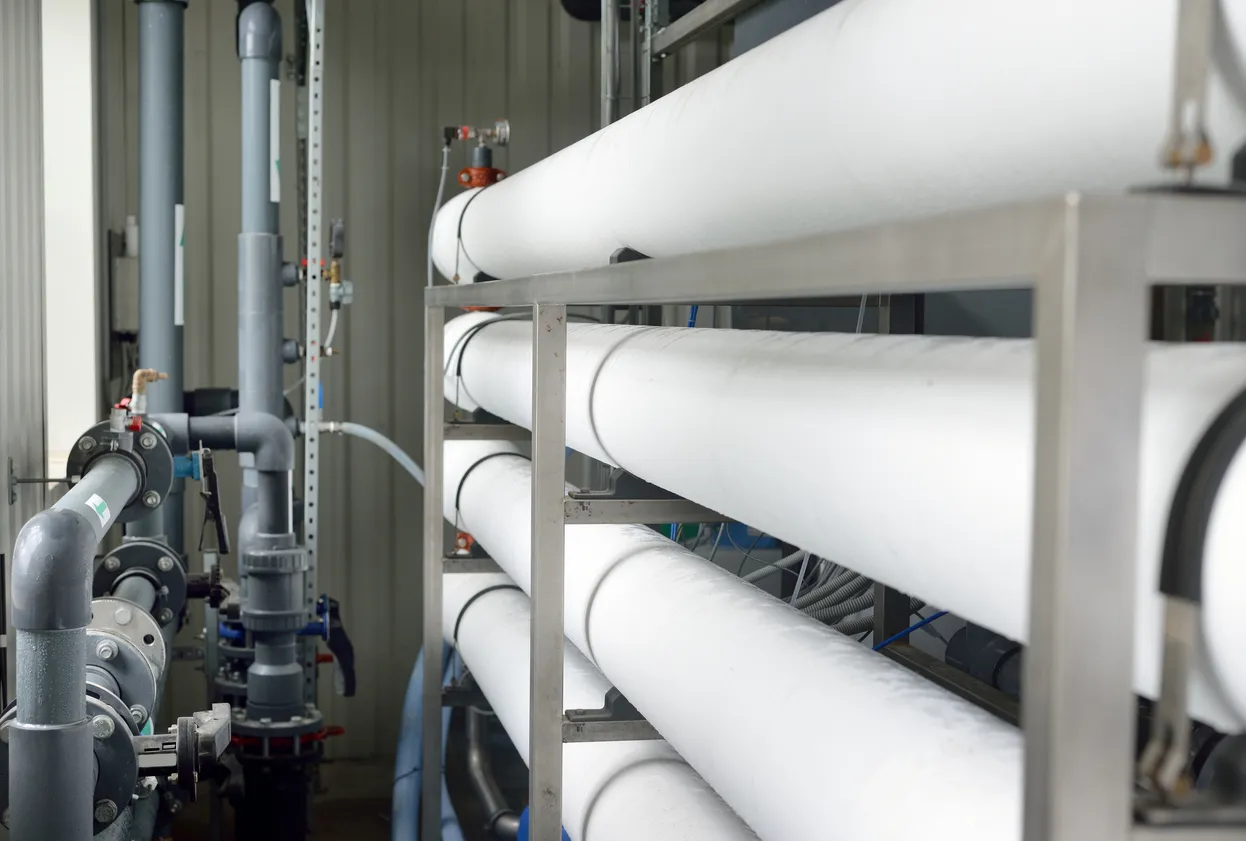
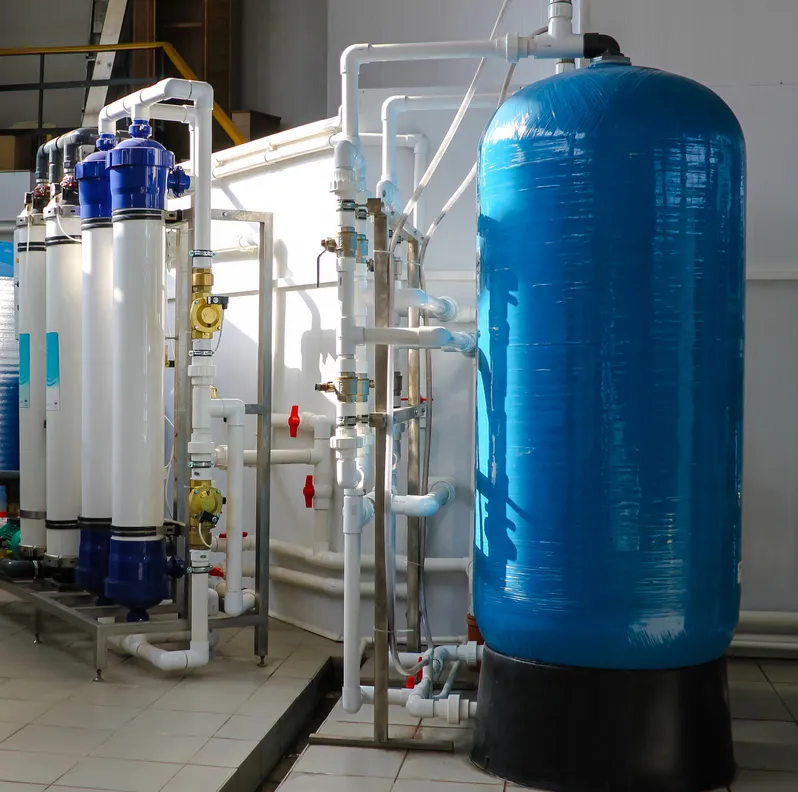
An industrial reverse osmosis system for food packaging should be reviewed as a complete water train. Pretreatment protects the membranes; membranes define separation; controls protect the asset; storage and distribution preserve quality after treatment.
Pretreatment is the first purchasing filter
Pretreatment may include multimedia filtration, activated carbon, softening, antiscalant dosing, dechlorination, cartridge filtration, pH adjustment or ultrafiltration depending on the water source. The correct combination depends on turbidity, silt density index, hardness, iron, manganese, organics, chlorine, microbiological risk and operational discipline. In empacadoras de alimentos, sanitation procedures and cleaning chemicals can influence water areas, so material compatibility and isolation valves must also be considered.
Membrane selection and array design
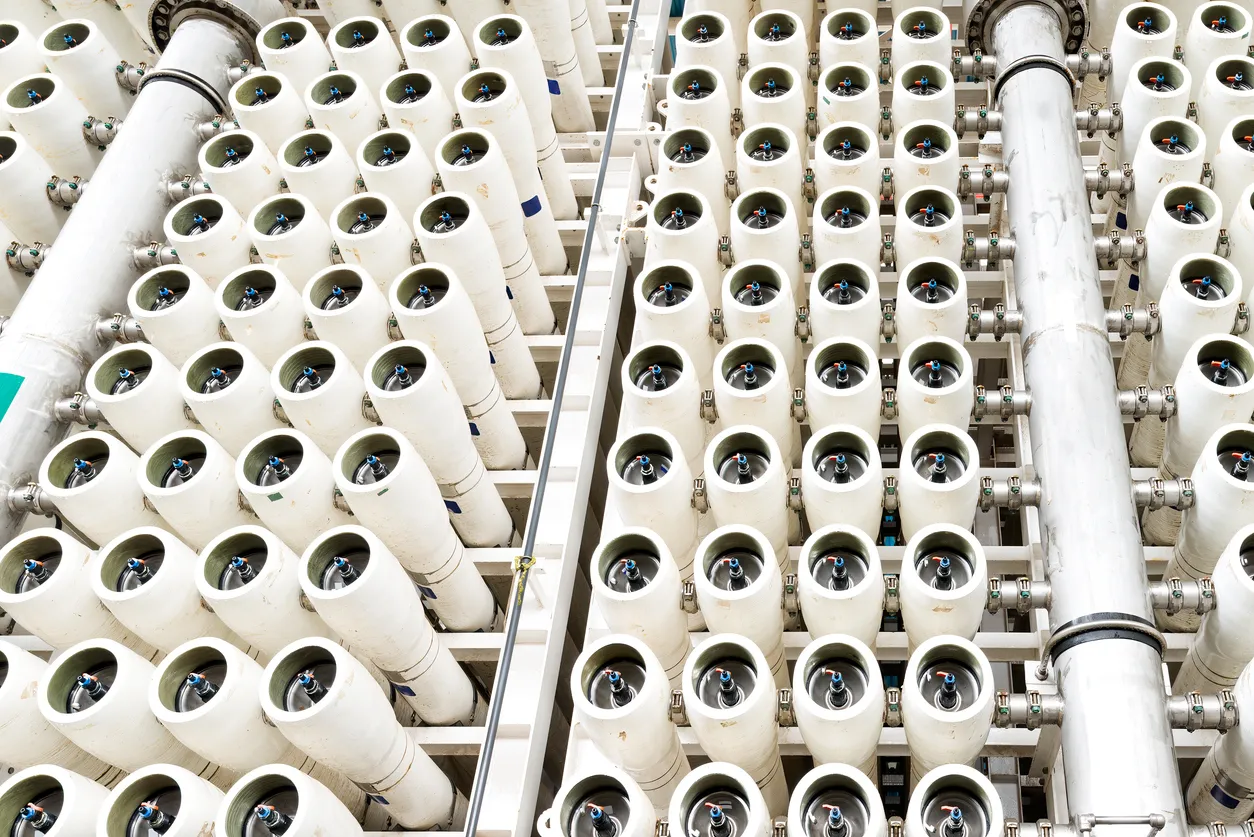
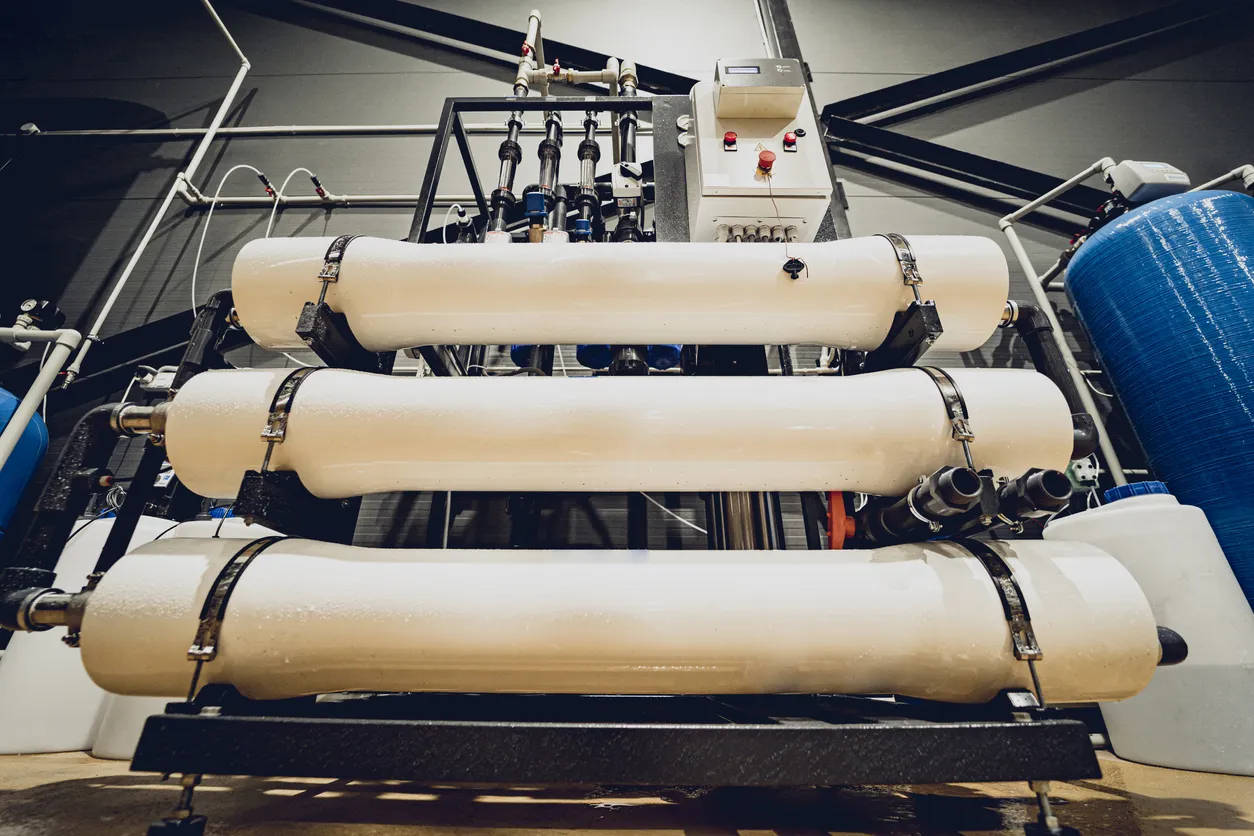
Membrane selection should consider salinity, required rejection, pressure limits, cleaning frequency, recovery target and fouling tendency. The array must balance permeate demand with concentrate flow so that scaling and concentration polarization remain controlled. Designs that operate at excessive recovery to reduce reject water may create higher scaling risk, more frequent cleanings and shorter membrane life. A good engineering proposal explains projected flows per vessel, pressure requirements, expected rejection and how performance will be normalized over time.
Automation and instrumentation
Controls should include permeate and concentrate flowmeters, conductivity meters, pressure transmitters, differential pressure, low-pressure protection, high-pressure trips, level integration, automatic flush logic and alarm history. These components are not decorative; they allow the maintenance team to detect fouling, scaling, pump issues and valve problems before quality is affected. Digital records also support internal quality reviews and continuous improvement programs.
When the plant compares suppliers, it should evaluate whether the proposal includes mechanical drawings, electrical requirements, consumable strategy, service access, CIP compatibility and documentation. The lowest purchase price can be misleading if the system lacks instrumentation, uses undersized pretreatment or omits the accessories needed for safe operation.
Return to index ↑Operate for continuity, hygiene and predictable membrane life
After installation, the system must be operated with a consistent routine. Reverse osmosis is highly dependable when pressure, flow, water chemistry and cleaning discipline are controlled.
Food packaging plants often run multiple shifts, so operator clarity matters. Daily logs should include feed pressure, concentrate pressure, permeate pressure, feed conductivity, permeate conductivity, temperature, permeate flow, concentrate flow and tank level. These readings allow normalized performance trends to be interpreted instead of reacting only when alarms appear. If permeate flow drops at the same pressure, fouling may be developing; if differential pressure increases, particulate or biological loading may be present; if rejection decreases, membrane damage, oxidation or seal issues may need investigation.
Preventive maintenance should cover cartridge filter replacement, calibration of conductivity instruments, inspection of chemical dosing, verification of softener or carbon performance, pump vibration review, valve actuation, leak checks and CIP readiness. In a packaging plant, an RO system should not be treated as a black box. It should be part of the quality and maintenance routine because its performance influences utilities, wash water, production stability and resource consumption.
Daily
Record pressure, flows, conductivity, tank status and alarms. Confirm no abnormal noise, leaks or pressure oscillation.
Weekly
Review trends, check prefilter pressure drop, chemical levels, softener cycles and instrument consistency.
Monthly
Normalize data, evaluate cleaning need, inspect pretreatment media, verify safety devices and document corrective actions.
Operational success also depends on communication between production, maintenance and quality teams. If production increases demand without evaluating RO capacity, permeate tanks can be depleted and the system may cycle aggressively. If sanitation changes chemicals without checking compatibility, membranes or elastomers may be exposed to risk. If water source changes are not communicated, recovery and antiscalant dosage may be inadequate. This is why service and engineering support are part of the buying decision.
Return to index ↑How to evaluate a reverse osmosis proposal for empacadoras de alimentos
A good proposal should make the buying decision easier by connecting process requirements, water chemistry, equipment configuration, operational cost and service support.
When reviewing options, ask for more than nominal gallons per minute. The proposal should state feed water assumptions, design temperature, recovery, number of stages, vessel configuration, membrane model, expected permeate conductivity, reject flow, pump horsepower, pretreatment scope, controls, automation and required maintenance. It should also explain what is excluded, such as civil works, electrical installation, storage tanks, distribution pumps, instrumentation calibration or CIP equipment.
For reverse osmosis empacadoras de alimentos, the technical value is strongest when the supplier understands food plant constraints: limited downtime windows, hygiene expectations, variability in production schedules, documented quality requirements and the cost of water-related deviations. The buyer should prefer proposals that include serviceability, spare parts availability, startup support and operational training. A system that operators understand is more likely to maintain quality and membrane life.
Key purchase criteria
- Permeate quality target expressed in measurable parameters.
- Pretreatment matched to actual feed water and fouling risks.
- Instrumentation sufficient for trend analysis and troubleshooting.
- Membrane array that balances recovery and scaling control.
- Documentation for operation, maintenance and cleaning procedures.
- Support for commissioning, service visits and future optimization.
Internal resources can help structure the evaluation: review what a sistema de ósmosis inversa includes, compare the role of ingeniería de ósmosis inversa, understand the scope of servicio de ósmosis inversa, and explore the category of servicios de ósmosis inversa.
The final decision should consider lifecycle cost, not only acquisition cost. Water waste, energy consumption, membrane replacement, cleaning chemicals, downtime risk and labor all influence the real cost of ownership. A properly selected RO system can support quality, reduce scaling, stabilize operations and help the plant make decisions based on data rather than emergency maintenance.
Return to index ↑
Heat transfer fluids for data centers, HVAC and industrial applications
Omega Chemicals offers solutions such as DOWFROST™ LC, KOSTChill PG XL, OMEGA DO LC30 and OMEGA DO LC25 for reliable thermal performance in critical applications.
- DOWFROST™ LC for data centers.
- KOSTChill PG XL for HVAC and computing.
- PG fluids for heat transfer.
- OMEGA DO LC30 PG 30 heat transfer fluid.
- OMEGA DO LC25 for industrial engines.
- Guidance in selecting the right product.
Reverse osmosis content guide for food packaging plants
Use this index to review the commercial value, engineering criteria, pretreatment, operation, validation and FAQ for reverse osmosis empacadoras de alimentos.
Frequently asked questions about reverse osmosis for food packaging plants
A food packaging facility should view reverse osmosis as part of a broader water quality strategy. The best results come from engineering, monitoring, maintenance and service working together. This reduces uncertainty, supports production continuity and helps the plant maintain stable water characteristics for sensitive operations.
Return to index ↑
Temas que te pueden interesar
Estos productos podrian interesarte