Productos
Segunda mano
Servicios
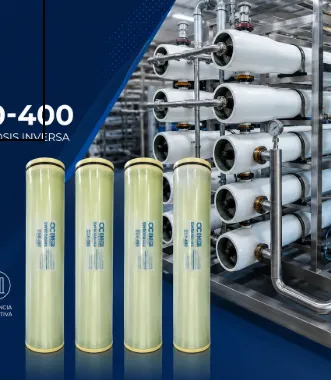
Reverse osmosis systems for rastros


Reverse osmosis for rastros with stable water quality, lower scaling risk and stronger process control
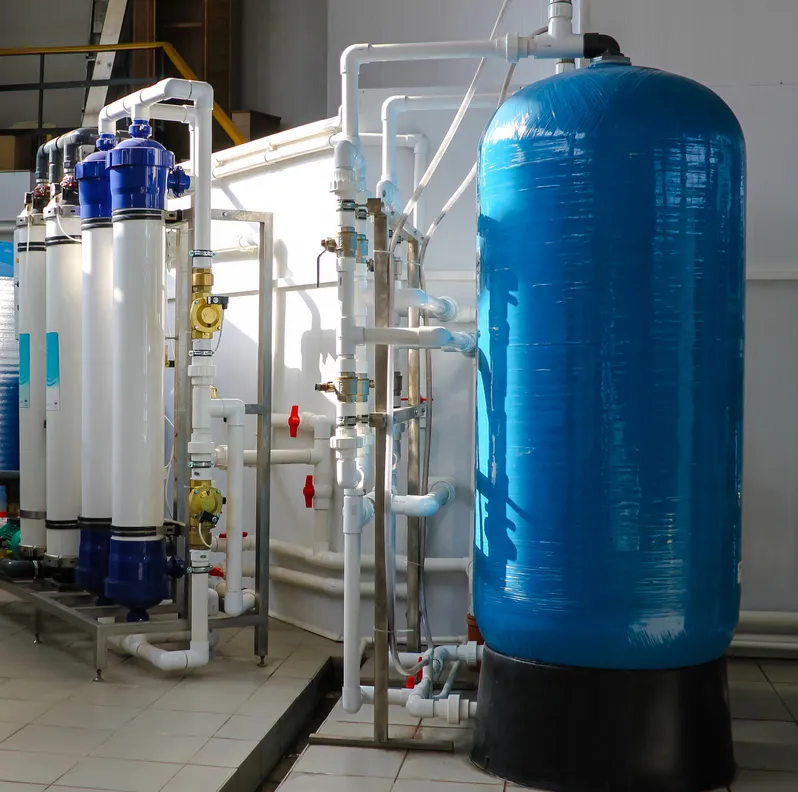
In rastros, water is not only a utility: it supports washing, sanitation, boiler make-up, cooling loops, product-contact cleaning and general plant hygiene. A well-engineered reverse osmosis system helps reduce dissolved salts, hardness, chlorides and conductivity so the facility can operate with more predictable quality across demanding production shifts.
The commercial value of reverse osmosis rastros is measured in fewer quality deviations, easier cleaning routines, better protection for downstream equipment and a clearer basis for audits. Instead of treating the RO skid as an isolated machine, the best projects evaluate source water, pretreatment, membrane selection, instrumentation, permeate storage, distribution and service strategy as one integrated water platform.
A project can start by reviewing the existing sistema de ósmosis inversa, validating the design basis through ingeniería de ósmosis inversa and defining the ongoing servicio de ósmosis inversa required to keep performance stable.
What the RO system should solve
- 01Variable incoming water quality that affects washing, sanitation, boiler operation or cooling circuits.
- 02High hardness, alkalinity, silica or conductivity that can increase chemical consumption and maintenance frequency.
- 03Lack of documented operating data for audits, preventive maintenance and purchasing decisions.
For rastros, the strongest reverse osmosis proposal is not the lowest-priced skid; it is the configuration that protects sanitary operation, equipment reliability, water cost and continuity of production with verifiable performance data.
Estos productos podrian interesarte
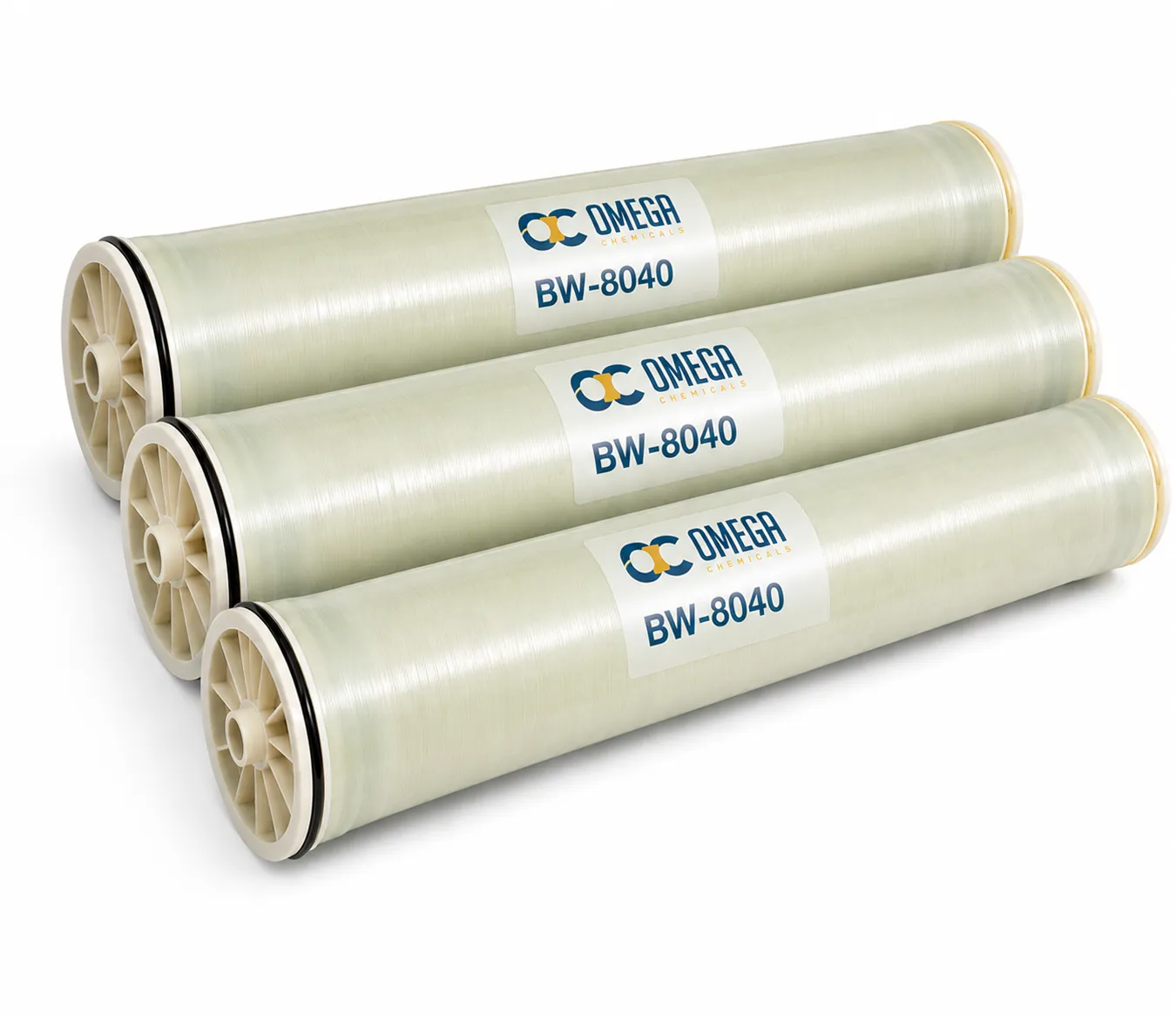
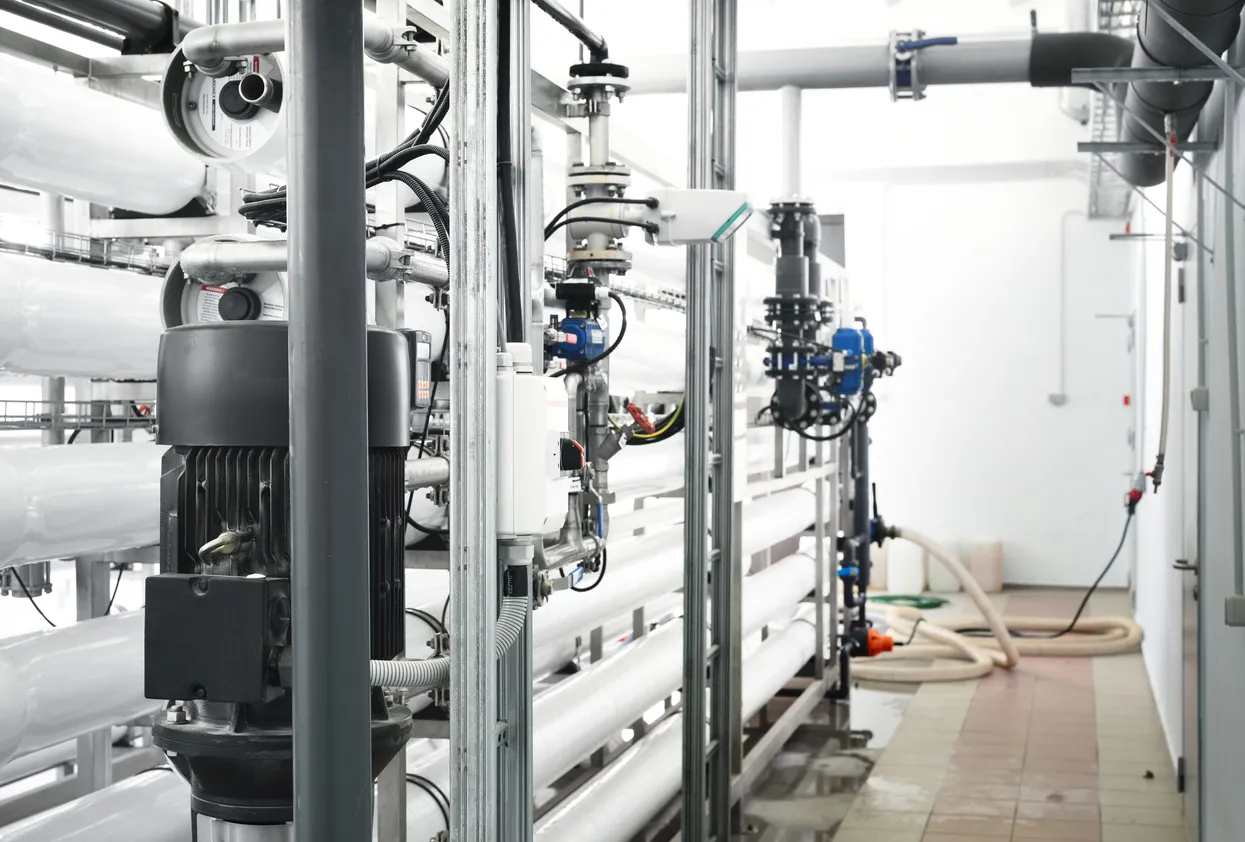
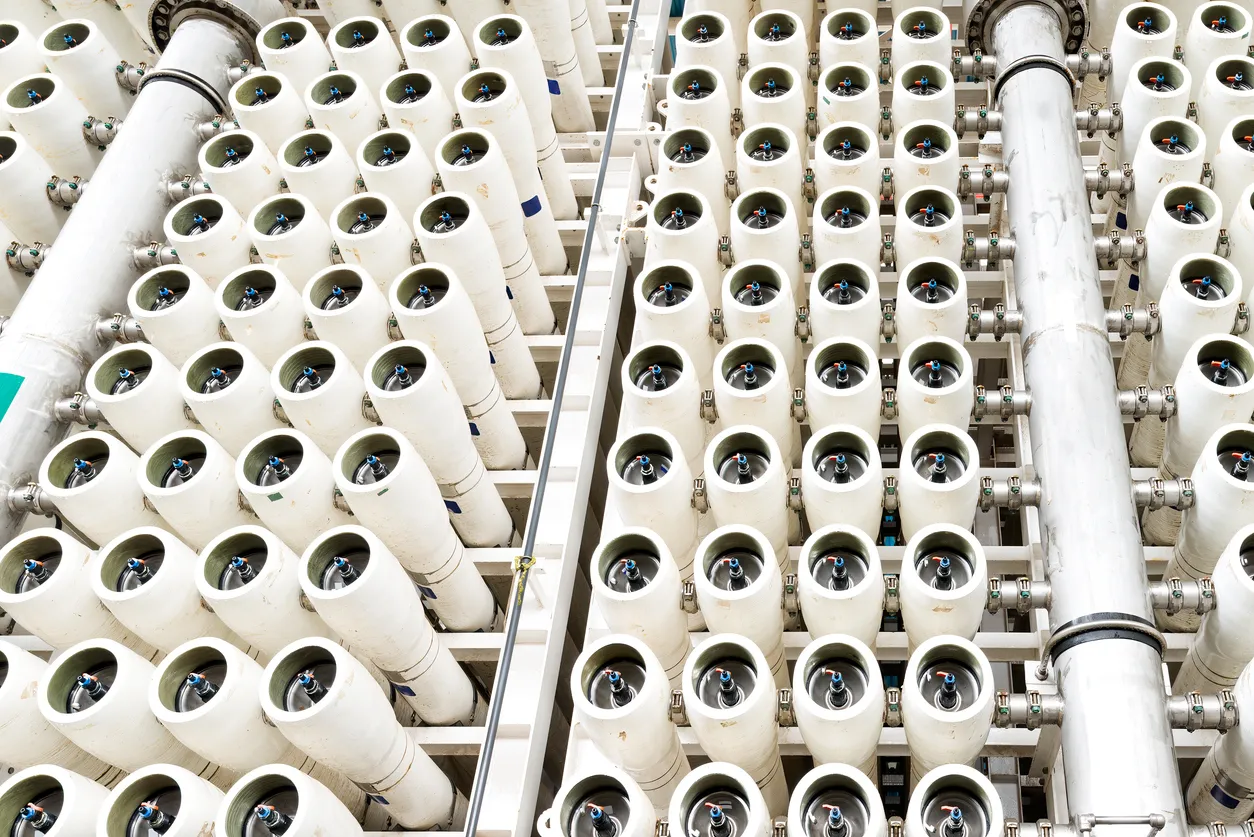
Quality goals for reverse osmosis in rastros
In a slaughterhouse or meat processing environment, the RO design must consider where permeate will be used. Water for final rinsing, sanitation solution preparation, boiler make-up, ice systems, humidification, cooling circuits or laboratory support may require different conductivity targets and different controls. The correct approach is to define quality by use point, not by a generic permeate claim.
Reverse osmosis reduces dissolved ions that are normally responsible for scaling, spotting, corrosion acceleration and unstable chemical behavior. In rastros, this can help standardize cleaning practices and reduce the variability that operators see when source water changes seasonally. A strong project should define feed analysis, permeate objective, recovery percentage, expected rejection, cleaning triggers and monitoring variables before equipment is purchased.
Conductivity and TDS
These values show how much dissolved material remains in the water. For reverse osmosis rastros, stable conductivity helps operators compare shifts, identify membrane drift and confirm whether permeate is suitable for sensitive utilities.
Hardness and alkalinity
Calcium, magnesium and alkalinity influence scale formation in boilers, heat exchangers and wash water systems. Lower hardness can reduce deposit formation and make chemical programs easier to control.
Chlorides and corrosion risk
Chloride concentration can affect stainless steel components, piping and heated surfaces. Reverse osmosis can lower chlorides, but materials of construction and sanitation chemicals must also be reviewed.
Silica and scaling control
Silica is important when recovery is high or when water is heated. It can create difficult deposits, so antiscalant selection, recovery limits and cleaning schedules should be defined with engineering support.
Decision point
The buyer should request a design basis that connects laboratory water analysis with actual plant demand. The objective is not only to produce permeate, but to deliver a water quality profile that supports hygiene, equipment life, energy efficiency and repeatable plant operation.
How to engineer the RO system for a rastro
A reverse osmosis system for rastros should be engineered from the complete operating context: incoming water variability, sanitary requirements, production schedule, cleaning practices, utility demand, available footprint, storage requirements and maintenance capacity. A plant that runs long shifts or has frequent sanitation cycles may need larger permeate storage, variable-speed pumps, redundancy in critical components and instrumentation that lets supervisors see changes before they become failures.
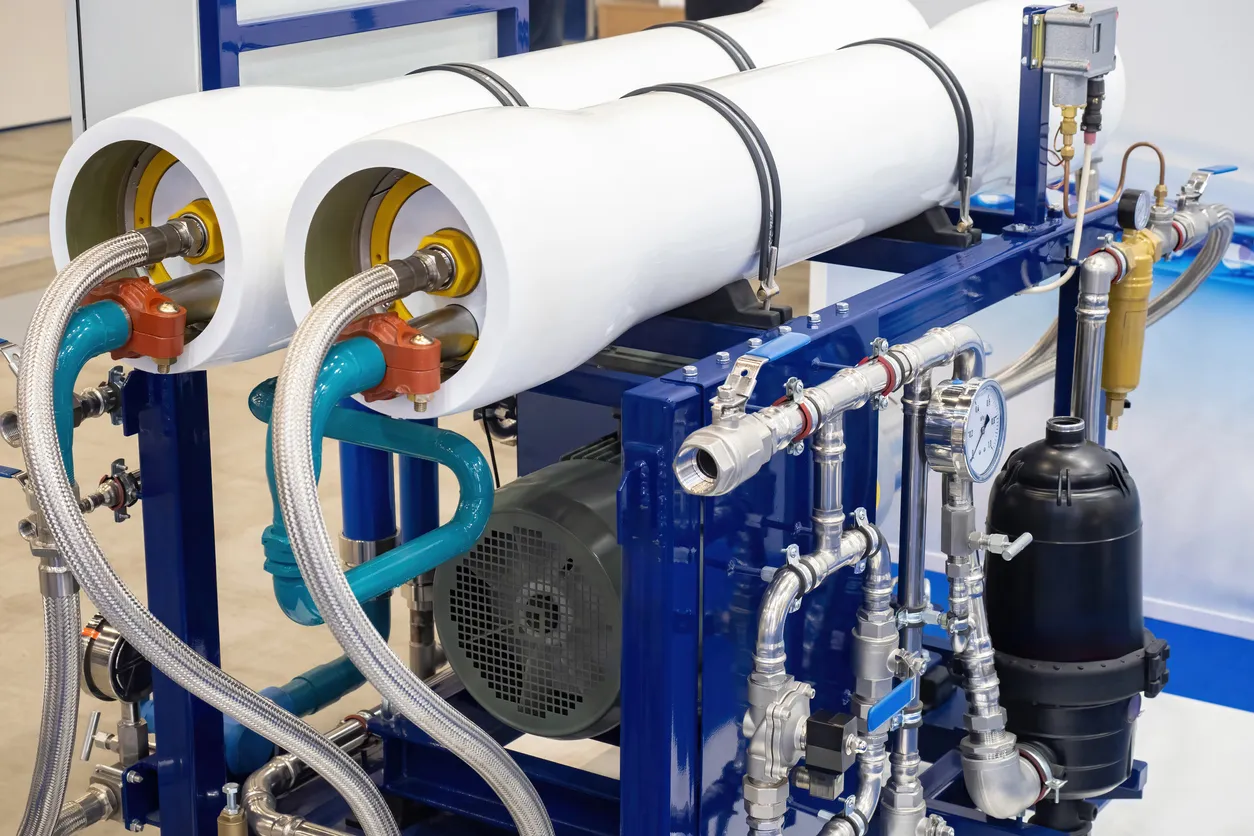
The technical proposal should include pretreatment, membrane array, high-pressure pump, instrumentation, automation, electrical protection, chemical dosing, CIP provisions, permeate tank, recirculation, distribution and service access. This is where ingeniería de ósmosis inversa becomes important: it translates water analysis and production requirements into a system that can be operated, cleaned and documented without interrupting the plant unnecessarily.
Recommended design elements
Pretreatment
Multimedia filtration, softening, cartridge filtration, dechlorination, antiscalant dosing or other barriers according to feed water.
Instrumentation
Pressure, flow, conductivity, ORP, pH and tank level signals to support diagnostics and maintenance decisions.
Automation
Start-stop logic, low-pressure protection, high-conductivity alarms, flush cycles and operating hour tracking.
Serviceability
Accessible membranes, valves, sampling ports, drains and CIP connections for faster service work.
Flow profile
Peak demand should be compared with average demand. A system sized only for daily volume can fail during sanitation peaks; a system sized only for peak flow may operate inefficiently. Storage and recirculation often solve this balance.
Recovery limit
Recovery affects concentrate volume, scaling risk and operating cost. The best recovery is not always the highest; it is the one that preserves membrane life and avoids frequent chemical cleaning.
Redundancy
Rastros need operational continuity. Depending on criticality, the project can include duplex pumps, bypass arrangements, spare membranes or service agreements that reduce downtime exposure.
Operating controls that protect quality and uptime
The value of reverse osmosis in rastros depends on daily discipline. Operators need clear setpoints, sampling routines, alarm responses and maintenance triggers. A system with good hardware but poor operating control can lose rejection, suffer fouling, consume more chemicals and deliver inconsistent water quality to the plant.
Daily operating log
Record feed pressure, concentrate pressure, permeate flow, reject flow, feed conductivity, permeate conductivity, temperature, tank level and operating hours. Trend data allows the plant to distinguish between normal temperature effects and real membrane fouling. This is especially useful when source water changes during rainy seasons or when production demand increases.
Sanitation-compatible design
Rastros use aggressive cleaning and disinfection programs around the plant. The RO system should be located and protected so sprays, chemicals, heat and washdown practices do not damage controls or instrumentation. Electrical panels, instruments, pumps and membranes must be accessible while remaining protected from harsh operating areas.
Preventive service plan
Cartridge filters, softeners, carbon beds, dosing pumps, antiscalant tanks, valves and conductivity probes require scheduled inspection. The servicio de ósmosis inversa should include performance review, normalization of data, membrane cleaning criteria, spare parts planning and corrective actions before permeate quality affects operations.
Practical risk control
For reverse osmosis rastros, the key operating risk is not only membrane failure; it is the slow loss of performance that becomes visible only when boiler scale, sanitation inconsistency, high conductivity alarms or unplanned downtime appear.
How to evaluate proposals for reverse osmosis rastros
When comparing suppliers, the buyer should look beyond nominal gallons per day. The proposal must prove that the system can reach the required permeate quality under real feed water conditions, with a realistic recovery rate, sufficient pretreatment and a clear maintenance plan. For a rastro, the wrong purchase can create expensive problems: unstable sanitation water, boiler scaling, excessive filter changes, frequent membrane cleaning or production interruptions.
A structured evaluation should request drawings, process flow diagram, instrumentation list, membrane model, pump data, control philosophy, pretreatment sizing, expected permeate conductivity, estimated chemical consumption, spare part recommendations and service scope. It should also clarify whether the supplier can support installation, commissioning, operator training and future maintenance through servicios de ósmosis inversa.
| Evaluation item | What to confirm | Why it matters |
|---|---|---|
| Water analysis | Complete feed profile, not only TDS | Defines pretreatment, recovery and scaling limits |
| Demand profile | Peak, average and sanitation-cycle consumption | Prevents undersized storage or inefficient oversizing |
| Membrane design | Array, flux, recovery and rejection assumptions | Impacts membrane life and cleaning frequency |
| Controls | Alarms, flushing, conductivity and pressure monitoring | Supports quick response and documented operation |
| Service plan | Preventive visits, spares and cleaning support | Reduces downtime and protects water quality |
When a new system is justified
A new sistema de ósmosis inversa is usually justified when existing equipment cannot meet conductivity targets, downtime is frequent, feed water has changed or production expansion requires more stable permeate capacity.
When engineering review is better first
If the plant already has an RO system, an engineering review can identify whether the issue is pretreatment, membrane condition, scaling, instrumentation, operating practice or insufficient service rather than capacity alone.
Extended technical checklist for project approval
Before approving a reverse osmosis project for rastros, the purchasing team, maintenance team and operations team should agree on the measurable success criteria. The project should document the target permeate conductivity, maximum acceptable pressure differential, expected normalized permeate flow, pretreatment pressure limits, cartridge filter replacement trigger, cleaning trigger, recovery range, antiscalant dosage basis, alarm logic and responsibilities for daily inspection.
The team should also map every use point connected to the permeate line. Some use points may tolerate higher conductivity while others may require tighter control. Combining all applications without reviewing the most sensitive use point can lead to an under-specified system. On the other hand, designing every use point to the most demanding requirement can increase cost unnecessarily. Good engineering separates requirements and evaluates whether blending, storage, recirculation or point-of-use polishing is required.
Finally, the proposal should include commissioning data. At start-up, the supplier should record feed conductivity, permeate conductivity, concentrate flow, permeate flow, feed pressure, interstage pressure when available, concentrate pressure, temperature and recovery. These values become the baseline for future maintenance. Without baseline data, the plant cannot determine whether a change in performance is caused by membrane fouling, feed temperature, pressure variation, instrument error or actual membrane damage.
Heat transfer fluids for data centers, HVAC and industrial applications
Omega Chemicals offers solutions such as DOWFROST™ LC, KOSTChill PG XL, OMEGA DO LC30 and OMEGA DO LC25 for reliable thermal performance in critical applications.
- DOWFROST™ LC for data centers.
- KOSTChill PG XL for HVAC and computing.
- PG fluids for heat transfer.
- OMEGA DO LC30 PG 30 heat transfer fluid.
- OMEGA DO LC25 for industrial engines.
- Guidance in selecting the right product.
Frequently asked questions about reverse osmosis for rastros
These questions help clarify how a rastro should evaluate reverse osmosis, what variables influence performance and why engineering, monitoring and service are as important as the equipment itself.
Is reverse osmosis necessary for every rastro?
Not always. The decision depends on source water quality, sanitation needs, boiler requirements, cooling system sensitivity, product-contact processes and the cost of current water-related problems. When hardness, conductivity, chlorides or silica are affecting operation, reverse osmosis can provide a more controlled water quality platform.
What water analysis is needed before sizing the system?
A complete analysis should include pH, conductivity, TDS, hardness, alkalinity, chlorides, sulfates, silica, iron, manganese, turbidity, SDI when relevant, microbiological considerations and any contaminants linked to the local source. This information supports pretreatment design and membrane recovery limits.
Can RO permeate be used for sanitation chemical preparation?
In many cases, lower mineral content can improve consistency in cleaning solution preparation, but the plant must validate compatibility with its sanitation chemicals, target concentrations, materials and hygiene procedures. RO should be integrated into the sanitation program rather than treated as a standalone improvement.
What causes membrane fouling in rastros?
Common causes include inadequate pretreatment, chlorine exposure when membranes are not compatible, scaling from excessive recovery, organic loading, biofouling, iron, suspended solids and poor filter maintenance. Monitoring pressure differential, normalized flow and permeate conductivity helps identify the problem early.
How often should the system receive service?
Frequency depends on feed water and operating hours, but the service plan should include routine inspection, cartridge filter changes, instrument calibration checks, pretreatment review, data analysis and membrane cleaning when performance triggers are reached. For critical operations, scheduled service reduces downtime risk.
What should be included in a professional proposal?
A strong proposal should include design flow, expected permeate quality, pretreatment scope, membrane configuration, pump specifications, instrumentation, automation, storage assumptions, installation requirements, commissioning plan, service scope and references to the selected sistema de ósmosis inversa and supporting engineering.

Temas que te pueden interesar
Estos productos podrian interesarte