Productos
Segunda mano
Servicios
Reverse osmosis systems for procesadoras de alimentos


Reverse osmosis for food processing plants that need stable, reliable and high-purity water.
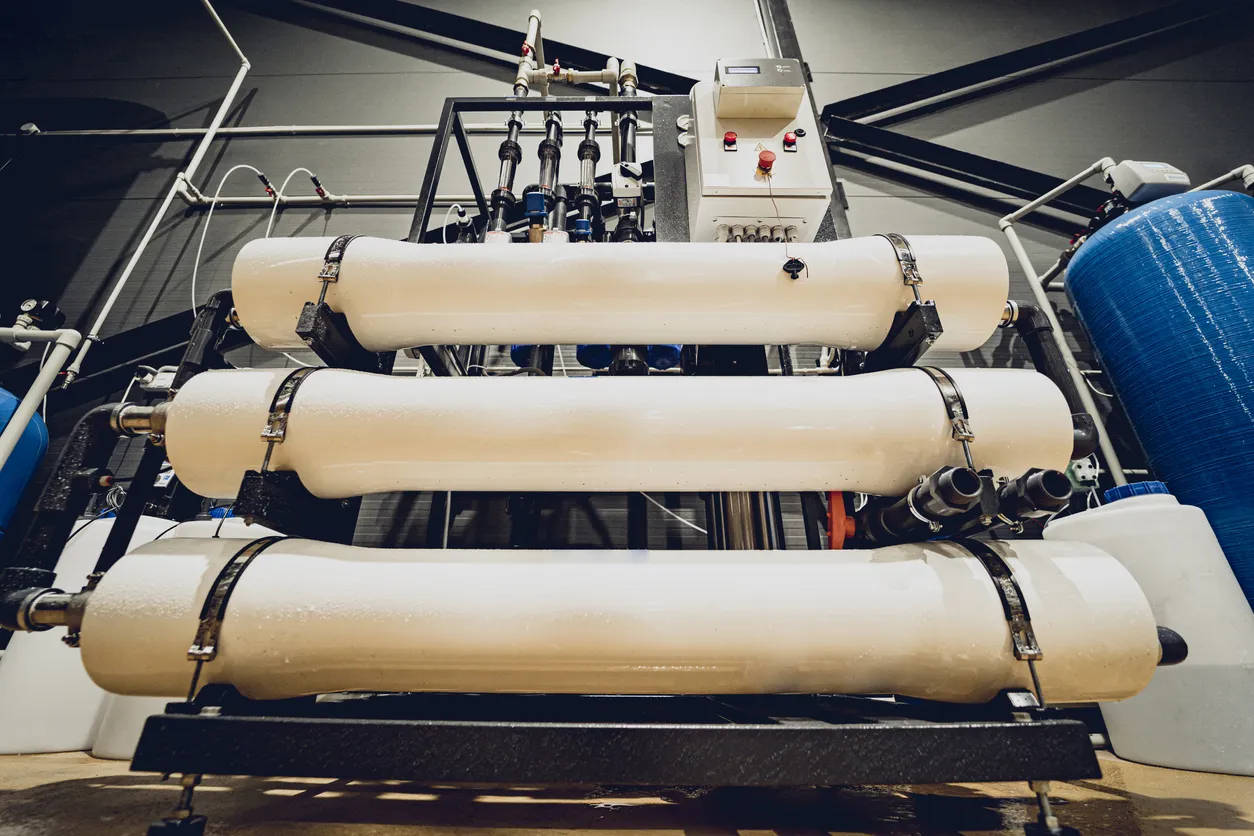
In procesadoras de alimentos, water is not only a service utility; it can influence product consistency, cleaning performance, steam quality, rinsing results, equipment protection and the repeatability of daily production. A well-engineered reverse osmosis system helps reduce dissolved solids, control conductivity, improve feedwater quality for downstream polishing and support a more predictable process environment.
This content is focused on reverse osmosis procesadoras de alimentos applications where the buyer needs a practical technical framework before selecting equipment, engineering support or specialized service. The objective is to explain what matters before investing: raw water characterization, pretreatment, membrane configuration, hygienic operation, monitoring, cleaning strategy, redundancy, instrumentation and the operational criteria that help protect product quality.
For a food processing facility, the decision should not be based only on nominal flow. The correct approach is to define the water quality target, the operating schedule, the variability of the incoming water, the risk of fouling, the sanitation requirements and the level of continuity required by production. When these variables are considered from the beginning, reverse osmosis becomes a controlled asset rather than a simple filtration skid.
Commercial value for food processors
- More consistent water quality for formulation, rinsing, washing and auxiliary services.
- Lower risk of scaling in boilers, heat exchangers, humidification systems and process equipment.
- Better control of conductivity, hardness, chlorides, silica and dissolved solids before critical operations.
- Engineering criteria to integrate pretreatment, RO membranes, storage, distribution and service routines.
- Operational visibility through pressure, flow, conductivity, recovery and normalized performance indicators.
Estos productos podrian interesarte
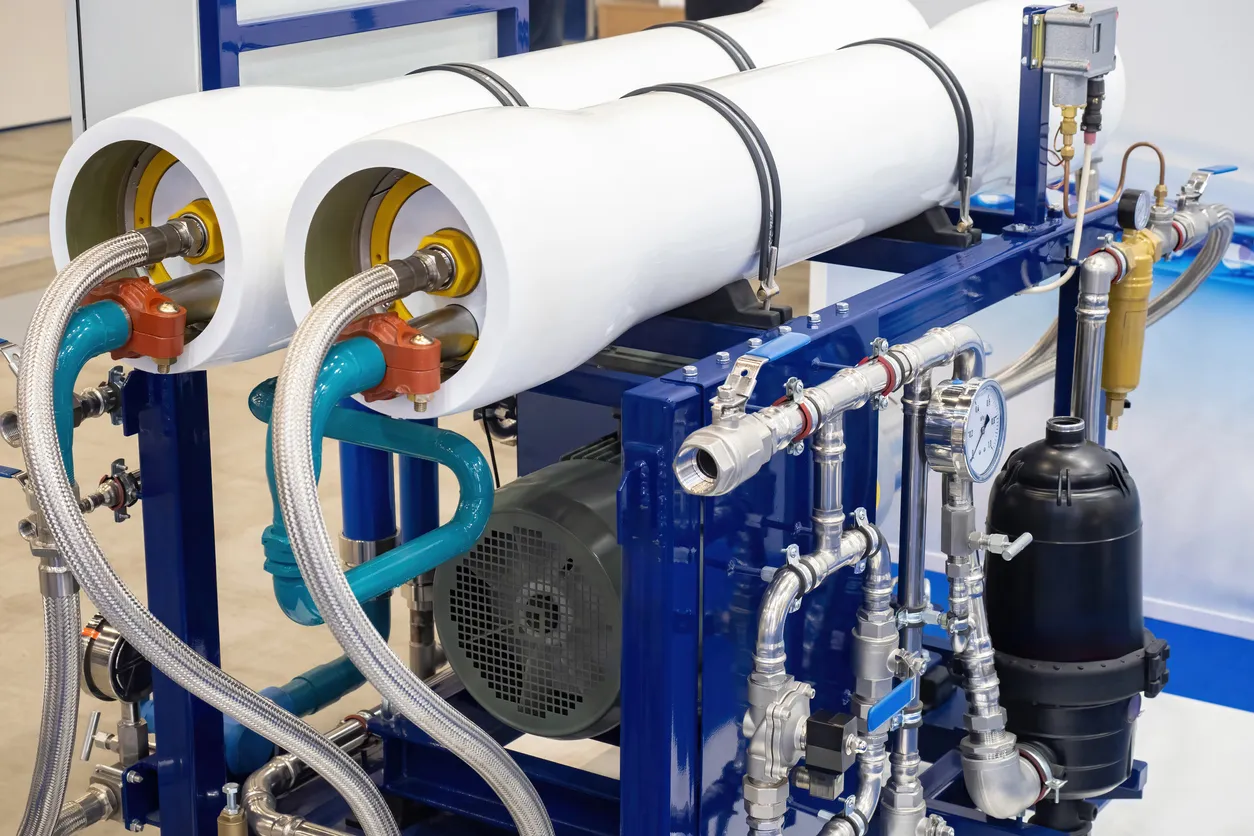
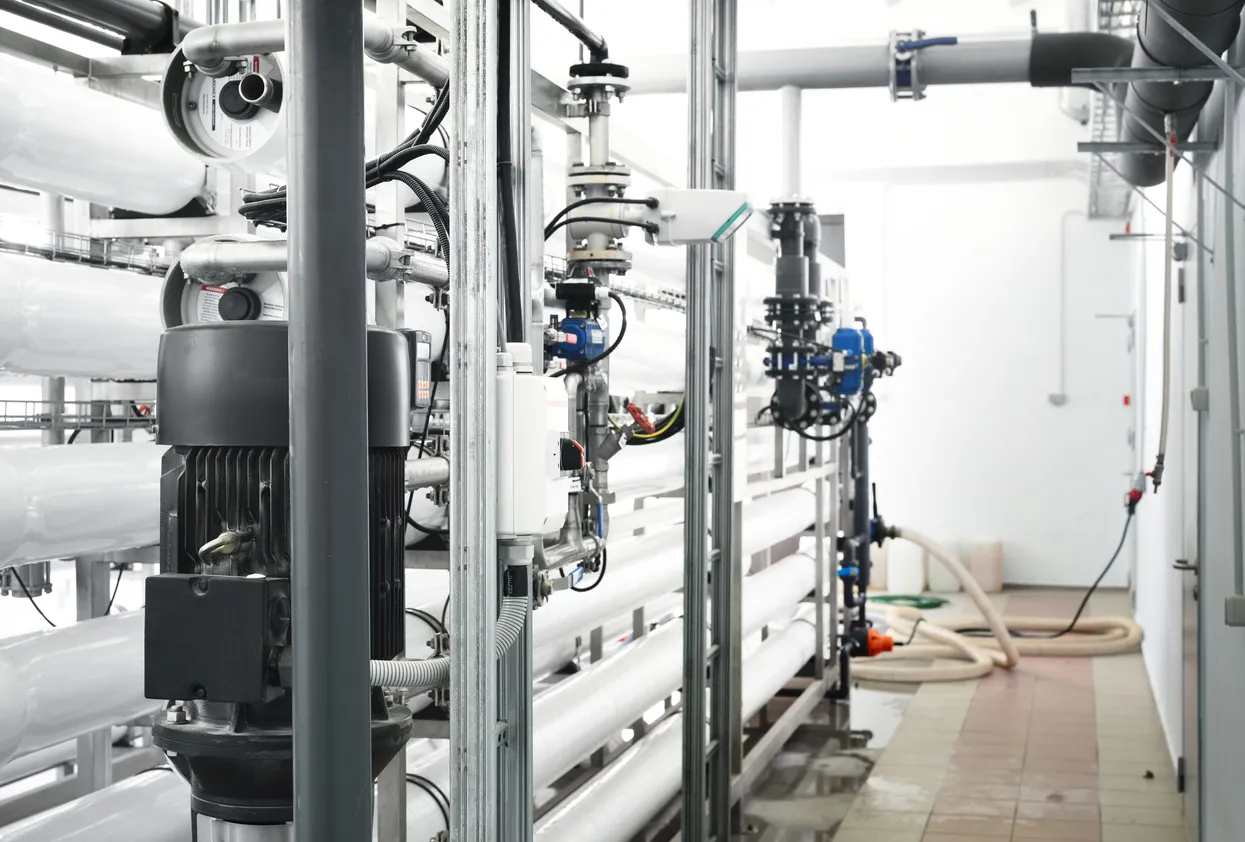
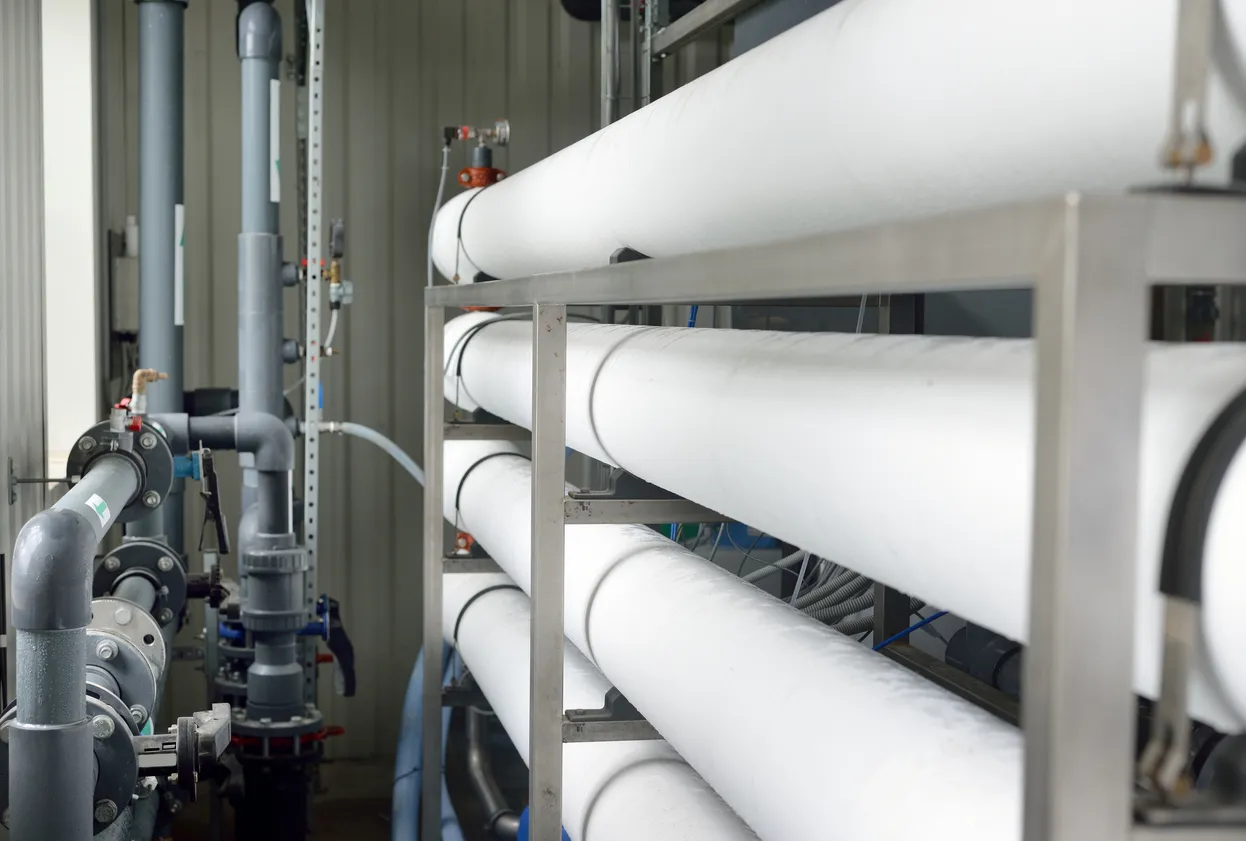
How reverse osmosis supports process water quality in food plants
Food processors usually need water that behaves consistently during production, cleaning and utility operation. Reverse osmosis reduces dissolved ions that can affect taste, deposits, rinsing, steam generation and the stability of downstream treatment.
Decision focus
Before selecting a system, define the required permeate conductivity, expected flow, daily operating hours, peak demand and the specific uses of permeate in the plant.
Quality parameters that must be evaluated
A technical evaluation should begin with a complete water analysis: conductivity, TDS, hardness, alkalinity, silica, chlorides, sulfates, iron, manganese, turbidity, SDI, microbiological risk and seasonal variability. These values determine membrane selection, recovery limits, antiscalant strategy and pretreatment design.
For procesadoras de alimentos, raw water can change by source, season or municipal supply conditions. A design that ignores these variations may operate acceptably during commissioning and then lose capacity when temperature, hardness or suspended solids change. The best practice is to design with a conservative operating window rather than a single ideal sample.
Permeate quality should be connected to the actual application. Water used for ingredient contact, bottle rinsing, clean-in-place support, boiler makeup, cooling tower makeup or washing may require different polishing steps after RO. The reverse osmosis system can be the core barrier, but it must be integrated with storage and distribution that preserve the quality achieved.
Internal links for technical context
For buyers comparing equipment, it is useful to review the structure of a sistema de ósmosis inversa and understand how pretreatment, high-pressure pumping, membranes, instrumentation and control logic work together.
When the plant has special quality targets or limited installation space, ingeniería de ósmosis inversa helps define the configuration, materials, automation level, recovery rate and operating philosophy.
If the system is already installed and performance is unstable, a specialized servicio de ósmosis inversa can evaluate membranes, pressure vessels, instruments, pretreatment and cleaning history before recommending corrective actions.
Pretreatment, membrane configuration and hygienic integration
The success of reverse osmosis in food processing is strongly linked to pretreatment and hygienic operation. The membrane skid is only one part of the system; upstream and downstream conditions determine reliability.
Decision focus
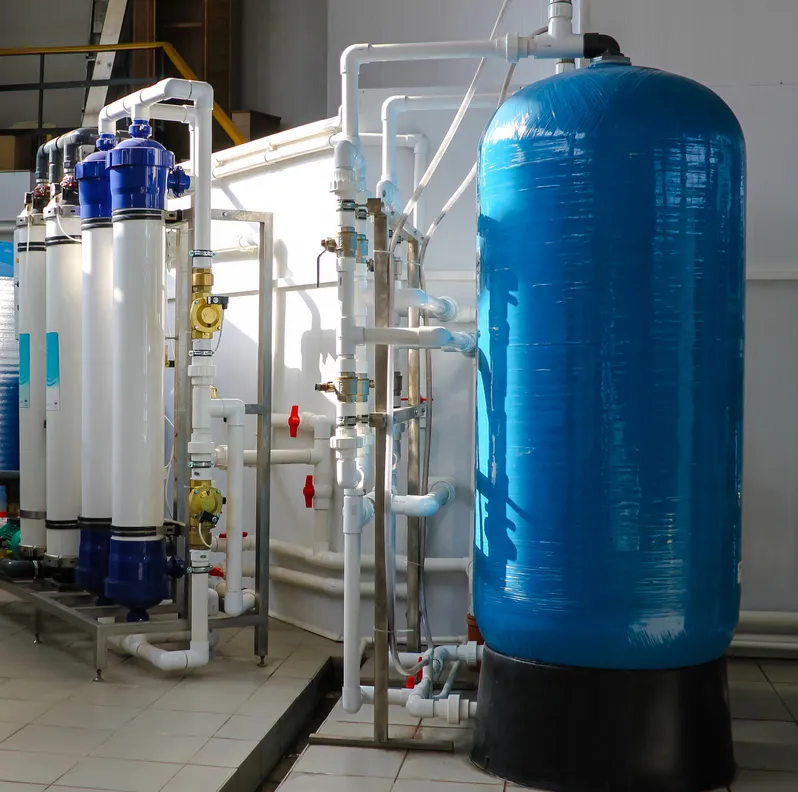
Evaluate the complete water train: feed tank, filters, softening or antiscalant, carbon, dosing, RO, permeate storage, UV, recirculation and distribution.
Pretreatment and fouling control
Pretreatment protects membranes from particles, oxidants, hardness scaling, metal fouling and biological activity. Depending on the feedwater, the system may require multimedia filtration, cartridge filtration, water softening, dechlorination, antiscalant injection, pH adjustment, iron removal or ultrafiltration. Each step must be justified by the analysis and not added as a generic accessory.
In food plants, chlorine control is especially important because many polyamide RO membranes are sensitive to oxidants. Activated carbon or chemical dechlorination must be monitored so that residual oxidant does not reach the membranes. At the same time, removing chlorine can increase biological risk, which makes sanitation practices, low dead-leg design and recirculation important.
The recovery rate must be selected according to scaling potential and wastewater management. A higher recovery can reduce reject flow, but it also concentrates salts on the membrane surface and increases scaling risk. For food processors, the most economical design is often the one that balances recovery, cleaning frequency, membrane life and operational stability.
Materials, layout and controls
Equipment for procesadoras de alimentos should be reviewed for material compatibility, cleanability and access for maintenance. Stainless steel piping, sanitary connections in specific zones, adequate drain points, sample valves and clear instrument locations help operators verify quality and respond faster to deviations.
Instrumentation should include feed pressure, concentrate pressure, permeate pressure, feed flow, permeate flow, concentrate flow, conductivity, temperature and alarms. These signals allow the plant to track pressure drop, salt passage, recovery and normalized permeate flow. Without instrumentation, the operation depends on visual inspection and delayed laboratory results.
Automation can be basic or advanced depending on the plant. Useful functions include automatic flush, low-pressure protection, conductivity diversion, tank level integration, alarm history and remote monitoring. For larger production environments, the RO system can be connected to plant supervision to support traceability and maintenance planning.
Operational practices that protect membrane performance
A reverse osmosis system in a food processing plant should be operated with documented limits. The goal is to maintain permeate quality while avoiding unnecessary membrane stress, cleaning delays and unplanned shutdowns.
Decision focus
Set operating windows for pressure, flow, recovery, conductivity, temperature, SDI, chlorine residual and pressure differential.
Monitoring and trend analysis
Daily readings are valuable only when they are trended. Operators should record feed conductivity, permeate conductivity, pressure differential, permeate flow, concentrate flow, feed temperature and recovery. A gradual increase in pressure differential may indicate particulate or biological fouling. A decrease in normalized permeate flow may indicate fouling or scaling. An increase in permeate conductivity may indicate membrane damage, seal leakage or system imbalance.
Normalized data is important because raw readings can be misleading. Temperature changes affect permeate flow, and feed conductivity affects rejection calculations. By normalizing data, the plant can distinguish normal variation from real membrane deterioration. This is especially helpful in plants with changing water temperature or variable production schedules.
Alarm limits should be practical. If alarms are too wide, the plant reacts late. If alarms are too narrow, operators may ignore them. The correct approach is to create warning limits and action limits based on commissioning data, membrane manufacturer guidance and the quality requirement of the process.
Cleaning strategy and membrane life
Cleaning should not be based on a fixed calendar alone. CIP is typically triggered by loss of normalized permeate flow, increase in pressure differential or loss of rejection. The cleaning chemistry depends on the foulant: acidic cleaning for mineral scale, alkaline cleaning for organic or biological fouling and specialized approaches when iron, silica or oils are present.
Food processors should consider sanitation and microbiological control as part of the water system. Stagnation, warm conditions and poor storage design can create downstream problems even when the RO skid performs well. Permeate tanks, vents, UV units, recirculation loops and point-of-use practices must be evaluated with the same discipline as the membrane skid.
Membrane life improves when pretreatment is stable, oxidants are controlled, scaling is prevented and cleaning is performed at the correct time. Delayed cleaning can compact foulants and make recovery incomplete. Excessive cleaning can also shorten membrane life. The best operating program is condition-based and supported by data.
How to compare suppliers and define a reliable RO solution
When evaluating reverse osmosis for food processors, the buyer should compare engineering depth, service capability, operating support and integration knowledge, not only equipment price.
Decision focus
Request a proposal that includes design basis, water analysis assumptions, expected permeate quality, recovery, pretreatment, controls, utilities and maintenance requirements.
Technical information to request
A complete proposal should identify feedwater conditions, design flow, average and peak demand, membrane model, number of pressure vessels, staging, recovery rate, expected permeate conductivity, reject flow, chemical dosing, electrical requirements and instrumentation. It should also state the limitations of the design and the conditions required to maintain warranty and performance.
The buyer should ask how the supplier will handle variations in feedwater, seasonal temperature changes, high hardness, silica, iron or microbiological risk. A proposal that only lists equipment without explaining the design basis may be difficult to evaluate. For procesadoras de alimentos, the cost of downtime and inconsistent water quality can be higher than the initial saving from a simplified system.
Service availability matters. Membrane replacement, cartridge filters, pump maintenance, calibration, troubleshooting and CIP support should be considered from the beginning. A supplier with field service experience can help the plant maintain performance after installation, not only during startup.
Commercial alignment and related service category
A good buying process connects technical performance with operational priorities: stable production, predictable maintenance, reduced scaling, controlled conductivity and clear responsibility for support. If the plant expects growth, the design should also consider modular expansion or future polishing stages.
For more options related to equipment, engineering and field support, the buyer can review servicios de ósmosis inversa. This category helps connect industrial buyers with providers that understand system design, maintenance, diagnosis and performance optimization.
The final selection should document acceptance criteria: permeate flow, permeate conductivity, operating pressure, recovery, alarm response and documentation to be delivered at startup. With clear acceptance criteria, the plant can evaluate whether the installed system meets the expected operating profile.
Heat transfer fluids for data centers, HVAC and industrial applications
Omega Chemicals offers solutions such as DOWFROST™ LC, KOSTChill PG XL, OMEGA DO LC30 and OMEGA DO LC25 for reliable thermal performance in critical applications.
- DOWFROST™ LC for data centers.
- KOSTChill PG XL for HVAC and computing.
- PG fluids for heat transfer.
- OMEGA DO LC30 PG 30 heat transfer fluid.
- OMEGA DO LC25 for industrial engines.
- Guidance in selecting the right product.
Frequently asked questions about reverse osmosis for food processors
This FAQ summarizes the most relevant technical and purchasing questions for reverse osmosis procesadoras de alimentos projects. It is intended to help buyers define scope, compare alternatives and avoid underdesigned systems.
Reverse osmosis helps reduce dissolved solids, hardness, chlorides, sulfates and other ions that can affect process consistency, rinsing results, boiler operation, equipment scaling and downstream polishing. In procesadoras de alimentos, this supports a more controlled water quality profile for production and utilities.
It depends on the required specification. RO can be a central treatment barrier, but some applications may require additional polishing, UV, activated carbon, microfiltration, storage recirculation or disinfection. The correct train must be defined from the final use and quality target.
A complete water analysis, required permeate flow, peak demand, operating hours, desired conductivity, feed temperature, available utilities, space limitations, reject handling and downstream uses are needed. Without these inputs, sizing may be inaccurate.
Cleaning frequency should be based on performance indicators such as normalized permeate flow, pressure differential and salt rejection. A fixed calendar can be useful as a reference, but condition-based cleaning is more reliable.
Common causes include poor pretreatment, chlorine breakthrough, high hardness, silica scaling, biological fouling, clogged cartridge filters, incorrect recovery, damaged seals, inadequate flushing and lack of data trending.
Yes. Flow, pressure, conductivity, temperature, tank level and alarm signals can be integrated into local control panels or plant supervision systems. This improves visibility and maintenance planning.
Compare the design basis, water analysis assumptions, pretreatment logic, membrane configuration, instrumentation, service capability, documentation and acceptance criteria. The lowest equipment price may not represent the lowest operating risk.
Final recommendation
For procesadoras de alimentos, reverse osmosis should be selected as an engineered water quality system, not as an isolated piece of equipment. The most reliable projects define the quality target, validate the feedwater, protect the membranes with proper pretreatment, monitor normalized performance and include a realistic service plan. This approach improves confidence in production water, reduces avoidable downtime and supports a more stable industrial operation.

Estos productos podrian interesarte