Productos
Segunda mano
Servicios
Reverse osmosis systems for embotelladoras


Índice de la guía
Accede a cada sección y regresa al índice desde cualquier bloque.
Reverse osmosis for embotelladoras that need consistent, high-purity process water
For bottling plants, water quality is not only a utility requirement; it is part of the product standard, the filling line stability and the reputation of the operation. A well-engineered reverse osmosis system helps reduce dissolved salts, improve taste consistency, protect downstream polishing stages and keep production aligned with predictable conductivity, hardness and microbiological control programs.
This content focuses on reverse osmosis embotelladoras projects where the objective is to select, operate and maintain a robust industrial solution for bottled water, beverages, ingredient preparation, rinsing, CIP support and general high-purity process water. The right configuration depends on raw water variability, flow demand, required permeate quality, redundancy, pretreatment, automation and service support.
A purchase decision should not be based only on nominal flow. It should evaluate membrane array, recovery, feed pressure, antiscalant strategy, cleaning access, instrumentation, alarms, trend monitoring, hygienic practices and the ability to support production when the plant operates with multiple shifts or seasonal peaks.
What the system must support
Stable permeate for formulation, filling, rinsing and utilities.
Reliable production under variable demand and raw water changes.
Pretreatment, recovery, membrane selection and control philosophy.
Maintenance, cleaning, troubleshooting and consumables availability.
Estos productos podrian interesarte
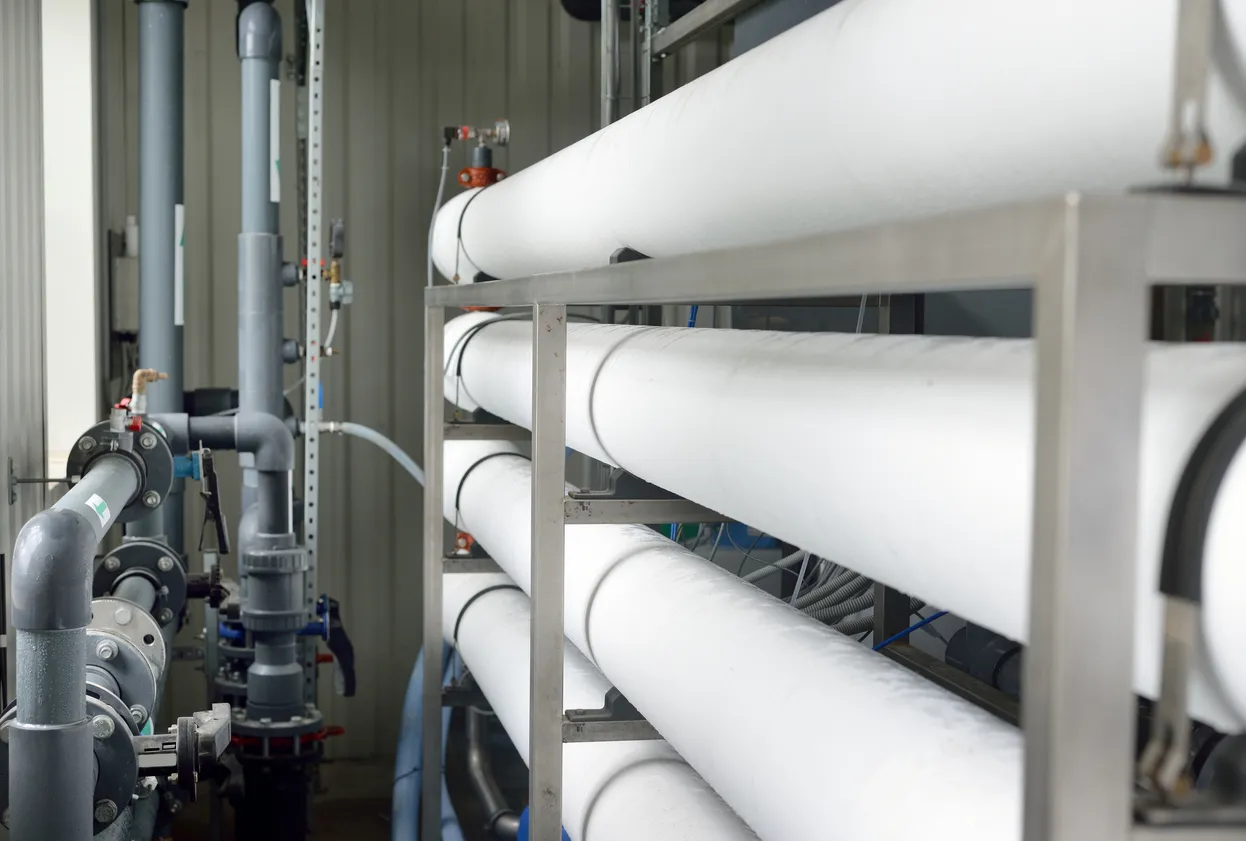
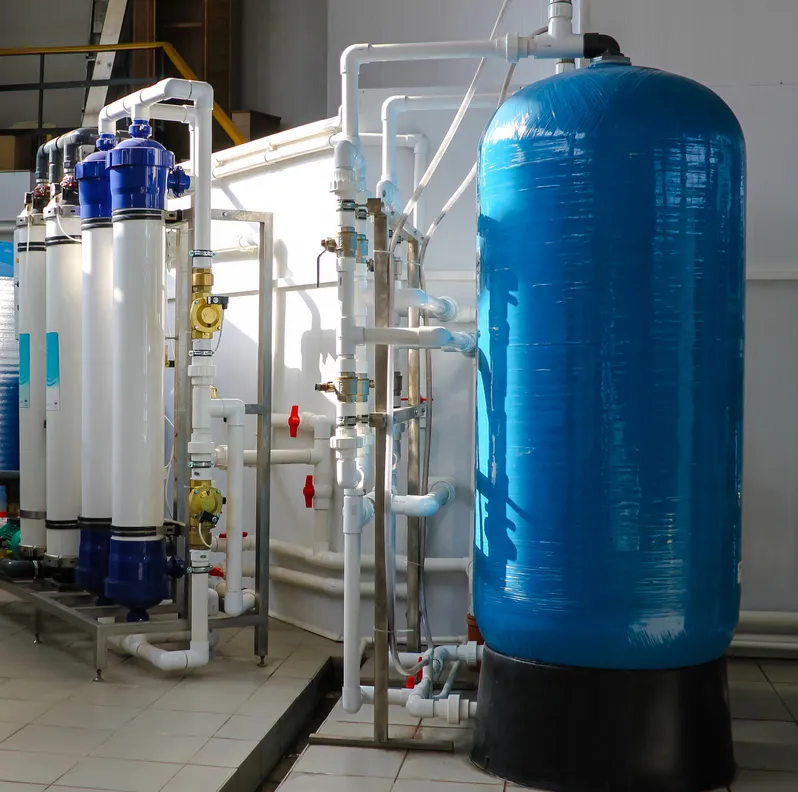
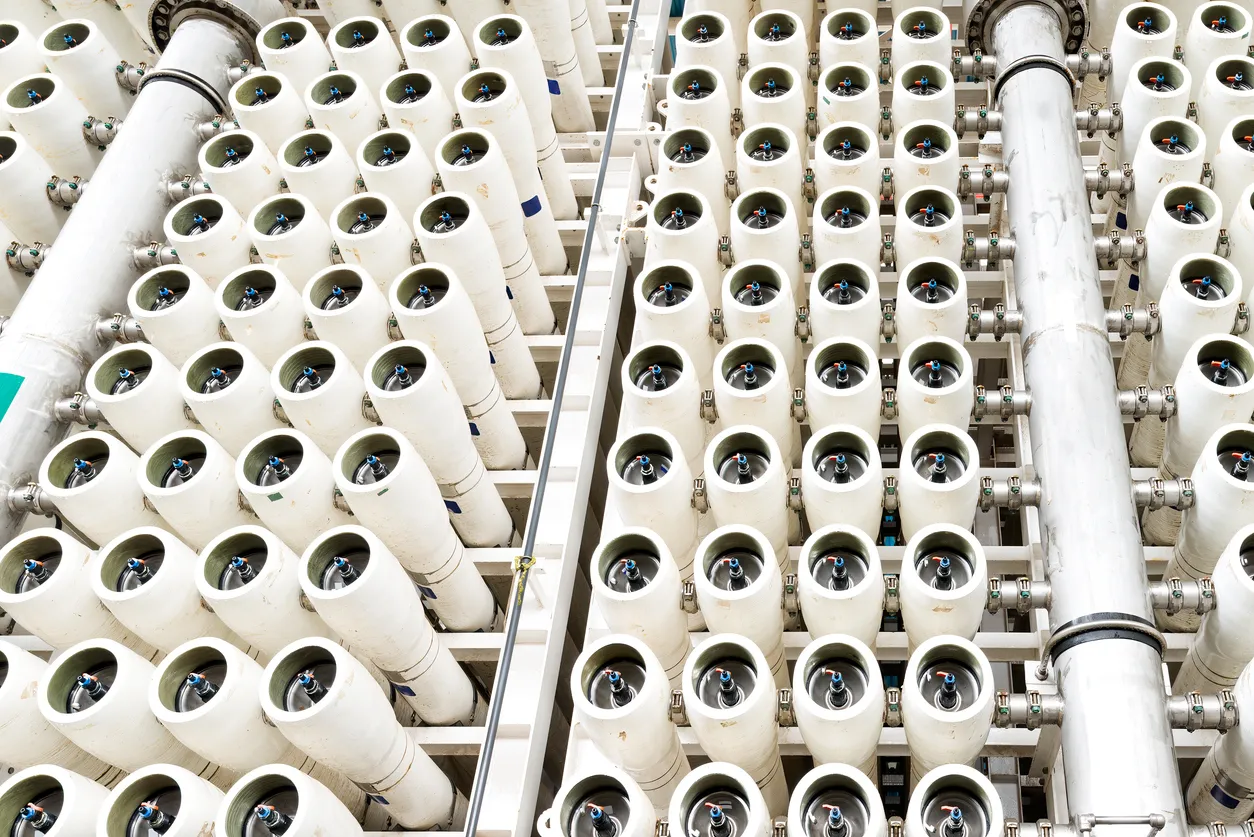
Índice de la guía
Accede a cada sección y regresa al índice desde cualquier bloque.
Water quality targets in bottling operations
In embotelladoras, reverse osmosis must be evaluated as part of a complete quality chain. The RO permeate may be used directly as process water or as feed to polishing technologies such as activated carbon, UV, ozone, cartridge filtration, mixed bed ion exchange or electrodeionization depending on the final product and internal quality program.
The main objective is to reduce dissolved ions that affect taste, scaling, turbidity risk, hardness, alkalinity and conductivity. When raw water comes from wells, municipal networks or mixed sources, the design must consider seasonal changes in TDS, silica, iron, manganese, organics and microbiological load. These variables affect pretreatment selection and membrane performance.
A reliable sistema de ósmosis inversa for bottling should include enough instrumentation to prove that permeate quality remains within the operating window, not only during commissioning but during routine production.
| Parameter | Why it matters | Engineering impact |
|---|---|---|
| Conductivity / TDS | Controls mineral reduction and consistency of the treated water profile. | Defines membrane type, staging, recovery and monitoring alarms. |
| Hardness and alkalinity | Can create scale, affect cleaning frequency and influence taste. | Requires softening, antiscalant, acid dosing or optimized recovery. |
| Silica | May limit recovery and generate difficult-to-remove deposits. | Needs conservative design, pretreatment review and cleaning planning. |
| Iron and manganese | Can foul membranes and compromise downstream hygiene. | Requires oxidation/filtration, cartridge control and feed monitoring. |
| Organics and microbiology | Affects biofouling and sanitation programs. | Needs carbon management, disinfection compatibility and hygienic operation. |
Quality documentation
The system should generate operating evidence: pressure, flow, conductivity, recovery, alarms, flush cycles and service records. This supports audits, quality reviews and preventive maintenance decisions.
Production flexibility
Bottling demand changes by product, shift and season. RO capacity should be sized for peak flow, storage strategy and redundancy instead of relying only on average daily consumption.
Engineering configuration for reverse osmosis embotelladoras
The engineering phase should begin with a complete water analysis, operating profile and quality objective. With those inputs, specialists can define pretreatment, membrane array, recovery percentage, pressure requirements, instrumentation, cleaning connections and control sequence.
For bottling plants, the system must be designed not only to produce water, but also to maintain stable operation during start-stop cycles, sanitation routines, tank level variations and demand from multiple users. A project based on ingeniería de ósmosis inversa helps prevent common problems such as undersized pretreatment, high differential pressure, poor concentrate control and premature membrane replacement.
Pretreatment train
Typical pretreatment may include multimedia filtration, activated carbon, softening, chemical dosing, cartridge filtration, dechlorination and microbiological control. Each component must be selected based on feed water risks and membrane compatibility.
The pretreatment is often the difference between stable permeate production and repeated membrane cleaning. In bottling, carbon beds and filters must also be managed with hygienic discipline.
Membrane selection
Membrane selection depends on salt rejection, operating pressure, energy use, fouling tendency and cleaning tolerance. Low-pressure brackish water elements are common, but the final selection must consider the feed water and required permeate profile.
A correct selection allows predictable rejection while maintaining reasonable flux and reducing the risk of accelerated fouling.
Hydraulic design
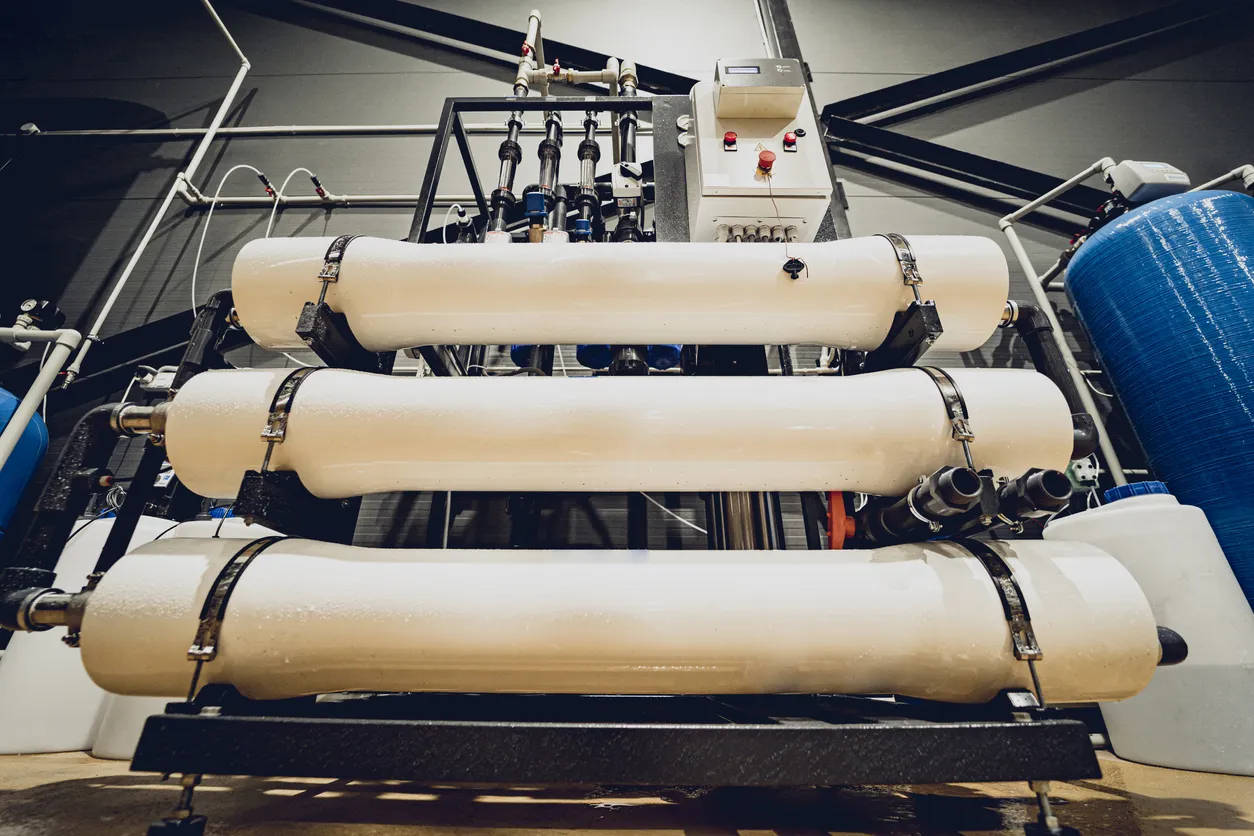
The hydraulic design should define feed flow, permeate flow, concentrate flow, recirculation, recovery, vessel arrangement, pressure drops and pump curve. It should include future capacity growth where production demand may increase.
Oversimplified designs may produce water during startup but fail under sustained industrial operation.
Automation and alarms
Automation should include conductivity monitoring, low feed pressure protection, high pressure shutdown, tank level logic, permeate divert, automatic flushing and alarm history. These functions help operators maintain production quality.
For plants seeking more visibility, remote monitoring can support trend review and faster response to abnormal conditions.
Selection criteria that protect long-term performance
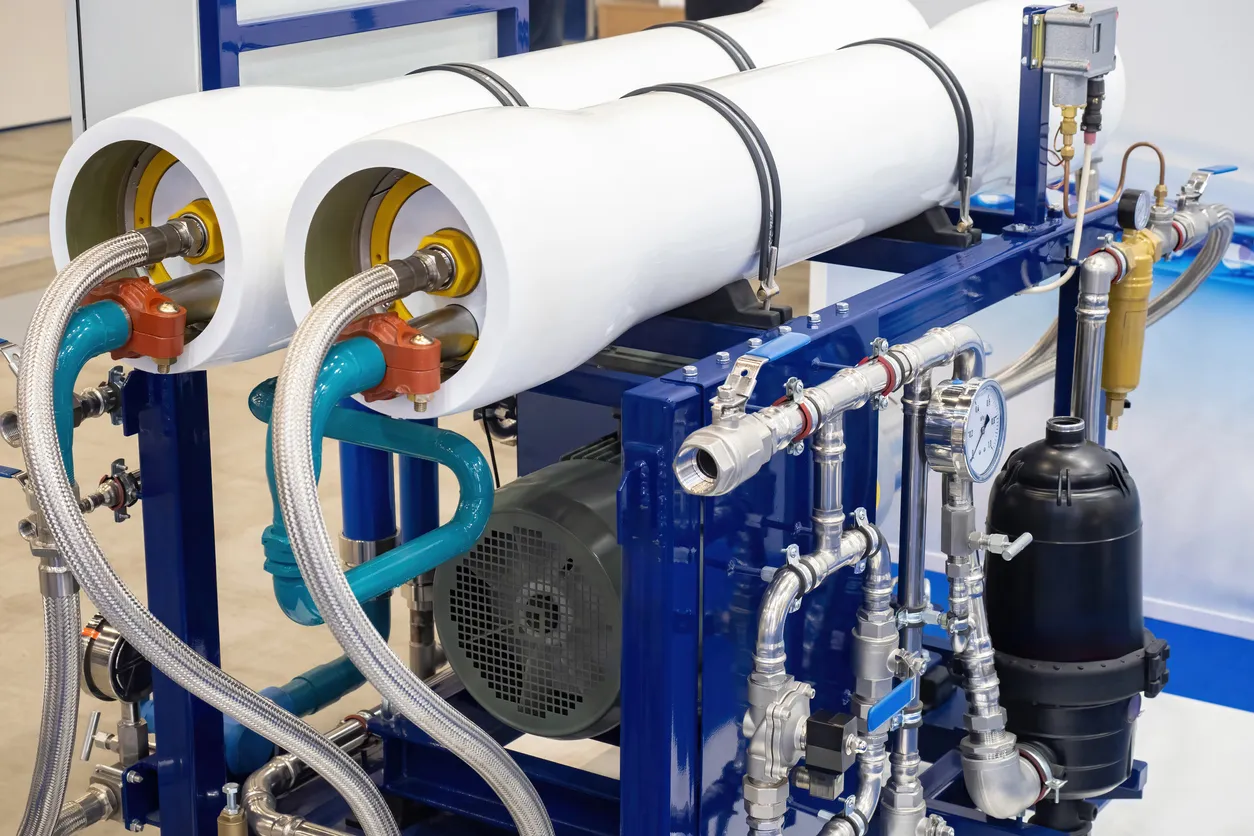
A reverse osmosis system for embotelladoras should be evaluated by total operating reliability: stable rejection, cleaning accessibility, availability of consumables, technical support, component quality, electrical panel design, instrumentation, service response and compatibility with site utilities. Stainless steel skids may be preferred where hygienic appearance, corrosion resistance or washdown areas are important. The design must also consider concentrate disposal, space limitations, operator access and integration with storage tanks.
The goal is to obtain a system that supports bottling quality every day, not only a piece of equipment that meets a single flow number on a quotation. This is why the purchase process should compare scope, engineering assumptions and service terms in addition to the initial price.
Operation, control and monitoring
Industrial RO operation requires disciplined observation of normalized performance. Operators should track permeate flow, concentrate flow, feed pressure, concentrate pressure, differential pressure, conductivity, temperature, recovery and chemical dosing. When these values are recorded consistently, the plant can identify fouling, scaling, feed variation or instrumentation drift before quality is affected.
In bottling environments, the cost of poor water quality can be higher than the cost of preventive service. A sudden conductivity increase, pressure rise or permeate flow loss may affect production planning, product release, tank availability and cleaning schedules. For this reason, operational visibility should be treated as part of the quality infrastructure.
A service program with periodic inspections, cartridge replacement, membrane cleaning criteria and performance reports is useful when the operation wants to maintain predictable water supply without waiting for emergency failures.
Daily indicators
Conductivity, flow, pressure and tank level must be reviewed during production to detect deviations quickly.
Weekly review
Differential pressure, cartridge condition, chemical consumption and rejection trends should be compared with baseline values.
Monthly analysis
Normalized data, cleaning need, membrane condition and pretreatment performance help plan corrective actions.
Service actions
A specialized servicio de ósmosis inversa supports troubleshooting, cleaning and recovery of stable operation.
Why monitoring matters for purchase decisions
The best time to define monitoring is before buying the equipment. Conductivity transmitters, pressure sensors, flow meters, sample ports, alarm logic and data logging should be included in the project scope if the plant needs traceability. Without enough instrumentation, operators may depend on manual observations and late symptoms, which makes root-cause analysis slower.
For embotelladoras, quality teams often need evidence that the system is operating within defined parameters. This evidence is easier to obtain when the RO package includes the correct instruments, a clear control panel, accessible reports and service personnel capable of interpreting trends. In addition, monitoring helps decide when to clean membranes, when to replace cartridges, when to adjust recovery and when to investigate feed water changes.
A plant that treats RO as a controlled process rather than a simple filter usually achieves better membrane life, more stable production and fewer emergency interventions.
Technical criteria before selecting a supplier
Before selecting a reverse osmosis supplier for bottling operations, the buyer should request clear information about design flow, feed water assumptions, recovery, membrane model, pretreatment components, panel logic, instrumentation, cleaning connections, warranty conditions, service scope and spare parts availability.
The comparison should also consider whether the supplier understands industrial bottling needs: stable quality, traceability, sanitary practices, quick response, integration with tanks, compatibility with existing utilities and the ability to support expansion. A lower-cost system that lacks instrumentation or pretreatment may become expensive when production begins.
MarketB2B service pages such as servicios de ósmosis inversa help centralize related options for engineering, equipment, maintenance and specialized technical support.
Ask for a basis of design
The quotation should explain the water analysis used, operating assumptions, expected permeate quality, recovery and limitations. Without this, the buyer cannot compare proposals fairly.
Review pretreatment scope
Pretreatment must match raw water risk. Filters, carbon, softening, dosing and cartridges should not be omitted when the feed water requires them.
Confirm maintenance access
The skid should allow cartridge replacement, chemical cleaning, sampling, valve access and instrument calibration without unsafe or impractical procedures.
Evaluate support after startup
Training, commissioning, trend review, troubleshooting and consumables supply are critical for plants that cannot stop water production unexpectedly.
Decision framework for embotelladoras
For bottling companies, a reverse osmosis project should be evaluated through four lenses: product quality, operational continuity, lifecycle cost and service reliability. Product quality depends on consistent permeate and proper downstream polishing. Operational continuity depends on capacity, redundancy, automation and maintenance planning. Lifecycle cost depends on energy, chemicals, cartridges, membrane life and cleaning frequency. Service reliability depends on the supplier’s ability to diagnose problems and provide parts when needed.
When these criteria are considered together, the buyer can avoid selecting equipment that appears attractive only because of price. The strongest projects usually include water analysis, process discussion, correct pretreatment, detailed instrumentation, commissioning support and a maintenance plan that protects both water quality and membrane performance.
The phrase reverse osmosis embotelladoras should therefore be understood as an industrial solution for bottling plants that need measurable performance, not just a generic RO skid.
Heat transfer fluids for data centers, HVAC and industrial applications
Omega Chemicals offers solutions such as DOWFROST™ LC, KOSTChill PG XL, OMEGA DO LC30 and OMEGA DO LC25 for reliable thermal performance in critical applications.
- DOWFROST™ LC for data centers.
- KOSTChill PG XL for HVAC and computing.
- PG fluids for heat transfer.
- OMEGA DO LC30 PG 30 heat transfer fluid.
- OMEGA DO LC25 for industrial engines.
- Guidance in selecting the right product.
Índice de la guía
Accede a cada sección y regresa al índice desde cualquier bloque.
Frequently asked questions about reverse osmosis for embotelladoras
These questions help purchasing, quality and maintenance teams understand the key decisions behind reverse osmosis embotelladoras projects. The correct answer may vary depending on feed water quality, required permeate specifications, plant capacity and the downstream treatment train.
Before requesting a proposal
Prepare a recent water analysis, required flow, operating hours, storage strategy, final water use, available utilities, space limitations and any internal quality limits. This information helps the supplier define the engineering scope correctly.
What is the role of reverse osmosis in bottling plants?
Reverse osmosis reduces dissolved salts, hardness, alkalinity and many ions that affect product consistency and scaling. In embotelladoras, RO may feed beverage formulation, bottled water production, rinsing, cleaning support or downstream polishing technologies. Its role is to create a stable water base that can be controlled and documented.
Is RO enough to produce final bottled water?
It depends on the product specification and local quality program. Many plants use RO as a core desalination stage, but final treatment may include activated carbon, UV, ozone, remineralization, cartridge filtration or microbiological control. The complete process should be designed according to the intended product and regulatory requirements.
What data is needed to size the system?
The supplier should know feed water analysis, required permeate flow, operating schedule, peak demand, storage tank volume, recovery target, available pressure, electrical supply, water temperature and final quality goal. Without these data, the design may be based on assumptions that do not match real production conditions.
How often should membranes be cleaned?
Cleaning frequency depends on fouling rate, pretreatment quality, recovery, feed water variability and operating discipline. Cleaning should be based on normalized performance indicators such as permeate flow loss, pressure increase, differential pressure and salt passage, rather than waiting for severe quality or production problems.
What should be included in the quotation?
A strong proposal should include basis of design, equipment capacity, membrane type, pretreatment, instruments, control logic, materials, cleaning connections, commissioning, operator training, spare parts, service scope and limitations. This allows the buyer to compare the real technical value of each option.
Why is service support important?
Service support helps protect production continuity. Bottling plants need quick troubleshooting, access to consumables, membrane cleaning guidance, performance review and corrective action when feed water or operating conditions change. A system without support may become difficult to maintain during production peaks.
How should a buyer compare multiple RO proposals?
Compare proposals by technical scope, not only by price. Review feed water assumptions, pretreatment, membrane array, recovery, instrumentation, automation, materials, hygienic considerations, service response, spare parts and expected lifecycle cost. The best option is the one that can maintain stable permeate quality, protect membrane life and support the production rhythm of the bottling plant.
Temas que te pueden interesar
Estos productos podrian interesarte