Productos
Segunda mano
Servicios
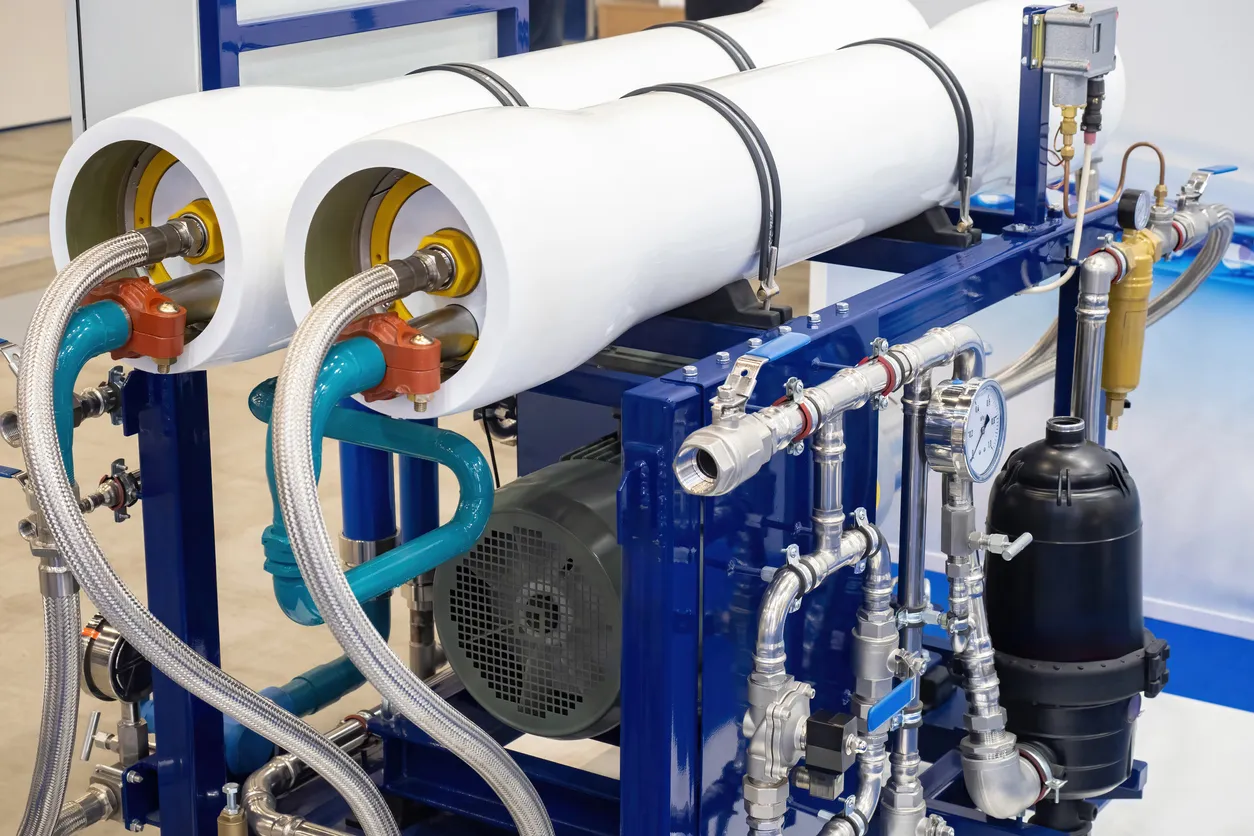
Reverse osmosis systems for industria cerámica


Reverse osmosis for ceramic manufacturing where water quality affects finish, stability and process repeatability
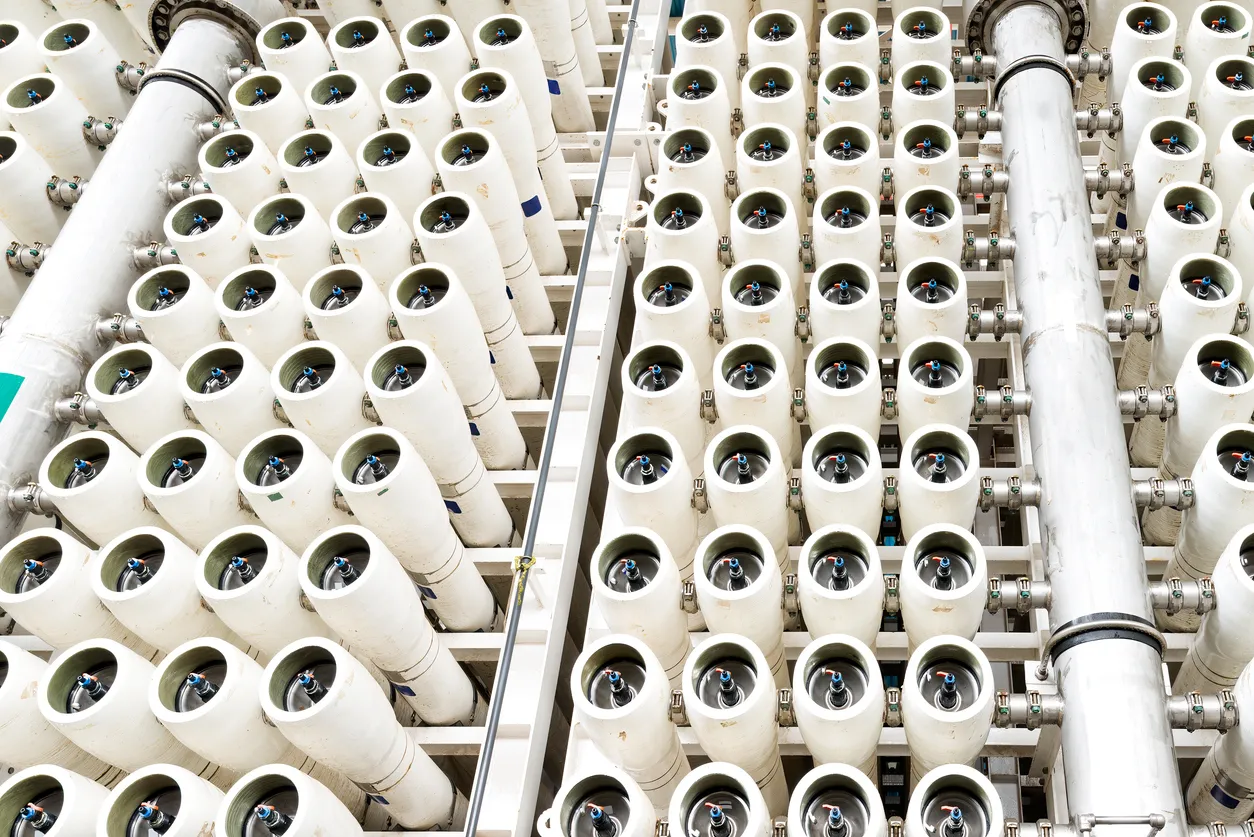
In ceramic plants, water is not only a utility. It participates in raw material preparation, glaze formulation, rinsing, cooling, boiler make-up, humidification and cleaning routines. When dissolved salts, hardness, silica, iron, chlorides or conductivity fluctuate, the operation can experience deposits, stains, inconsistent glaze behavior, higher chemical use, scale in equipment and unstable product quality. A properly engineered reverse osmosis system helps convert variable feed water into a controlled resource for industrial ceramic applications.
This page is designed for purchasing, maintenance, quality, utilities and engineering teams evaluating reverse osmosis industria cerámica projects. The objective is not only to install equipment, but to define a treatment strategy that protects production continuity, reduces mineral load and supports high-purity process water where the ceramic process requires tighter control. The right approach considers feed water analysis, pretreatment, membrane selection, recovery, instrumentation, automation, service access and operating procedures.
Stable process water
Reduces dissolved solids variation that can affect ceramic batches, glazes, rinses and auxiliary services.
Industrial reliability
Supports continuous operation with pretreatment, monitoring and maintenance criteria aligned with plant demand.
Decision support
Connects design variables with purchasing criteria: capacity, quality target, footprint, service and lifecycle cost.
Where reverse osmosis adds value
- Lower conductivity water for process stability.
- Reduced hardness to minimize scaling in heaters, piping and nozzles.
- Better control of salts that may influence stains, deposits or surface defects.
- Improved feed quality for boilers, humidifiers, washing systems and finishing operations.
- Documented operating variables for quality and maintenance teams.
Estos productos podrian interesarte

Why water quality matters in ceramic production
In the ceramic industry, water quality is linked to consistency. Even when water is not part of the final product in the same way as in food or pharmaceutical applications, it can influence raw material dispersion, slip behavior, glaze preparation, wash water quality, nozzle performance, heat exchange, steam generation and cleaning efficiency. A reverse osmosis system is valuable because it removes a high percentage of dissolved ions and creates a more predictable base water for the plant.
The decision normally starts with a complete water analysis. Conductivity, total dissolved solids, hardness, alkalinity, silica, iron, manganese, chlorides, sulfates, microbiological risk, turbidity and organic load help define whether the plant requires softening, filtration, antiscalant dosing, carbon filtration, pH adjustment or other pretreatment before reverse osmosis. Without this technical baseline, it is easy to oversize, undersize or incorrectly protect the membranes.
Typical quality variables to evaluate
Conductivity and TDS
These indicate dissolved mineral load. RO permeate lowers conductivity and helps standardize water used in sensitive process points.
Hardness
Calcium and magnesium promote scale formation in hot surfaces, pipes, spray systems, boilers and recirculation loops.
Silica
Silica can contribute to difficult deposits, especially when concentration increases through recovery or evaporation.
Iron and manganese
These metals may cause staining, fouling and membrane performance loss if not controlled before RO.
Process areas
Reverse osmosis can serve multiple ceramic plant needs: water for glaze and pigment preparation, feed for polishing or rinsing stages, boiler make-up, humidification, cooling tower make-up where lower mineral loading is beneficial, laboratory use and final cleaning. Each use point may have a different quality target. That is why the engineering stage should separate critical quality requirements from general utility requirements.
For example, the water used in a formulation area may need tighter conductivity stability than water used for general washing. A central system may be ideal when several users require similar quality, while a point-of-use system may be better when one process area demands higher purity or independent control.
Commercial relevance
For buyers, the main value is reduced operational uncertainty. Poor water quality can increase chemical cleaning, cause unplanned stoppages, create variability in process performance and shorten equipment life. Reverse osmosis is not selected only by nominal flow rate; it should be selected by the impact that treated water quality has on production quality, maintenance frequency, energy use and asset reliability.
Before requesting a quote, the plant should define current water source, daily consumption, peak flow, required permeate quality, available space, electrical conditions, storage capacity, reject water handling and service expectations. These details help suppliers propose a system that is technically aligned with the ceramic operation.
How to design reverse osmosis for ceramic industry applications
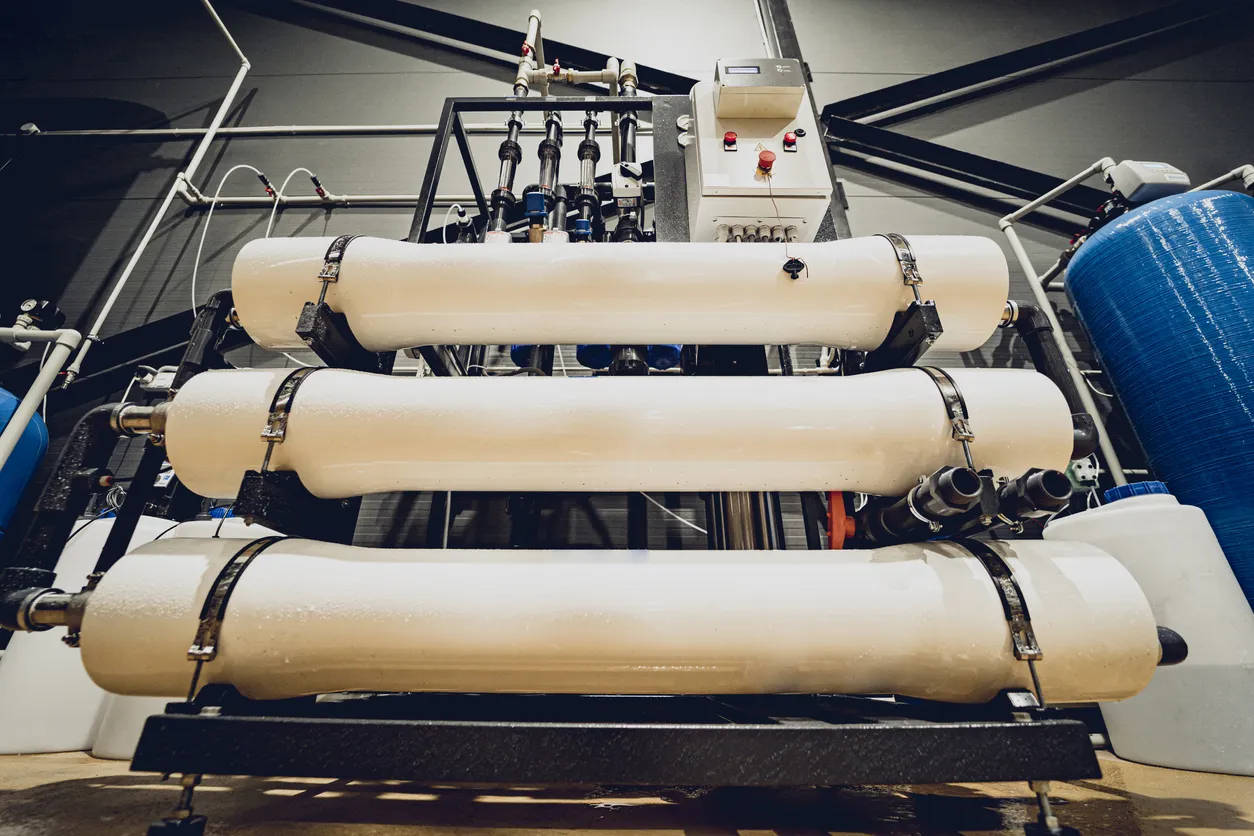
A robust reverse osmosis project begins with a treatment train, not a single piece of equipment. Ceramic plants may have well water, municipal water, recycled water or mixed sources. Each source has a specific risk profile. The engineering task is to protect membranes, stabilize permeate quality and make operation simple for the plant team.
Important decisions include pretreatment technology, membrane type, array configuration, operating pressure, recovery percentage, cleaning connections, automation level, instrumentation and redundancy. When these elements are integrated correctly, reverse osmosis becomes a reliable production utility rather than a maintenance burden.
Recommended design sequence
- Characterize feed water: collect representative analyses, including seasonal variation if the source changes throughout the year.
- Define the quality target: specify permeate conductivity, flow, storage, pressure and use points.
- Select pretreatment: choose multimedia filtration, softening, cartridge filtration, carbon filtration, chemical dosing or pH correction as required.
- Model membrane performance: verify recovery, rejection, concentrate scaling risk and expected flux under local conditions.
- Plan CIP and maintenance: include cleaning ports, sampling points, isolation valves and accessible layouts.
- Integrate controls: include flow, pressure, conductivity, tank level, alarms, permissives and remote monitoring options.
Pretreatment
Protects membranes from particles, scale, chlorine, metals and fouling agents that increase pressure and reduce permeate flow.
Membrane selection
Defines salt rejection, energy requirement, cleaning tolerance and performance stability for the selected feed water.
Instrumentation
Allows operators to detect deviation before it becomes a production or quality problem.
Interlinked technical resources
When evaluating an industrial RO project, the purchasing team can compare related resources such as sistema de ósmosis inversa, ingeniería de ósmosis inversa and servicio de ósmosis inversa. These topics help connect the equipment decision with design, installation, service and performance support.
For plants that need to evaluate suppliers in one category, the related service directory at servicios osmosis inversa can be used as a reference point for industrial solutions.
Avoiding common design errors
Common errors include selecting equipment only by flow rate, ignoring feed water variation, failing to provide enough pretreatment, not including permeate storage, placing the skid where service access is limited, and omitting instrumentation needed for troubleshooting. These omissions can raise operating costs and cause premature membrane replacement.
In ceramic operations, it is also important to consider whether the treated water feeds batch processes or continuous utilities. Batch users may require storage and transfer pumps, while continuous users need stable pressure and flow. A good design separates production requirements from equipment limitations.
Operating parameters that protect performance
Once the reverse osmosis system is installed, reliable operation depends on routine monitoring. Ceramic plants should track feed pressure, concentrate pressure, permeate pressure, flow rates, recovery, permeate conductivity, feed conductivity, differential pressure, tank levels and chemical dosing status. These values show whether the membranes are stable, fouling, scaling or losing rejection.
Operators should not wait until water quality fails. Trending normalized permeate flow, salt passage and differential pressure helps identify the difference between membrane fouling, scaling, temperature effects, pump issues, valve restriction or pretreatment failure. This operating discipline is especially important when production depends on treated water availability.
For better continuity, plants may implement alarms for high permeate conductivity, low feed pressure, high differential pressure, low antiscalant level, full permeate tank, low permeate tank or pump faults. When available, remote monitoring can help supervisors review trends and prioritize service before a stoppage occurs.
Monitoring matrix
| Variable | Purpose | Decision supported |
|---|---|---|
| Permeate conductivity | Verifies treated water quality | Use point acceptance |
| Differential pressure | Detects fouling or obstruction | Cleaning timing |
| Recovery | Controls concentrate scaling risk | Water balance |
| Feed pressure | Confirms pump and pretreatment condition | Mechanical inspection |
| Permeate flow | Tracks production capacity | Demand planning |
Daily checks
Review pressure, flow, conductivity, chemical levels, leaks, pump sounds and tank status. Record values consistently.
Weekly checks
Compare trends, inspect cartridge filter pressure drop, verify instruments and confirm pretreatment regeneration or dosing.
Service triggers
Schedule diagnosis when normalized flow declines, pressure rises or permeate conductivity increases beyond the control band.
What to compare before buying a reverse osmosis system
For reverse osmosis industria cerámica applications, the best purchase decision evaluates the complete lifecycle of the system. Initial price is only one part of the equation. Buyers should compare permeate quality guarantee, pretreatment scope, membrane brand and configuration, instrumentation, automation, skid construction, electrical panels, documentation, commissioning support, spare parts and service response.
It is also important to verify that the supplier understands ceramic plant operation. A system for occasional low-flow laboratory use is different from a plant utility that feeds production shifts. The system should match the water demand profile, not just an average daily number. Peak demand, storage volume, regeneration cycles, cleaning windows and service access all influence final design.
Supplier evaluation checklist
- Feed water analysis review.
- Defined permeate quality target.
- Calculated recovery and concentrate flow.
- Pretreatment included and justified.
- Cartridge filtration and chemical protection.
- Conductivity and pressure instrumentation.
- Automatic flush and alarms where needed.
- CIP compatibility and sampling points.
- Spare parts availability.
- Startup, training and service support.
Cost factors
Operating cost includes energy, pretreatment chemicals, cartridge filters, membrane replacement, cleaning chemicals, labor, reject water management and downtime risk. A cheaper system may become expensive if it operates at excessive flux, lacks pretreatment or produces unstable water. Conversely, an engineered system can reduce maintenance surprises and support predictable production.
For ceramic plants, water savings should be balanced with scaling risk. High recovery can reduce reject volume, but if the concentrate becomes too saturated, membranes may foul or scale faster. Engineering must define a recovery level that fits the chemistry of the feed water and the plant’s cost priorities.
Implementation plan
An effective project typically includes design review, equipment fabrication, installation planning, hydraulic and electrical connection, pretreatment startup, membrane loading, flushing, permeate quality verification, operator training and performance documentation. These steps help ensure that the system reaches the expected quality and capacity in real plant conditions.
The final specification should define responsibility limits. Clarify who supplies tanks, pumps, piping, drains, electrical feed, chemicals, cartridges, commissioning labor and post-startup service. Clear scope prevents delays and helps purchasing teams compare proposals fairly.
Heat transfer fluids for data centers, HVAC and industrial applications
Omega Chemicals offers solutions such as DOWFROST™ LC, KOSTChill PG XL, OMEGA DO LC30 and OMEGA DO LC25 for reliable thermal performance in critical applications.
- DOWFROST™ LC for data centers.
- KOSTChill PG XL for HVAC and computing.
- PG fluids for heat transfer.
- OMEGA DO LC30 PG 30 heat transfer fluid.
- OMEGA DO LC25 for industrial engines.
- Guidance in selecting the right product.
Frequently asked questions about reverse osmosis for industria cerámica
These questions help purchasing, engineering and maintenance teams clarify the most important points before requesting a reverse osmosis system for ceramic manufacturing or related industrial utilities.
Reverse osmosis reduces dissolved salts, hardness, conductivity and other mineral contaminants from feed water. In ceramic plants, this can support more stable water quality for glazes, rinsing, boiler make-up, humidification, cleaning and other process utilities where mineral variation can affect reliability or finish.
Not always. The need depends on the source water quality, the sensitivity of the process and the quality targets required by the plant. If water has high hardness, conductivity, silica, iron or inconsistent chemistry, RO may be justified as part of a broader treatment strategy.
Pretreatment can include multimedia filtration, softening, activated carbon, cartridge filtration, antiscalant dosing, pH adjustment or iron removal. The correct configuration depends on feed water analysis and the expected recovery of the reverse osmosis system.
Sizing should consider average demand, peak demand, operating hours, permeate storage, reject flow, recovery, membrane flux and future expansion. A ceramic plant should avoid sizing only by daily consumption because batch operations may create short periods of high flow demand.
Maintenance includes cartridge filter replacement, pretreatment verification, instrument calibration, cleaning chemical review, inspection of pumps and valves, and membrane cleaning when performance trends show fouling or scaling. Tracking normalized flow and conductivity is essential.
RO can support sustainability when it reduces chemical consumption, scaling, maintenance frequency and water quality variability. However, reject water management and energy use must be included in the design to ensure the system is efficient and aligned with plant goals.
Final technical note
For ceramic applications, reverse osmosis should be evaluated as an engineered water quality platform. The most successful projects connect water analysis, pretreatment, membrane design, automation, maintenance access and service support. This avoids the common mistake of treating RO as a generic skid and helps the plant protect quality, continuity and operating cost over time.
When preparing a supplier request, include current water analysis, desired permeate quality, flow profile, application points, available utilities and operating schedule. With this information, an industrial supplier can propose a solution that fits the real requirements of reverse osmosis industria cerámica projects.
Temas que te pueden interesar
Estos productos podrian interesarte