Productos
Segunda mano
Servicios
Reverse osmosis systems for industria del vidrio


Reverse osmosis for glass manufacturing where process stability defines product quality
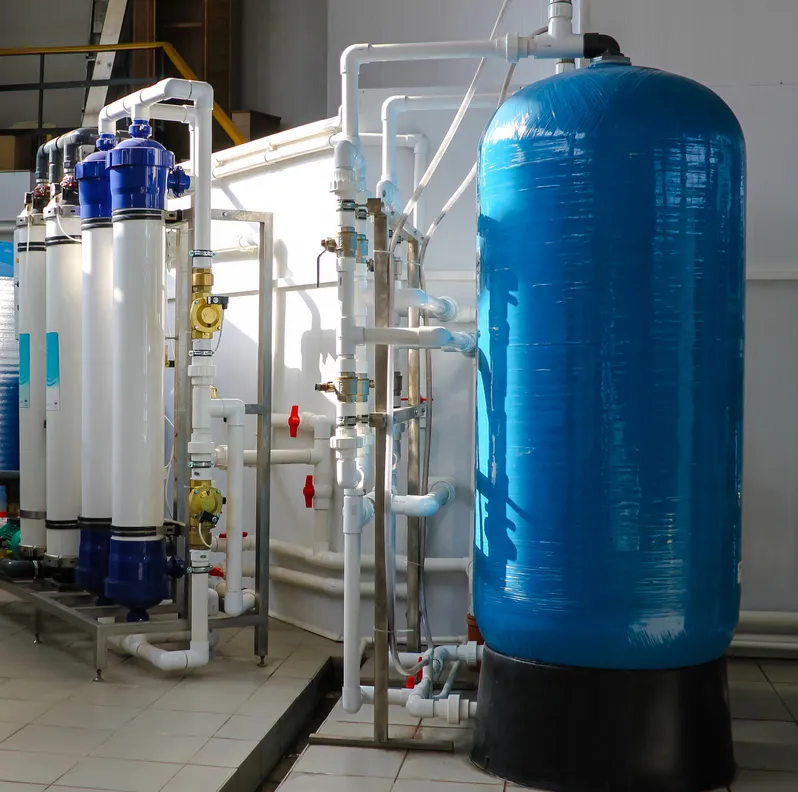
In glass plants, water quality directly affects cooling circuits, washing stages, polishing support, batch preparation utilities, boiler makeup and the reliability of downstream finishing operations. A properly engineered reverse osmosis system helps reduce dissolved salts, hardness, silica contribution, chloride load and conductivity variability before these parameters become scale, spotting, corrosion, unstable rinsing or excessive blowdown.
This page is designed for technical and purchasing teams evaluating reverse osmosis industria del vidrio as part of an industrial water treatment strategy. The goal is not only to install membranes, but to integrate pretreatment, instrumentation, recovery control, cleaning criteria and service support so the plant can operate with predictable permeate quality and lower operational risk.
Related references: sistema de ósmosis inversa, ingeniería de ósmosis inversa, servicio de ósmosis inversa and servicios de ósmosis inversa.
What the RO system must protect
Glass operations need water that supports thermal stability, clean contact surfaces and repeatable finishing conditions. Reverse osmosis can be configured to reduce dissolved solids before they concentrate in recirculating systems, deposit on equipment or interfere with rinse quality.
- ✓ Feedwater analysis linked to membrane projection and recovery limits.
- ✓ Pretreatment to control hardness, suspended solids, iron, oxidants and organic fouling.
- ✓ Instrumentation for pressure, flow, conductivity, differential pressure and normalized performance.
- ✓ Service planning for cleaning, cartridge replacement, antiscalant control and membrane life.
Estos productos podrian interesarte

Why water quality matters in glass manufacturing
The glass industry uses water in many support and production-adjacent services: furnace auxiliary systems, cooling loops, compressor cooling, mold cooling support, batch plant utilities, cutting tables, washing, polishing, rinsing, boiler makeup and general plant services. Even when water does not become part of the final glass formulation, poor control of dissolved minerals can create deposits, interfere with heat transfer, increase maintenance frequency and generate visible quality problems in finishing areas.
Reverse osmosis is commonly selected when the plant needs to lower conductivity, total dissolved solids, hardness, alkalinity and chloride concentration before water is sent to sensitive equipment. In a glass facility, the benefit is not only a lower number on the conductivity meter. The benefit is a more stable operating envelope: fewer abrupt changes in make-up water quality, less scaling pressure on heat exchangers, more predictable chemical dosage and better consistency in rinse or wash operations.
For reverse osmosis industria del vidrio, the initial design must consider the complete water balance. A plant may have different users with different quality needs. Boiler feed pretreatment may require a different permeate quality than washing or cooling makeup. Polishing and finishing may be sensitive to spots, residue and dissolved silica. Recirculating systems may be limited by cycles of concentration. A well-designed RO strategy separates critical users, defines acceptable permeate conductivity and establishes how much water must be recovered without causing premature membrane fouling.
Several parameters influence the decision: feed conductivity, hardness, silica, iron, manganese, free chlorine, turbidity, SDI, organic load, temperature, pH, alkalinity, sulfate, chloride and the presence of process contamination in reused water. If these variables are not measured, the RO system may be undersized, over-recovered or operated without enough pretreatment protection. That can lead to scaling, pressure increase, loss of permeate flow, higher cleaning frequency and shorter membrane life.
Common water-related risks
- Scale formation in heat transfer equipment due to hardness and alkalinity concentration.
- Spotting or residue in washing, rinsing and finishing steps.
- Corrosion risk associated with high chloride and unstable chemistry.
- Higher blowdown volume in cooling or boiler systems when feedwater quality is inconsistent.
- Unplanned maintenance caused by fouling, plugged nozzles or unstable instrumentation.
Reverse osmosis supports sustainability and operational continuity when it is integrated with pretreatment, monitoring and a realistic maintenance program.
Engineering a reverse osmosis system for glass-industry service
A reliable RO project starts with engineering. The system must be sized according to required permeate flow, feedwater chemistry, available pressure, seasonal temperature, expected recovery, cleaning access, reject handling and the operational profile of the plant. A glass manufacturer often operates continuously, so the design must also consider redundancy, bypass philosophy, storage capacity, automated flushing and how maintenance can be performed without affecting production.
Pretreatment before membranes
Pretreatment protects membranes from suspended solids, oxidants, hardness scaling and biological fouling. Depending on the analysis, the train may include multimedia filtration, activated carbon, softening, antiscalant dosing, cartridge filtration, dechlorination, pH adjustment or specialized iron removal. In glass plants, the correct pretreatment is especially important when well water, municipal water with seasonal changes or reused water streams are considered.
Cartridge filters should not be seen as the only protection. They are polishing barriers, not a full pretreatment system. If turbidity, SDI, iron or oxidant residuals are poorly controlled, the membranes absorb the problem. That usually appears as rising differential pressure, declining normalized permeate flow or loss of salt rejection.
Membrane projection and recovery
Recovery must be calculated using feed chemistry and scaling indices. Higher recovery reduces reject volume, but it also increases concentration at the membrane surface. For water with hardness, sulfate, silica or alkalinity, aggressive recovery can create deposits that reduce flow and increase cleaning frequency. The most economical design is not always the highest recovery; it is the recovery that balances water savings, membrane life, chemical dosage and operational stability.
Projection should also define array configuration, flux, feed pressure, concentrate flow and the expected permeate quality at minimum and maximum water temperature. This prevents selecting a skid that works only under ideal conditions.
Instrumentation
Pressure gauges, flowmeters, conductivity sensors and sampling points allow the operator to identify changes before production is affected.
Automation
PLC control, alarms, flush sequences and interlocks help keep the system inside safe operating limits.
Serviceability
Clean-in-place connections, accessible valves and documented setpoints reduce downtime during maintenance.
When the project requires broader evaluation, the design can be supported through ingeniería de ósmosis inversa. If the objective is to compare available equipment concepts, reviewing the scope of a sistema de ósmosis inversa helps align capacity, quality, controls and operating expectations before procurement.
Operational control: the difference between installed capacity and dependable production
After installation, reverse osmosis performance depends on disciplined operation. Operators should not rely only on daily permeate flow or a single conductivity value. A glass plant benefits from a routine that tracks normalized permeate flow, normalized salt passage, differential pressure, feed pressure, reject flow, recovery percentage, antiscalant dosage, cartridge filter pressure drop, pH, temperature and cleaning history. These values reveal whether the membranes are scaling, fouling, degrading or simply responding to temperature changes.
For high-value production environments, the monitoring plan should establish alarm limits and action levels. For example, a progressive increase in differential pressure may indicate particulate or biological fouling. A drop in permeate flow at similar temperature and pressure may indicate scaling or organic fouling. A loss of rejection may point to membrane damage, oxidant exposure, O-ring leaks or mechanical problems. Without normalization, teams may misinterpret normal seasonal temperature effects as membrane failure, or overlook a real fouling trend until capacity is already compromised.
Daily checks
Log feed, permeate and concentrate flows; feed and permeate conductivity; operating pressures; temperature; tank levels and alarms. These records create the baseline for troubleshooting.
Weekly review
Compare normalized trends, verify chemical consumption, inspect pretreatment performance and confirm that cartridge filters are not masking upstream problems.
Planned intervention
Schedule membrane cleaning or service when trends reach defined thresholds, not only after the process experiences low flow or poor quality.
Good operation also includes protection against hydraulic shock, dry running, incompatible chemicals and exposure to free chlorine when polyamide membranes are used. Shutdown and startup sequences should be documented because many membrane problems begin during abnormal operating conditions rather than steady operation. Flush cycles, low-pressure starts, controlled valve movements and correct storage procedures help protect the membrane elements.
The service model is part of the technical decision. A plant that needs uninterrupted production should evaluate spare parts availability, membrane replacement planning, remote support, emergency visits and periodic audits. Professional servicio de ósmosis inversa can help convert operating data into actions, while the broader category of servicios de ósmosis inversa supports diagnostics, maintenance, optimization and corrective work.
How to evaluate a reverse osmosis solution for the glass industry
Purchasing an RO system for glass manufacturing should not be reduced to a price comparison by flow rate. Two skids with the same nominal capacity can have very different outcomes if one ignores feedwater variability, membrane flux, pretreatment duty, automation, cleaning access or service support. The evaluation should connect water quality objectives with measurable operating criteria and lifecycle costs.
Technical questions to ask before buying
- What permeate flow is required at the lowest expected water temperature?
- What conductivity or TDS target must be achieved for each user of permeate water?
- What recovery is proposed and how was scaling risk calculated?
- What pretreatment is included and what feedwater limits must be respected?
- How will differential pressure, salt passage and normalized flow be tracked?
- Is there space and valve arrangement for CIP cleaning?
- What alarms, interlocks and shutdown protections are included?
- How will reject water be handled in the plant water balance?
Commercial and operational criteria
- Availability of membranes, cartridge filters, pumps, instruments and chemical consumables.
- Documented operating procedures and training for plant personnel.
- Clear warranty conditions tied to feedwater limits and maintenance practices.
- Service response for troubleshooting, cleaning, optimization and replacement planning.
- Energy consumption, chemical consumption and expected waste stream volume.
- Scalability if production expands or water quality requirements become stricter.
A practical selection framework
Start with a complete water analysis and a list of process users. Define the critical quality target for each user. Establish required flow by hour, shift and peak condition. Review pretreatment and recovery using the worst expected feedwater case. Confirm instrumentation and control philosophy. Finally, compare proposals by lifecycle reliability: water quality stability, membrane life, cleaning frequency, service support, spare parts and operational documentation.
For glass plants, the best reverse osmosis solution is the one that reduces process risk while remaining maintainable by the operating team. A robust design improves water consistency, supports thermal efficiency, reduces mineral-related issues and gives managers a measurable way to control quality rather than react to failures.
Heat transfer fluids for data centers, HVAC and industrial applications
Omega Chemicals offers solutions such as DOWFROST™ LC, KOSTChill PG XL, OMEGA DO LC30 and OMEGA DO LC25 for reliable thermal performance in critical applications.
- DOWFROST™ LC for data centers.
- KOSTChill PG XL for HVAC and computing.
- PG fluids for heat transfer.
- OMEGA DO LC30 PG 30 heat transfer fluid.
- OMEGA DO LC25 for industrial engines.
- Guidance in selecting the right product.
Frequently asked questions about reverse osmosis for the glass industry
Why would a glass plant need reverse osmosis?
A glass plant may need reverse osmosis to reduce dissolved solids, hardness, alkalinity, chloride and other minerals that contribute to scaling, spotting, corrosion and unstable water quality. RO helps create a more consistent water source for utilities, washing, rinsing, cooling makeup and boiler-related applications.
Is reverse osmosis enough by itself?
Usually, no. Reverse osmosis requires adequate pretreatment. The final configuration depends on feedwater chemistry and may include filtration, softening, carbon, antiscalant, dechlorination, cartridge filtration and monitoring. Without pretreatment, membranes can foul or scale quickly.
What information is needed to size the system?
The most important inputs are permeate flow demand, peak usage, feedwater analysis, temperature range, target permeate conductivity, recovery expectations, available footprint, reject handling and required redundancy. These inputs allow proper membrane projection and equipment selection.
How does RO support sustainability in glass manufacturing?
RO can reduce mineral loading into plant systems, improve cycles of concentration, lower blowdown requirements in some utilities and support water reuse strategies when combined with the correct treatment train. Sustainability depends on the full water balance, not only on the RO skid.
What maintenance does the system require?
Routine maintenance includes monitoring performance trends, replacing cartridge filters, verifying chemical dosing, calibrating sensors, inspecting pumps and valves, documenting pressures and flows, and performing CIP cleaning when normalized data indicates fouling or scaling.
How should proposals be compared?
Compare proposals by design basis, membrane flux, recovery, pretreatment scope, instrumentation, automation, serviceability, energy use, chemical consumption, spare parts, warranty conditions and technical support. The lowest-cost skid may become expensive if it creates downtime or short membrane life.
For reverse osmosis industria del vidrio, the best result comes from aligning process needs, engineering criteria, operating discipline and service support. The system should be selected as part of a complete industrial water strategy.
Temas que te pueden interesar
Estos productos podrian interesarte