Productos
Segunda mano
Servicios
Reverse osmosis systems for industria papelera


Water quality engineered for paper mills, pulp preparation and continuous industrial production
In paper manufacturing, water is not only a utility; it is part of fiber preparation, chemical dilution, boiler feed, shower systems, vacuum sealing, cooling circuits, coating preparation and cleaning operations. A well-designed reverse osmosis system helps stabilize conductivity, reduce dissolved solids, protect downstream equipment and support more consistent process water for demanding paper mill conditions.
This page explains how reverse osmosis can be planned for industria papelera environments where raw water variability, high consumption, suspended solids, organic load, silica, hardness and operational continuity must be evaluated together. The objective is to help technical buyers identify the engineering, pretreatment, instrumentation and service criteria that matter before selecting a system.
Why paper mills evaluate RO
Reverse osmosis as a strategic utility for industria papelera
The paper industry uses large volumes of water and depends on predictable quality. When incoming water changes by season or by source, the effect can appear as higher chemical consumption, deposits in heat exchange surfaces, instability in boiler operation, spotting, plugging of nozzles, reduced efficiency in showers or additional maintenance in pumps and valves. Reverse osmosis provides a controlled barrier for dissolved salts and allows the mill to define a more consistent permeate quality based on conductivity, flow, recovery, pressure and membrane performance.
For a purchasing decision, the value of RO is not limited to buying equipment. The correct scope includes water analysis, pretreatment, membrane selection, cleaning strategy, instrumentation, automation, spare parts, service availability and operating cost. A paper mill should evaluate the complete system as an industrial asset that protects production continuity and supports quality objectives. Related engineering references include sistema de ósmosis inversa, ingeniería de ósmosis inversa, servicio de ósmosis inversa and servicios de ósmosis inversa.
Volver al índiceEstos productos podrian interesarte

Índice técnico
1. Strategic value2. Water requirements3. Engineering design4. Operation criteria5. Supplier evaluation6. FAQWater quality requirements in paper mill applications
Reverse osmosis industria papelera projects must begin with a complete understanding of where permeate will be used. A paper mill may need RO permeate for boiler makeup, high-pressure showers, chemical preparation, starch systems, coating kitchens, cooling makeup, sealing water, humidification or general process water. Each use has a different sensitivity to conductivity, hardness, silica, chloride, alkalinity, organic matter and microbiological growth. Treating all uses as if they required the same water quality can increase cost or, worse, leave critical areas underprotected.
The first engineering step is to compare raw water quality against the required permeate quality. Typical parameters include pH, conductivity, TDS, hardness, alkalinity, silica, iron, manganese, chlorides, sulfates, turbidity, suspended solids, SDI, TOC and temperature. In industria papelera, the source may be well water, municipal water, surface water, clarified water or recovered process water. Each source creates a different pretreatment challenge. Surface water, for example, may have greater seasonal turbidity and organic matter. Well water may be more stable but can contain hardness, silica, iron or manganese that must be controlled before the RO membranes.
For boiler feed preparation, reverse osmosis reduces dissolved solids before polishing, deaeration or additional treatment steps. This can help reduce blowdown, improve cycles of concentration and protect heat transfer surfaces. For high-pressure showers, RO permeate helps limit mineral deposition in nozzles and reduces plugging risk when combined with proper filtration and maintenance. For chemical dilution, lower and more consistent conductivity may improve repeatability in chemical preparation and reduce variability in process response.
Key water questions before selecting RO
- What is the complete raw water analysis and how does it change by season?
- Which process areas will use permeate and what quality is required for each?
- What flow is required hourly, daily and during peak production?
- What conductivity, hardness, silica and microbiological limits are acceptable?
- Is the RO system expected to feed a tank, a loop or a downstream polishing stage?
- What redundancy is required to avoid production interruption?
Boiler makeup
RO can reduce TDS before boilers, helping control cycles, blowdown and scaling tendency. The system should be designed around feed quality, silica, alkalinity and required steam reliability.
Process showers
Lower mineral load can help protect nozzles and improve cleaning consistency when the RO system is paired with correct filtration, tank design and loop hygiene.
Chemical preparation
Using consistent permeate for dilution can support repeatable preparation of additives, coatings, starches and process chemicals in paper manufacturing.
The decision should include both quality and operating stability. A low-cost RO skid without adequate pretreatment may produce acceptable water at startup but lose performance quickly under the load of paper mill service. Likewise, an oversized or poorly automated system may increase energy consumption, waste water or create unstable tank levels. The best technical approach connects water quality objectives with production demand, storage, distribution, control philosophy and service support.
Volver al índiceÍndice técnico
1. Strategic value2. Water requirements3. Engineering design4. Operation criteria5. Supplier evaluation6. FAQEngineering design for reverse osmosis in industria papelera
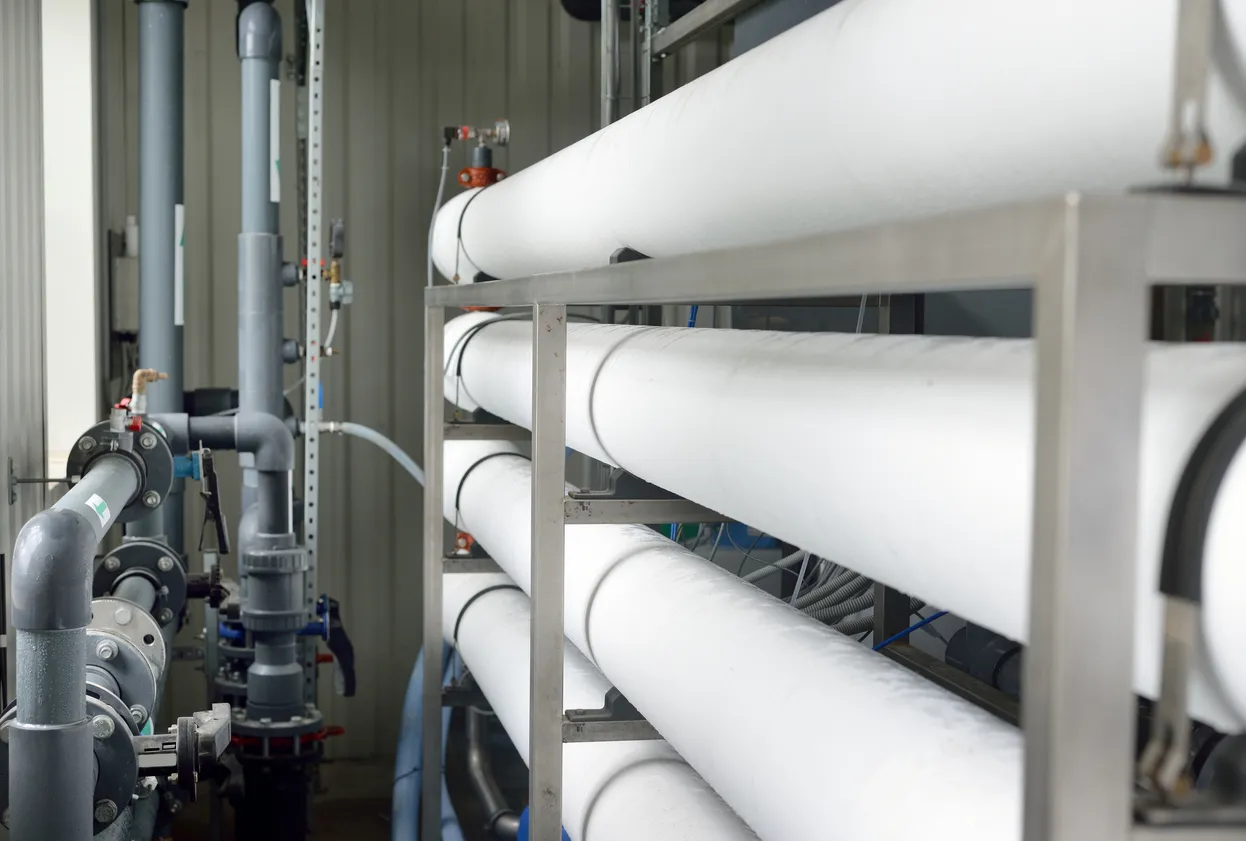
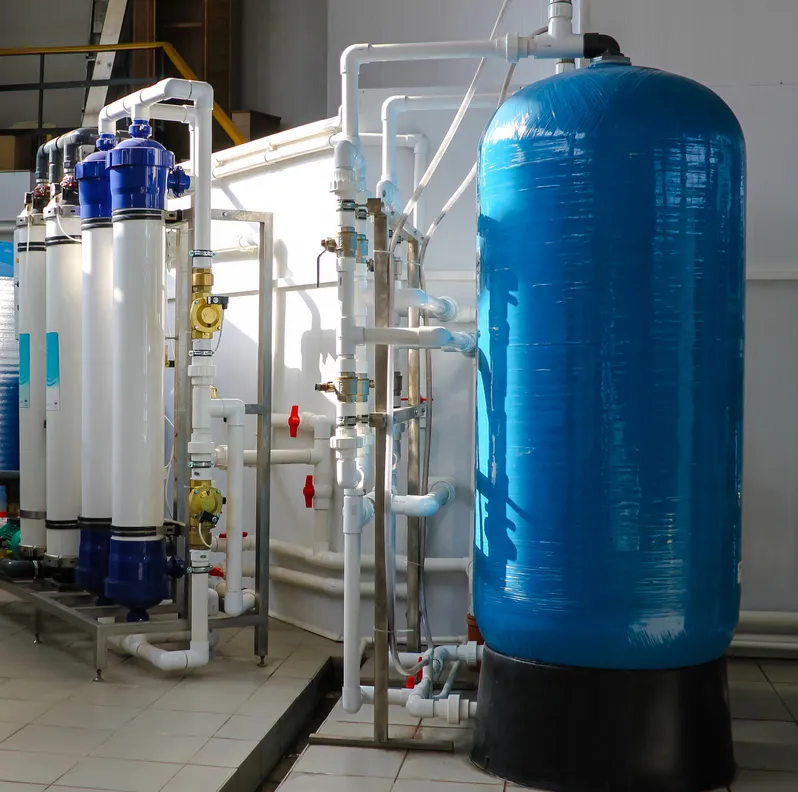
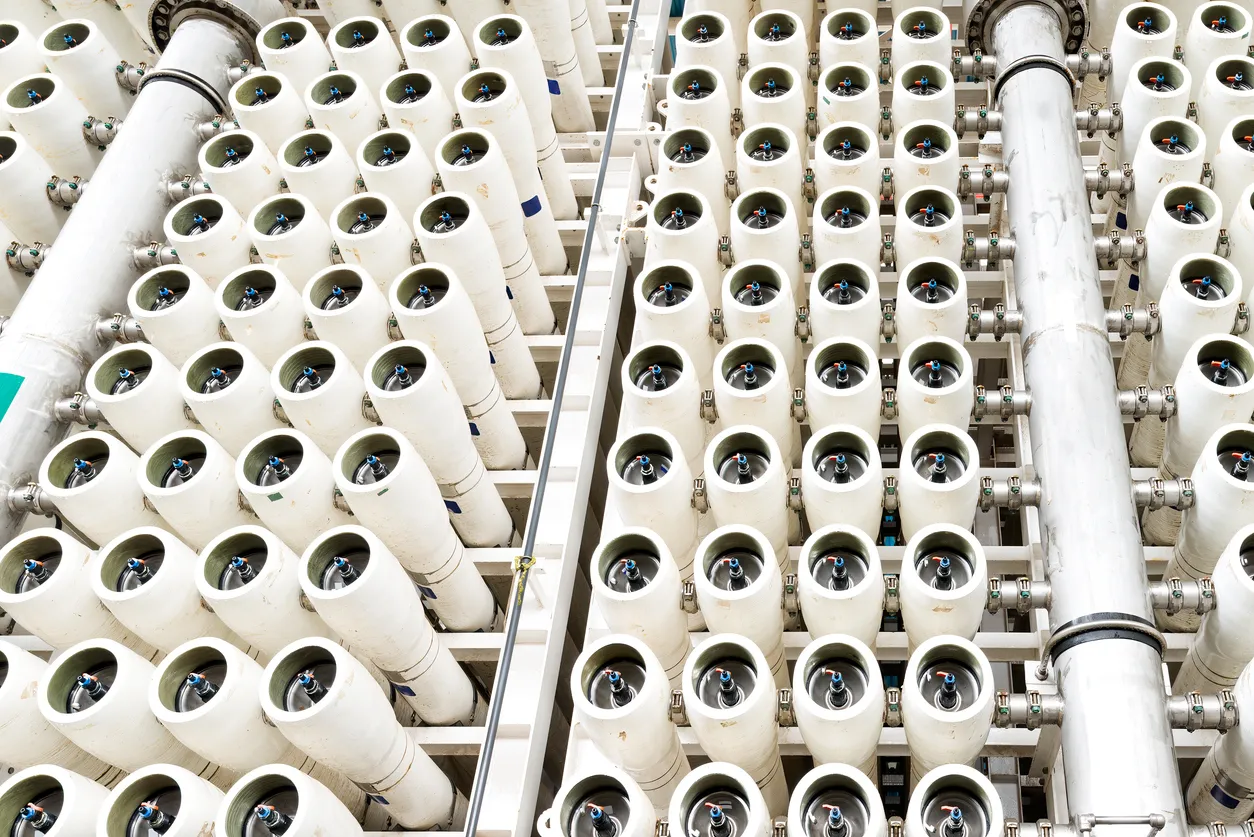
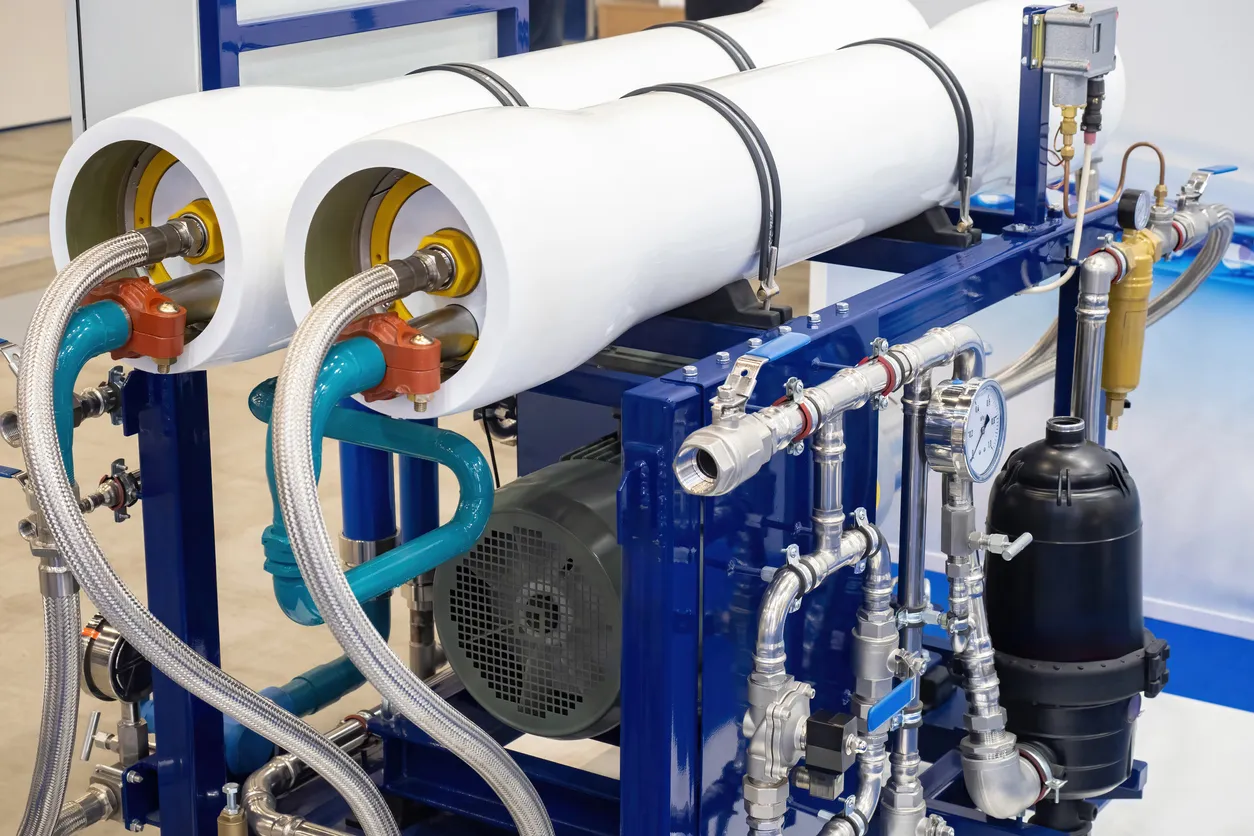
A robust RO design for industria papelera must consider pretreatment, membrane configuration, hydraulic balance, recovery, permeate storage, reject management, automation and cleaning access. The design is usually not a single piece of equipment; it is a treatment train. Depending on raw water, pretreatment may include multimedia filtration, activated carbon, softening, antiscalant dosing, cartridge filtration, oxidation control, dechlorination, ultrafiltration or pH adjustment. The purpose is to protect membranes against fouling, scaling, chlorine damage, suspended solids and biological growth.
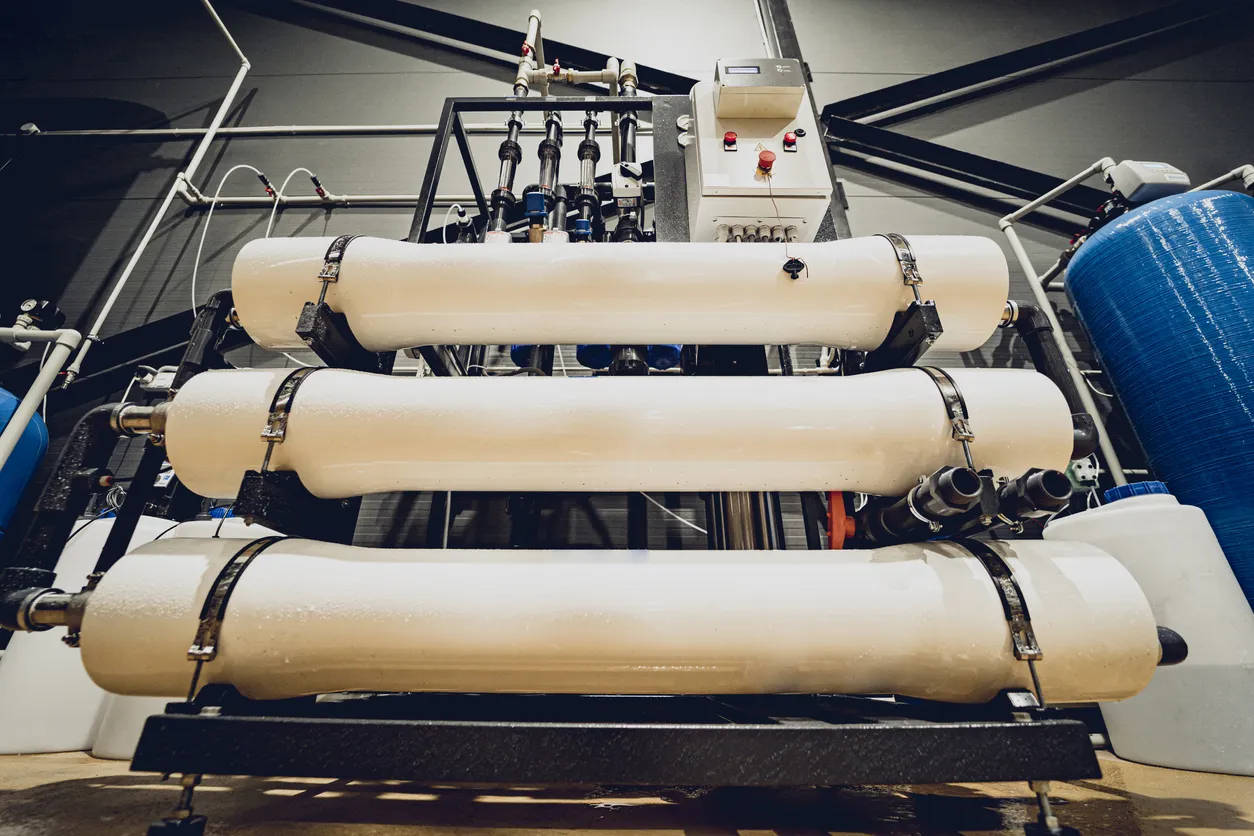
Membrane selection and array design should be based on feed quality and performance targets. Factors such as flux, recovery, feed pressure, concentrate flow, temperature correction, scaling potential and cleaning frequency determine whether the system will remain stable. High recovery may look attractive because it reduces reject volume, but excessive recovery can increase silica, hardness or sulfate concentration in the brine and accelerate scaling. For paper mills, the engineering goal is not only high recovery; it is sustainable recovery that maintains permeate quality and reduces membrane stress over time.
Instrumentation is another decisive element. At minimum, the RO should monitor feed pressure, concentrate pressure, permeate pressure, flow rates, conductivity, temperature and tank levels. Better systems include normalized permeate flow, salt rejection trends, differential pressure across prefilters, chemical dosing confirmation and alarms. These variables allow maintenance teams to see whether the system is losing capacity due to fouling, scaling, membrane aging or feed water changes. Without instrumentation, operators only see the problem when flow is already insufficient or water quality has moved out of range.
Design criteria to review
| Area | What to verify | Why it matters |
|---|---|---|
| Pretreatment | SDI, turbidity, chlorine, iron, organics | Protects membranes and reduces cleaning frequency. |
| Hydraulics | Feed pressure, concentrate flow, permeate backpressure | Prevents unstable operation and membrane stress. |
| Recovery | Scaling limits for silica, hardness and sulfates | Avoids premature scaling and production losses. |
| Controls | Conductivity, alarms, tank level logic, interlocks | Improves reliability and operator response. |
| Serviceability | CIP ports, isolation valves, sampling points | Speeds maintenance and troubleshooting. |
Pretreatment compatibility
The RO cannot compensate for poor pretreatment. Filtration, chemical dosing and chlorine control should be selected according to the exact feed source and paper mill operating profile.
Membrane protection
Flux and recovery should be conservative enough to reduce fouling and scaling while meeting production needs. Design software and field experience should guide the final array.
Automation logic
Automatic flush, low-pressure protection, tank interlocks and conductivity diversion can protect the system and prevent off-spec water from entering critical processes.
A complete engineering scope should define what happens during startup, shutdown, low demand, high demand, chemical cleaning, membrane replacement, filter changeout and temporary raw water excursions. These operating states are often where weak systems fail. When reviewing proposals, buyers should request a clear explanation of pretreatment rationale, expected permeate quality, projected operating pressure, antiscalant strategy, cleaning frequency assumptions, reject flow and service plan. Useful references for broader scope comparison are sistema de ósmosis inversa and ingeniería de ósmosis inversa.
Volver al índiceÍndice técnico
1. Strategic value2. Water requirements3. Engineering design4. Operation criteria5. Supplier evaluation6. FAQOperational criteria that protect performance and continuity
In a paper mill, RO operation must be evaluated under real production conditions. The plant may run continuously, experience peak demand, receive fluctuating feed quality or depend on treated water for several process areas at once. Therefore, the RO system must be sized not only for nominal flow but for daily production patterns, storage capacity, redundancy and response time. If the permeate tank is too small or if the system lacks redundancy, a temporary stop can affect boilers, showers or chemical preparation.
Operators should track normalized permeate flow, normalized salt rejection and differential pressure. These indicators help separate common problems. A decline in normalized flow with stable rejection may suggest fouling or scaling. A drop in rejection may indicate membrane damage, seal issues or chemical exposure. A rising differential pressure may indicate particulate fouling or biological growth. By monitoring these values, maintenance teams can plan cleaning before the system reaches a critical production limit.
Cleaning strategy is especially important for industria papelera because feed water may include organics, colloids or seasonal contaminants. CIP procedures should be based on the type of foulant. Acid cleaning may target inorganic scaling, while alkaline cleaning may address organic or biological fouling. The plant should avoid cleaning only after severe performance loss, because delayed cleaning can shorten membrane life and increase operating pressure. A documented service program makes the RO system easier to manage and supports predictable cost of ownership.
Operational indicators
- Feed, permeate and concentrate flow trends.
- Permeate conductivity and salt rejection.
- Pressure differential by stage and across prefilters.
- Temperature-corrected permeate production.
- Frequency of cartridge filter replacement.
- CIP results before and after cleaning.
- Antiscalant consumption and dosing verification.
- Raw water changes after rain, well switching or process reuse.
Continuity planning
Paper mills should evaluate N+1 pumps, standby trains, bypass strategy, tank autonomy and emergency service. The cost of downtime may be higher than the cost of additional reliability features.
Data-driven maintenance
When operating data is recorded and reviewed, the plant can schedule cleaning, membrane replacement and pretreatment adjustments before water quality impacts production.
A practical RO operation program includes daily checks, weekly review of trends, monthly inspection of pretreatment performance and periodic validation of instruments. Conductivity probes, flowmeters and pressure transmitters should be maintained because poor readings can lead to incorrect decisions. When the system supports critical utilities, remote monitoring or alarms may help reduce response time. The system should also include clear procedures for startup after shutdown, flushing, chemical dosing verification and safe isolation during maintenance.
The service component should not be considered optional. Even a well-designed reverse osmosis system will require cartridge filters, chemicals, membrane cleaning, pump inspection, valve maintenance, calibration and technical troubleshooting. A reliable servicio de ósmosis inversa helps keep the treatment plant aligned with production requirements and reduces the risk of reactive maintenance.
Volver al índiceÍndice técnico
1. Strategic value2. Water requirements3. Engineering design4. Operation criteria5. Supplier evaluation6. FAQHow to evaluate suppliers and proposals for reverse osmosis industria papelera
When comparing proposals, buyers should look beyond installed flow. Two systems with the same rated capacity can have very different pretreatment, membrane loading, recovery, automation, serviceability and operating cost. A strong proposal should explain the water analysis used for design, the target permeate quality, pretreatment assumptions, antiscalant or chemical strategy, expected recovery, energy requirements, concentrate flow, cleaning access, instrumentation and maintenance plan.
The supplier should be able to discuss how paper mill conditions affect RO operation. This includes high water demand, variable source quality, boiler requirements, production criticality, chemical dilution, possible reuse streams and the need for stable conductivity. The proposal should identify operational risks and mitigation steps rather than presenting the RO as a generic skid. For example, if silica is high, the design should explain recovery limitations or chemical control. If raw water turbidity changes, the pretreatment should include appropriate filtration and monitoring. If the mill requires continuous operation, redundancy and spare parts should be reviewed from the start.
Documentation also matters. The project should include process flow diagrams, equipment list, control philosophy, instrument list, maintenance recommendations, cleaning procedures and startup criteria. These documents help maintenance, production, quality and purchasing teams align expectations. They also reduce ambiguity during commissioning and future service. The best decision is usually based on total value: permeate quality, reliability, technical support, operating cost and adaptability to the mill’s future needs.
Proposal checklist
- Complete raw water basis of design.
- Defined permeate quality target.
- Pretreatment and membrane rationale.
- Recovery and scaling calculations.
- Instrumentation and alarm list.
- CIP and maintenance strategy.
- Spare parts and technical service plan.
- Integration with tanks, pumps and distribution.
Technical fit
The selected RO system should match paper mill water demand, raw water chemistry and process sensitivity. A generic design can create avoidable operating problems.
Lifecycle cost
Energy, chemicals, filters, membrane cleaning, reject management and service labor should be considered together, not only initial equipment price.
Support capacity
Fast response, correct diagnostics and access to consumables are important for mills where treated water is tied to production continuity.
For purchasing teams, a practical comparison method is to request a technical matrix for every proposal. Include flow, recovery, permeate quality, pretreatment, membrane model, number of pressure vessels, control features, cleaning provisions, space requirements, electrical requirements and service scope. This makes the comparison more objective and reduces the risk of selecting a system that meets only the headline capacity. To review service alternatives and related suppliers, consult servicios de ósmosis inversa.
In conclusion, reverse osmosis industria papelera should be treated as an engineered water platform. Its value comes from combining pretreatment, membrane performance, automation, service and operating discipline. When these elements are aligned, the mill gains better water stability, lower scaling risk and a stronger basis for efficient production.
Volver al índice
Heat transfer fluids for data centers, HVAC and industrial applications
Omega Chemicals offers solutions such as DOWFROST™ LC, KOSTChill PG XL, OMEGA DO LC30 and OMEGA DO LC25 for reliable thermal performance in critical applications.
- DOWFROST™ LC for data centers.
- KOSTChill PG XL for HVAC and computing.
- PG fluids for heat transfer.
- OMEGA DO LC30 PG 30 heat transfer fluid.
- OMEGA DO LC25 for industrial engines.
- Guidance in selecting the right product.
Índice técnico
1. Strategic value2. Water requirements3. Engineering design4. Operation criteria5. Supplier evaluation6. FAQFAQ about reverse osmosis for industria papelera
These frequently asked questions summarize the most important technical and purchasing considerations for paper mills evaluating reverse osmosis. The answers are written to support preliminary comparison, but every project should be confirmed with a complete water analysis, demand profile and engineering review.
Why is reverse osmosis useful in the paper industry?
Reverse osmosis reduces dissolved solids and helps produce more consistent process water. In industria papelera, this can support boiler makeup, chemical dilution, showers, coating preparation and other areas where mineral content or conductivity variability can affect equipment and process stability.
Is RO always required for all paper mill water?
No. The decision depends on the process requirement. Some areas may use filtered or softened water, while critical uses may benefit from RO permeate. A correct design separates water qualities by application instead of treating every use with the same specification.
What raw water data is needed before designing the system?
At minimum, the project should review pH, conductivity, TDS, hardness, alkalinity, silica, iron, manganese, chloride, sulfate, turbidity, SDI, TOC, temperature and microbiological risk. Seasonal variation should also be evaluated, especially when surface water or mixed sources are used.
What causes RO membranes to fail early in paper mill service?
Common causes include inadequate pretreatment, high fouling load, chlorine exposure, excessive recovery, poor antiscalant control, delayed cleaning, biological growth, incorrect startup or shutdown practices and lack of performance monitoring.
How should the RO system be sized?
Sizing should consider peak flow, average daily consumption, tank autonomy, redundancy, recovery, raw water temperature and the production areas served. A system sized only for nominal flow may be insufficient during peak demand or maintenance events.
What should be included in a supplier proposal?
A complete proposal should include basis of design, pretreatment, membrane array, expected permeate quality, recovery, reject flow, instrumentation, automation, CIP provisions, spare parts, service plan and integration with storage or distribution systems.
For buyers, the most important recommendation is to evaluate reverse osmosis as a full engineered solution, not as a standalone skid. The final selection should consider water quality objectives, continuity needs, maintenance capability, service support and long-term operating cost. A properly specified RO system can help the paper mill maintain consistent water quality while protecting critical utilities and process equipment.
Volver al índice
Temas que te pueden interesar
Estos productos podrian interesarte