Productos
Segunda mano
Servicios
Reverse osmosis systems for industria textil


Reverse osmosis for textile process water
A structured guide for selecting, engineering and operating industrial RO in textile production environments.
Reverse osmosis for textile manufacturing that depends on stable, repeatable water quality
In textile plants, process water is not only a utility; it directly influences dyeing consistency, chemical consumption, rinsing performance, boiler makeup, cooling loops and final product quality. A well engineered reverse osmosis industria textil solution helps convert variable feed water into a controlled water stream that supports production stability, lower rework risk and a more predictable operating model.
The objective is not simply to install membranes. The objective is to define the required permeate quality, protect the RO system with suitable pretreatment, size the equipment according to real demand and operate it with the correct instrumentation. When these elements are aligned, reverse osmosis can help reduce dissolved salts, hardness, alkalinity, chlorides and conductivity that interfere with textile wet processing.
Supports repeatable dye baths, washes and rinses by reducing water variability.
Controls mineral load that can affect heaters, valves, pipes and membrane trains.
Enables measurable quality targets through conductivity, flow and pressure monitoring.
Where RO adds value in industria textil
Reverse osmosis can be specified for dyeing, finishing, washing, chemical preparation, boiler feed pretreatment, cooling makeup and water reuse polishing when the quality objective requires lower dissolved solids.
Estos productos podrian interesarte
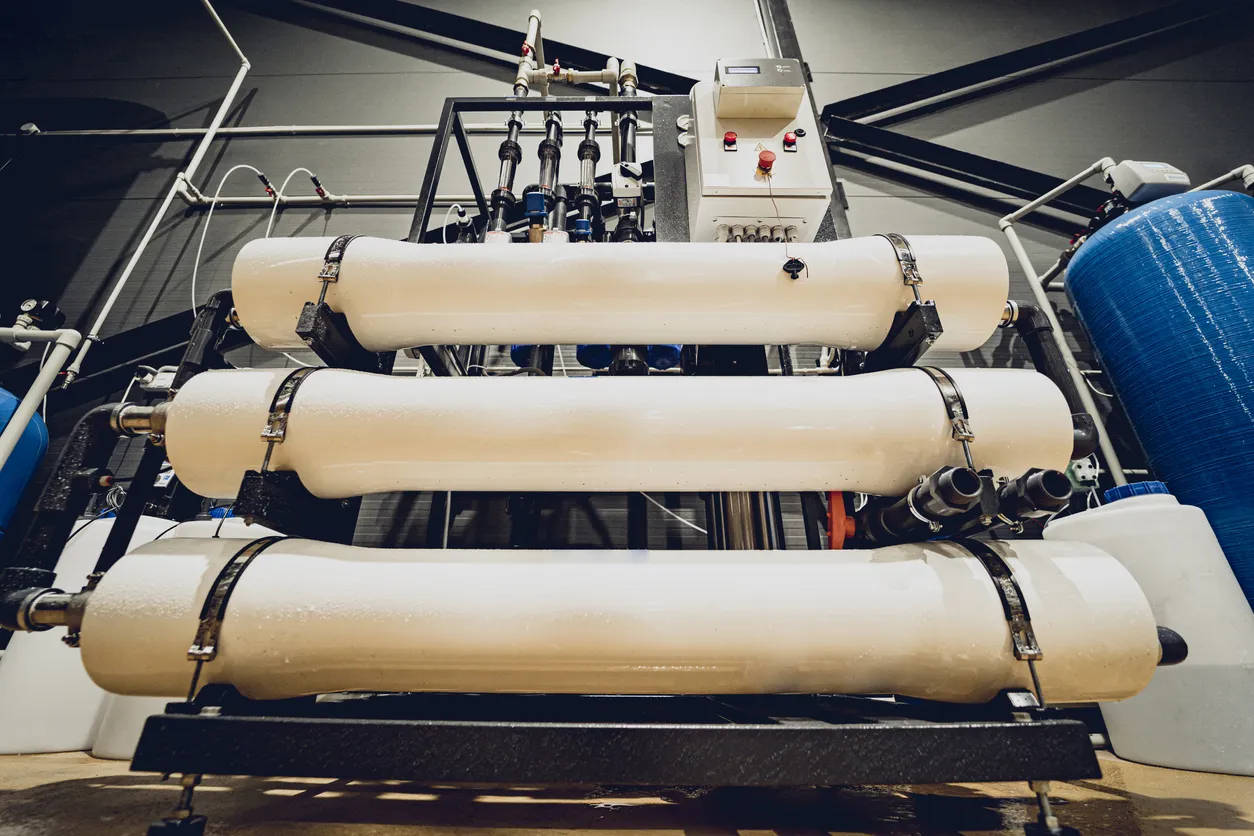
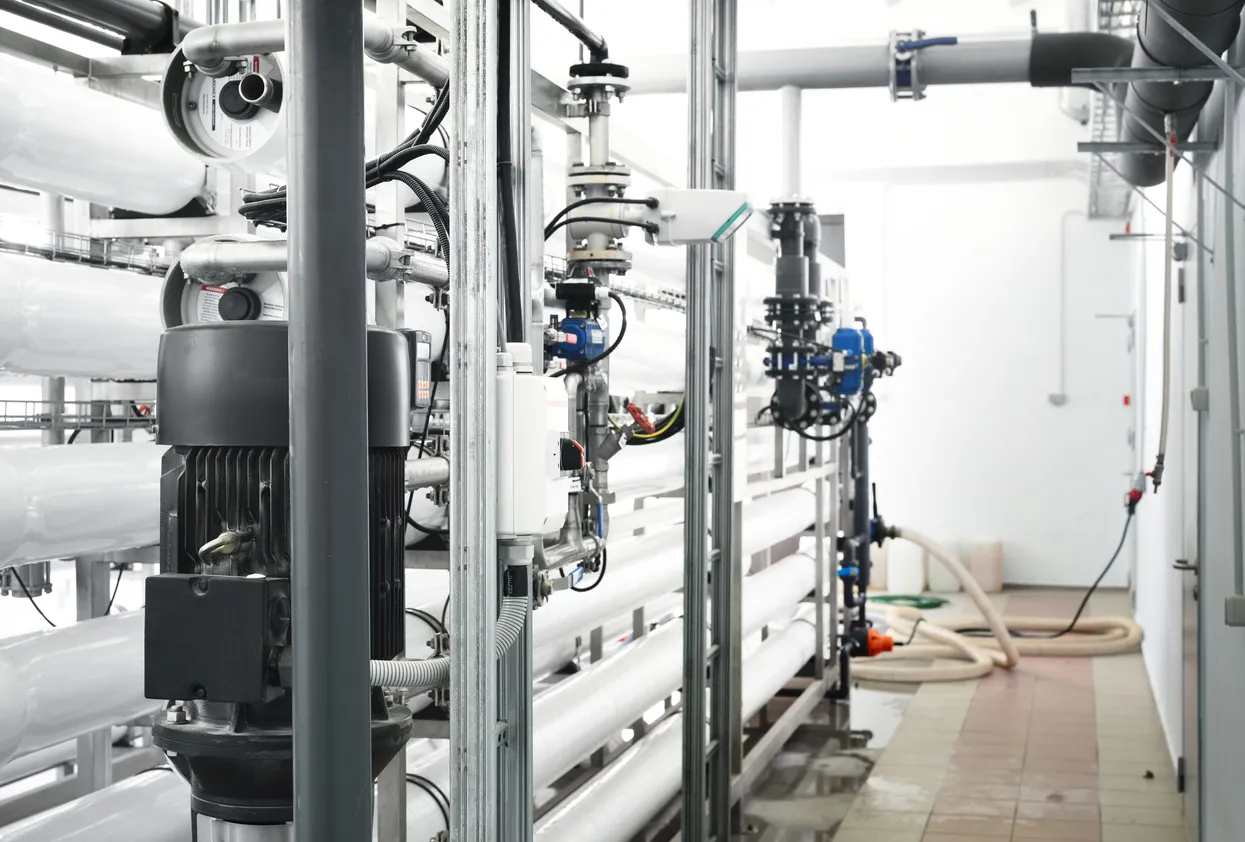
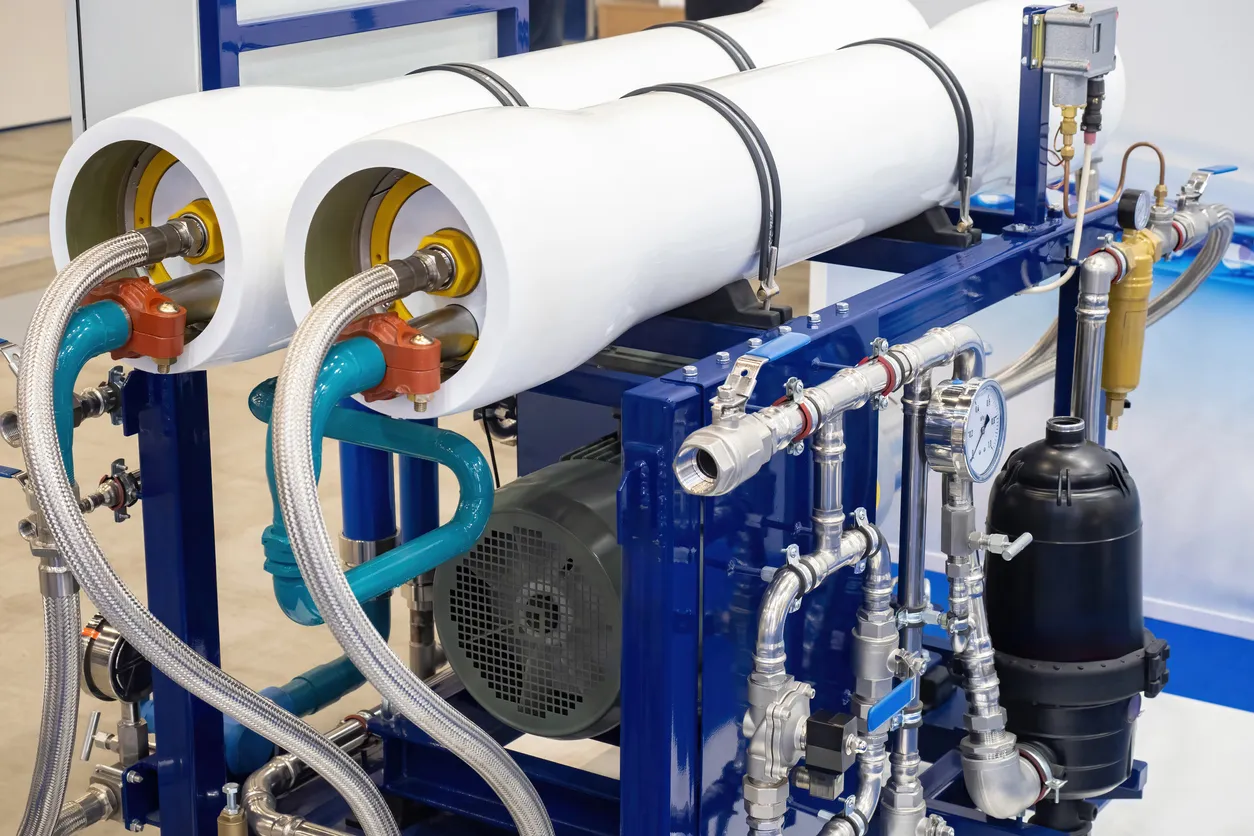
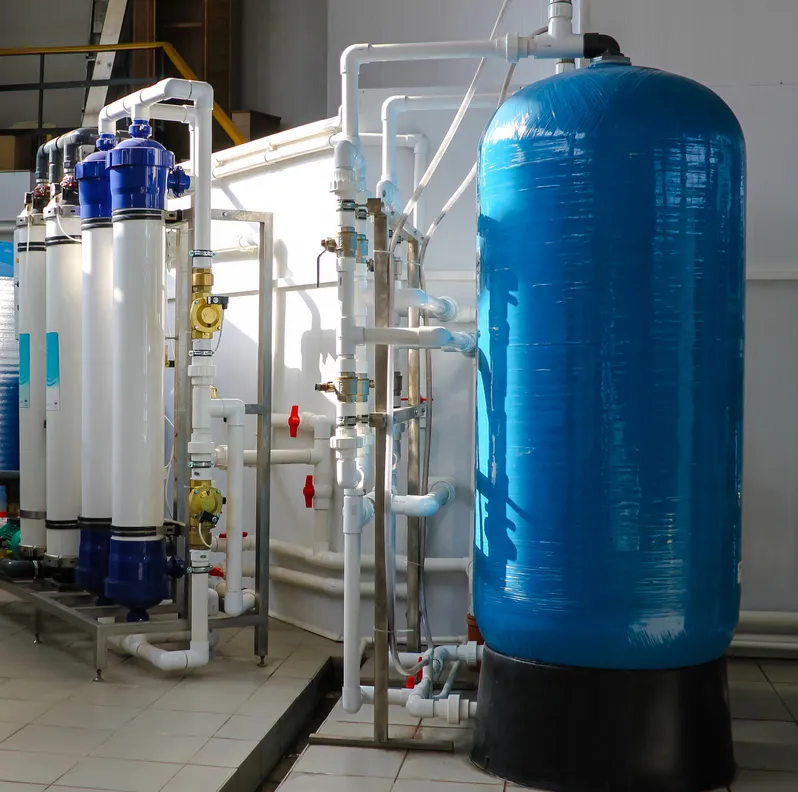
Reverse osmosis for textile process water
A structured guide for selecting, engineering and operating industrial RO in textile production environments.
Water quality objectives for textile reverse osmosis projects
Textile plants use water in several different ways, and each use has its own sensitivity to conductivity, hardness, alkalinity, silica, iron, manganese, organics and microbiological load. A reverse osmosis system must therefore be evaluated around the process requirement, not only around the nominal capacity of the equipment. For dyeing and finishing, stable water quality helps improve reproducibility. For boiler makeup, low hardness and reduced dissolved solids help decrease scale formation and blowdown. For washing and rinsing, lower salinity can improve removal efficiency and reduce spotting or residue risk.
A practical specification begins by defining feed water quality, desired permeate quality, peak flow, daily production profile and storage philosophy. This is the difference between buying a generic skid and developing a sistema de ósmosis inversa that matches textile production. The same RO capacity may perform very differently depending on raw water variation, temperature, fouling load, pretreatment quality and operator practices.
Typical quality variables to define before purchase
Used to verify dissolved salt reduction and permeate stability. Sudden increases may indicate membrane damage, bypass, scaling, oxidation or sealing problems.
Important for dye baths, boilers, heat exchangers and chemical preparation because calcium and magnesium can generate scale or interfere with formulations.
Influence chemical dosing, cleaning strategy and scaling potential. They must be reviewed together with recovery and antiscalant design.
Can foul pretreatment and membranes, produce staining and reduce cleaning effectiveness if not controlled before the RO train.
Decision logic for industria textil
For the textile sector, reverse osmosis should be evaluated as part of an integrated water strategy. The system may supply several processes at once, but the strictest quality requirement usually determines the final design. If dyeing requires very stable conductivity, the RO system must prioritize consistent permeate quality, proper storage turnover and protection against contamination. If the objective is boiler makeup, the design may require degassing, polishing, softening, chemical conditioning or additional treatment downstream. If the objective is reuse, the feed water characterization becomes even more important because wastewater streams can contain dyes, surfactants, salts, COD, fibers and residual chemicals that require specialized pretreatment before reaching RO membranes.
Another key point is that RO performance is not fixed. Temperature changes, membrane age, fouling, scaling and feed quality variations can change permeate flow and rejection. For that reason, the purchase decision should include not only equipment capacity but also instrumentation, data logging, sampling points, cleaning access, spare parts and service response. A textile plant with multiple production shifts needs a system that can be diagnosed quickly and operated with clear reference values.
Return to index ↑Engineering considerations: pretreatment, membranes and hydraulic design
The strongest RO designs for textile applications start before the membrane array. Pretreatment protects the membranes from suspended solids, oxidants, hardness scale, iron, biological growth and organic fouling. Depending on the feed water source, the pretreatment train may include multimedia filtration, activated carbon, softening, ultrafiltration, cartridge filtration, chemical dosing, pH correction, dechlorination, antiscalant and clean-in-place connections. The final configuration must be selected from water analysis, expected fouling tendency and recovery objectives.
Engineering also defines the membrane model, number of pressure vessels, staging, recovery, concentrate flow, permeate flow, pump pressure, recirculation strategy and reject management. In a textile plant, this matters because demand may change by batch, color, fabric type, washing stage or production schedule. A correctly engineered system supports these variations while keeping membrane flux inside a reasonable range. Oversizing can increase capital cost and stagnant water risk, while undersizing can force high flux, poor recovery or unstable operation.
For complex projects, ingeniería de ósmosis inversa should include raw water evaluation, mass balance, design basis, control philosophy, electrical requirements, skid layout, piping materials, instrumentation and operating criteria. This level of definition helps the buyer compare proposals beyond price and avoid hidden gaps that become operating problems after installation.
Design elements that should be reviewed
- Feed water source: well, municipal supply, surface water or treated wastewater each requires different pretreatment assumptions.
- Recovery target: higher recovery reduces reject volume but increases scaling risk and may require stricter chemical control.
- Membrane flux: must be compatible with feed quality and fouling potential; aggressive flux shortens cleaning intervals.
- Instrumentation: pressure, flow, conductivity, temperature and differential pressure enable troubleshooting and normalized performance tracking.
- Cleaning access: CIP connections, valves and tanks should be planned from the beginning, not added as an afterthought.
- Materials: piping, seals and pumps must tolerate water chemistry, cleaning agents and industrial operating conditions.
Pretreatment protects investment
Many RO failures begin with insufficient pretreatment. Removing particles, oxidants and scale-forming compounds before the membranes helps reduce cleaning frequency and unexpected downtime.
Hydraulics drive reliability
Balanced flow, adequate concentrate velocity and suitable pressure control reduce localized stress and support stable rejection in continuous textile operation.
Controls simplify operation
A control panel with alarms, permissives, automatic flush and quality monitoring can help operators maintain the system within the intended envelope.
How to compare RO proposals for textile plants
When comparing suppliers, the buyer should request more than a list of components. A complete proposal should describe design flow, permeate quality expectation, feed quality assumptions, recovery, pretreatment scope, membrane brand and model, pump specification, instrumentation, automation, utilities, cleaning method, installation limits and commissioning requirements. It should also clarify whether tanks, distribution pumps, piping, electrical work, civil work, chemical dosing and operator training are included.
For textile production, the most attractive proposal is not always the lowest equipment price. A system that lacks adequate pretreatment or monitoring may cost less at purchase but can generate higher chemical consumption, more frequent membrane replacement, batch quality issues and production interruptions. The technical comparison should therefore focus on risk reduction, serviceability and total operating cost.
Return to index ↑Operation and monitoring for stable textile water supply
A reverse osmosis skid becomes valuable when it is operated with consistent reference points. Operators should know normal feed pressure, concentrate pressure, permeate flow, concentrate flow, recovery, permeate conductivity, temperature and pressure drop. These indicators help detect scaling, fouling, membrane oxidation, cartridge filter plugging, pump wear and valve misalignment before the plant loses quality or capacity.
Because textile production often operates in shifts, data must be easy to read and interpret. Simple logs, trend charts and alarms can prevent subjective decision-making. When possible, normalized permeate flow and salt rejection should be reviewed because raw data changes with temperature and feed pressure.
Operating indicators that support preventive decisions
High or unstable conductivity can indicate membrane damage, O-ring leaks, bypass, insufficient flushing or feed changes that exceed the design basis.
Increasing pressure drop across vessels is often an early sign of fouling, scaling, biological growth or feed suspended solids entering the RO array.
Recovery should remain aligned with design. Excessive recovery can concentrate salts and increase scaling risk in the last stage.
Short cleaning intervals may reveal pretreatment limitations, chemical dosing problems or membrane flux that is too aggressive for the water quality.
Service strategy for continuous production
RO service should be planned around the cost of downtime. Textile operations may require water for dyeing, preparation, rinsing, steam generation and finishing. If the RO plant stops unexpectedly, production can be delayed or shifted to lower-quality water, creating risks in color repeatability and process control. A service plan should include scheduled inspections, cartridge changes, chemical inventory review, sensor calibration, membrane performance evaluation and cleaning criteria.
A qualified servicio de ósmosis inversa can also help establish operating baselines after commissioning. Baselines are essential because they allow the plant to distinguish between normal variation and real deterioration. Without a baseline, teams may wait until permeate quality is already out of specification before taking action.
Remote or local monitoring can be valuable when multiple plants or shifts are involved. Even basic alarms for low feed pressure, high permeate conductivity, high differential pressure and tank level can improve response time. More advanced implementations may integrate data to maintenance systems or dashboards, making the RO plant part of the production reliability strategy instead of a standalone utility.
Return to index ↑Purchase criteria: capacity, quality, integration and lifecycle cost
For a textile plant, the purchase decision should balance water quality, reliability and operating cost. The buyer should evaluate whether the RO system can meet current demand and future growth, whether it can be serviced without long stoppages, whether consumables are readily available and whether the automation level matches the plant team. The project should also define installation boundaries, power supply, drain capacity, raw water storage, permeate storage and distribution pressure.
Lifecycle cost includes energy, cartridge filters, chemicals, membrane replacement, cleaning chemicals, labor, calibration, downtime and reject water handling. Two systems with the same nominal permeate flow may have very different lifecycle costs if recovery, pressure, pretreatment and service accessibility are different. For this reason, the quote should include technical assumptions and not only a commercial price.
Questions to ask before approving a project
- What feed water analysis was used to design the system?
- What permeate conductivity or quality range is expected under normal operation?
- What pretreatment is included and what is outside the scope?
- What recovery percentage is proposed and why is it safe for this water?
- What instrumentation is included for monitoring and troubleshooting?
- How will CIP, membrane replacement and preventive service be performed?
- What utilities, tanks and distribution equipment are required for integration?
Integration with textile utilities
RO permeate may feed dye kitchens, rinsing systems, boilers, cooling makeup or blending tanks. Each destination may require a different pressure, flow pattern and storage approach. The integration design should avoid stagnant water, cross-contamination, oversized tanks and distribution bottlenecks. It should also preserve access for maintenance and sampling.
Vendor evaluation
Suppliers should be evaluated by technical clarity, documentation, experience with industrial systems, availability of consumables, commissioning support and maintenance capability. MarketB2B categories such as servicios de ósmosis inversa can help connect technical requirements with suppliers that understand industrial RO applications.
Final recommendation for reverse osmosis industria textil projects
A successful RO project for textile manufacturing must be treated as an engineering and operations decision. The system should be specified from the real water analysis, the production process, the required permeate quality and the expected operating hours. The best results are achieved when pretreatment, membranes, instrumentation, automation, storage and service are designed as one integrated solution.
Before purchasing, the plant should request a clear design basis, verify the quality objective, review the pretreatment scope and confirm how the equipment will be maintained. This approach reduces risk, improves process stability and supports a more predictable water supply for textile operations that depend on consistent results.
Return to index ↑
Heat transfer fluids for data centers, HVAC and industrial applications
Omega Chemicals offers solutions such as DOWFROST™ LC, KOSTChill PG XL, OMEGA DO LC30 and OMEGA DO LC25 for reliable thermal performance in critical applications.
- DOWFROST™ LC for data centers.
- KOSTChill PG XL for HVAC and computing.
- PG fluids for heat transfer.
- OMEGA DO LC30 PG 30 heat transfer fluid.
- OMEGA DO LC25 for industrial engines.
- Guidance in selecting the right product.
Reverse osmosis for textile process water
A structured guide for selecting, engineering and operating industrial RO in textile production environments.
Frequently asked questions about reverse osmosis for industria textil
These questions help purchasing, maintenance and production teams evaluate whether a reverse osmosis system is suitable for textile process water and how to compare different technical proposals.
Why is reverse osmosis used in textile manufacturing?
Reverse osmosis is used to reduce dissolved salts, hardness, alkalinity and conductivity in process water. In textile operations, this can support more consistent dyeing, better rinsing, improved chemical preparation and reduced scaling in boilers, heaters and utility systems. The exact benefit depends on the feed water quality and the process requirement.
What water quality should a textile RO system produce?
The target quality depends on the application. Dyeing and finishing may need stable conductivity and low hardness, while boiler makeup may require very low hardness and controlled dissolved solids. The specification should be based on laboratory analysis, production requirements and the most sensitive water use in the plant.
Is pretreatment necessary before RO membranes?
Yes. Pretreatment is critical because RO membranes are vulnerable to suspended solids, chlorine, iron, hardness scale, organic fouling and biological growth. A textile plant may require filtration, carbon, softening, antiscalant, pH adjustment or ultrafiltration depending on the raw water source and operating conditions.
Can reverse osmosis treat textile wastewater for reuse?
It can be part of a reuse strategy, but textile wastewater normally requires specialized pretreatment before RO. Dyes, surfactants, salts, COD, fibers and residual chemicals can foul membranes rapidly. A reuse project should include pilot testing or detailed engineering to define pretreatment, cleaning strategy and concentrate management.
What indicators show that an RO system needs maintenance?
Common indicators include higher permeate conductivity, lower permeate flow, increasing differential pressure, higher operating pressure, unstable recovery or more frequent cartridge filter changes. These symptoms should be compared against commissioning baselines and normalized data when possible.
How should suppliers be compared?
Suppliers should be compared by design basis, feed water assumptions, pretreatment scope, membrane selection, instrumentation, automation, service support, spare parts and lifecycle cost. A clear technical proposal is more useful than a low price without defined operating limits.
For additional technical context, review the suggested interlinks: sistema de ósmosis inversa, ingeniería de ósmosis inversa, servicio de ósmosis inversa and servicios de ósmosis inversa.
Return to index ↑
Temas que te pueden interesar
Estos productos podrian interesarte