Productos
Segunda mano
Servicios
Reverse osmosis systems for semiconductores


High-purity water strategy for semiconductor manufacturing
In semiconductor plants, water quality is not a secondary utility; it is part of the manufacturing environment. A reverse osmosis semiconductores solution helps reduce dissolved salts, hardness, silica, organic load and operational variability before polishing stages, enabling a more stable route toward high-purity and ultrapure water production.
The value of reverse osmosis in this industry is not only membrane separation. The real value appears when feedwater analysis, pretreatment, instrumentation, hydraulic design, membrane selection, cleaning strategy and service response work together. For facilities producing wafers, electronic components, printed circuits, sensors, power modules or precision assemblies, a properly engineered RO system reduces risk in rinsing, cleaning, chemical preparation, humidification, boiler make-up and closed-loop support utilities.
This page explains how to evaluate a sistema de osmosis inversa, when to request ingenieria de osmosis inversa, and why ongoing servicio de osmosis inversa is critical for semiconductor applications.
Commercial evaluation focus
A semiconductor RO project should be evaluated through process continuity, water specification, trace contaminant control, maintenance access, automation and future expansion. The purchase decision is stronger when the supplier can support engineering, commissioning, monitoring and corrective service instead of only selling equipment.
Estos productos podrian interesarte
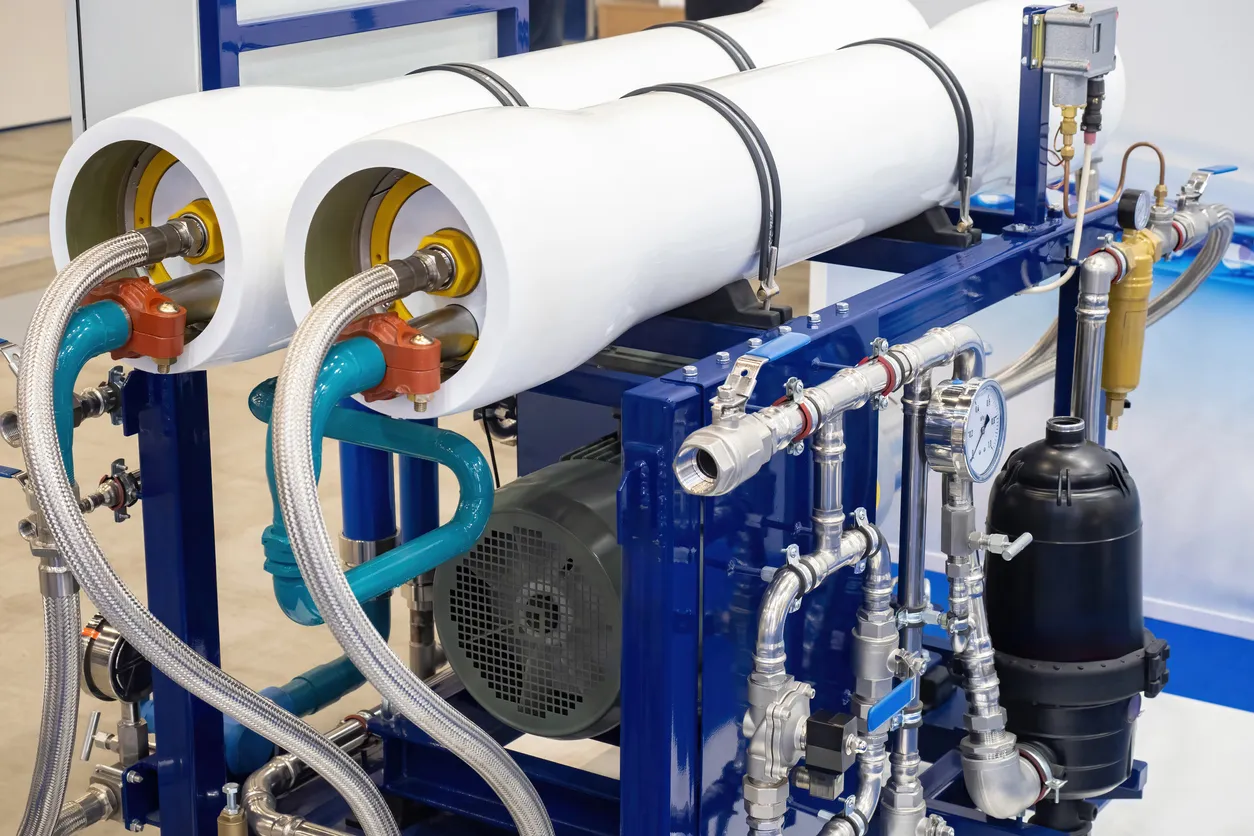
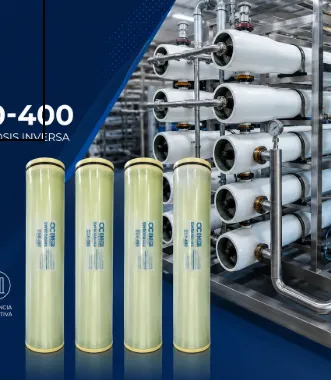

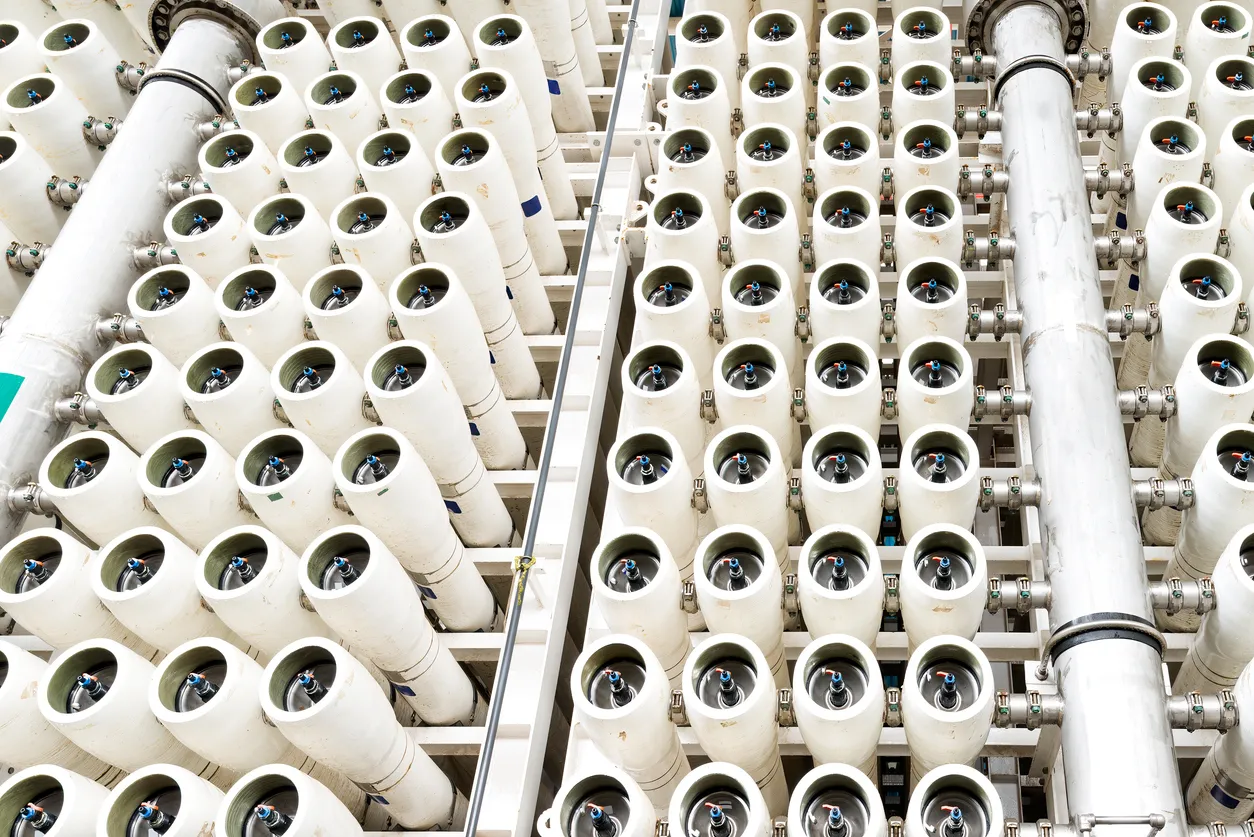
Role of reverse osmosis in semiconductor water systems
Contenido técnico para evaluar ingeniería, operación y compra de reverse osmosis semiconductores con enfoque industrial.
Semiconductor facilities require water with predictable ionic, particulate and organic profiles. Reverse osmosis is usually positioned before electrodeionization, mixed bed polishing, UV, ultrafiltration or final distribution loops because it removes a large fraction of dissolved ions and reduces the load on downstream high-purity stages. In practical terms, RO protects the most expensive polishing steps by delivering a more consistent permeate.
The feedwater source determines the design. Municipal water, well water and reused process water can contain different levels of hardness, alkalinity, silica, chlorides, sulfates, iron, manganese, suspended solids, organic matter and oxidants. A reverse osmosis semiconductores project must begin with a complete water analysis, seasonal review and definition of critical quality limits. Without this information, membrane flux, recovery, pretreatment and cleaning frequency become guesses instead of engineered decisions.
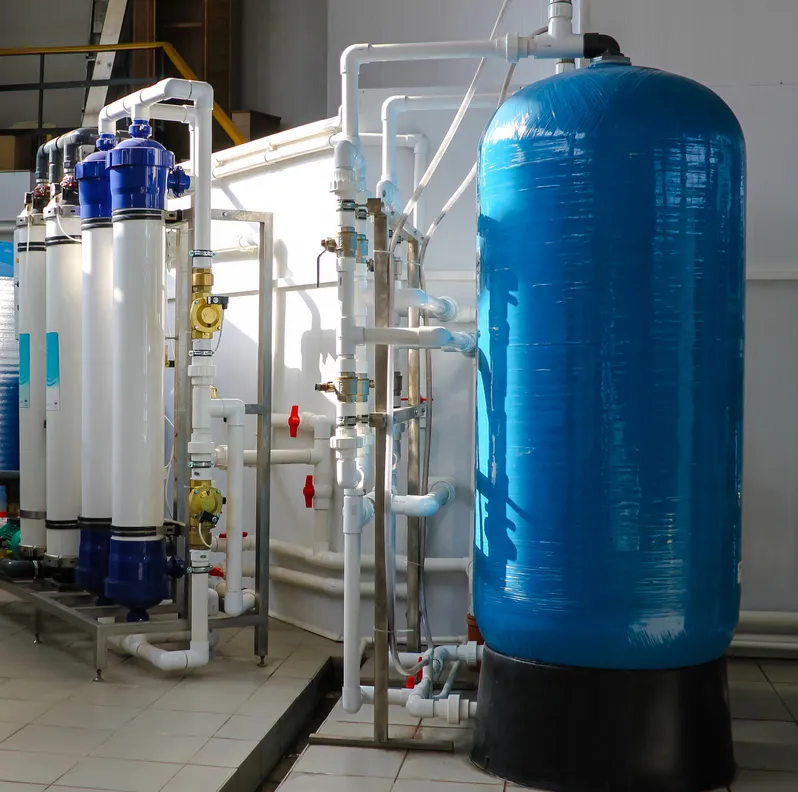
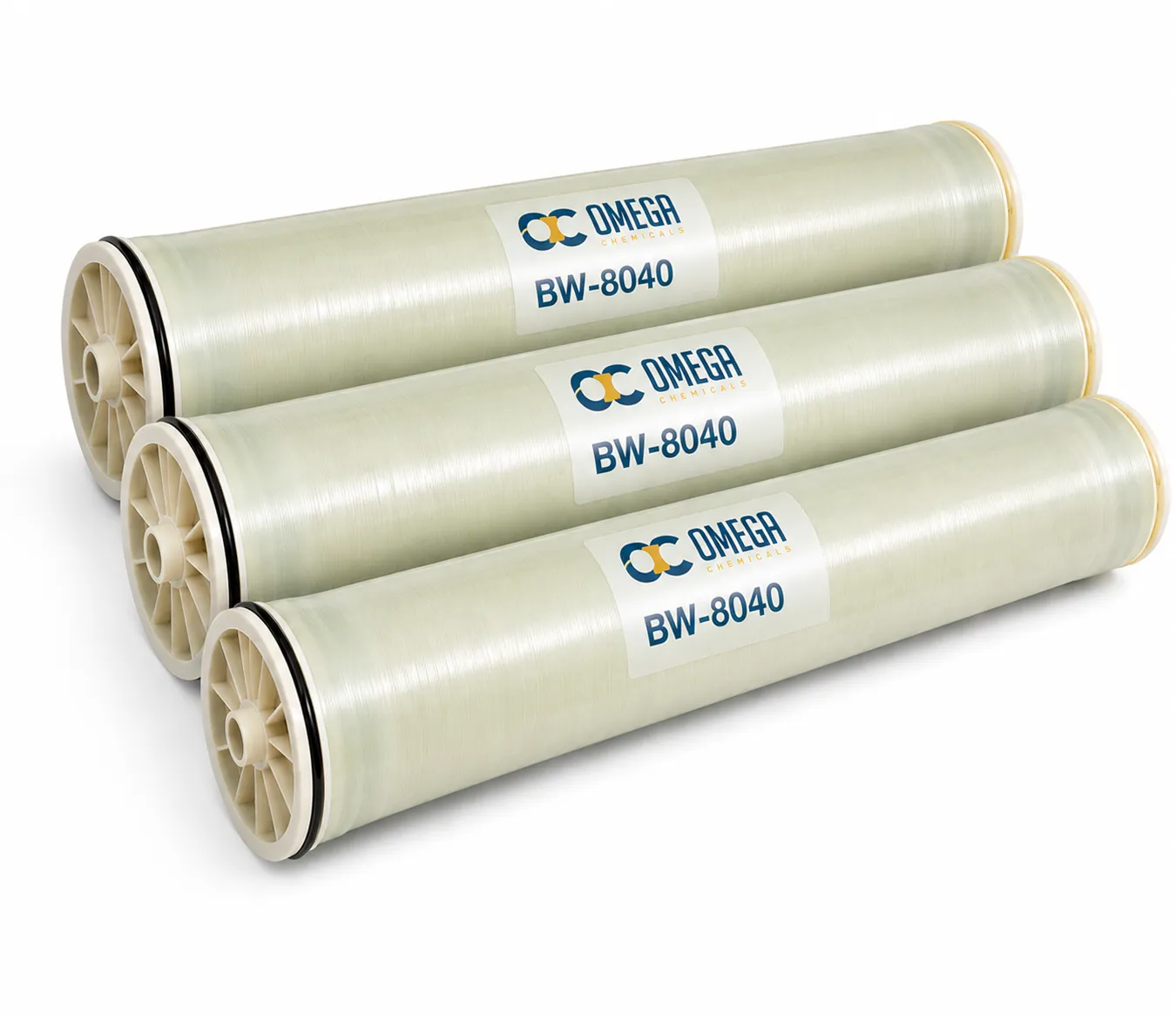
In semiconductor support systems, small deviations can become costly. High silica can affect polishing performance, hardness can accelerate scaling, free chlorine can damage polyamide membranes, and unstable pressure can disturb permeate quality. This is why a complete system includes multimedia filtration, activated carbon or dechlorination, softening or antiscalant dosing, cartridge filtration, high-pressure pumping, membrane arrays, instrumentation and programmed flushing.
The technical buyer should also define where RO permeate will be used. Water for pre-rinse may have different requirements than water feeding a UPW train, humidification, cleanroom support, chemical dilution or cooling tower make-up. A modular design makes it easier to separate quality levels and avoid over-treating every flow. The best approach is to match water quality to process risk.
Feedwater analysis
Determines pretreatment, recovery, membrane selection and cleaning risk.
Permeate consistency
Reduces conductivity variability before polishing and distribution.
Contaminant control
Addresses hardness, silica, chlorine, iron, organics and suspended solids.
Process matching
Aligns water quality with rinse, dilution, utility or UPW pretreatment use.
Engineering criteria for reliable RO performance
Contenido técnico para evaluar ingeniería, operación y compra de reverse osmosis semiconductores con enfoque industrial.
Engineering for semiconductor reverse osmosis requires a balance between rejection, recovery, flux and reliability. Pushing recovery too high may reduce wastewater but can increase scaling, concentration polarization and cleaning frequency. Running flux too aggressively may lower capital cost but shorten membrane life. The engineering decision must consider the actual water chemistry, operational hours, temperature range, downtime tolerance and available pretreatment space.
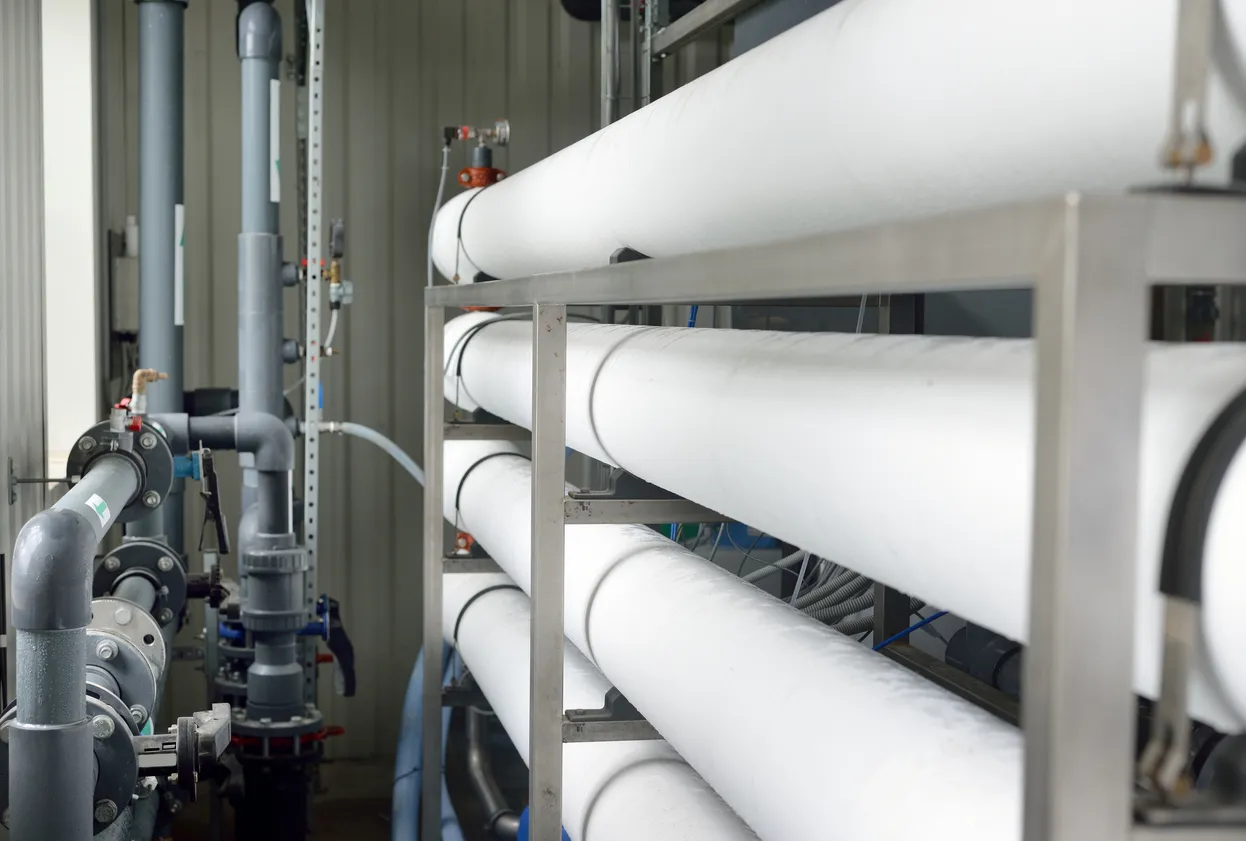
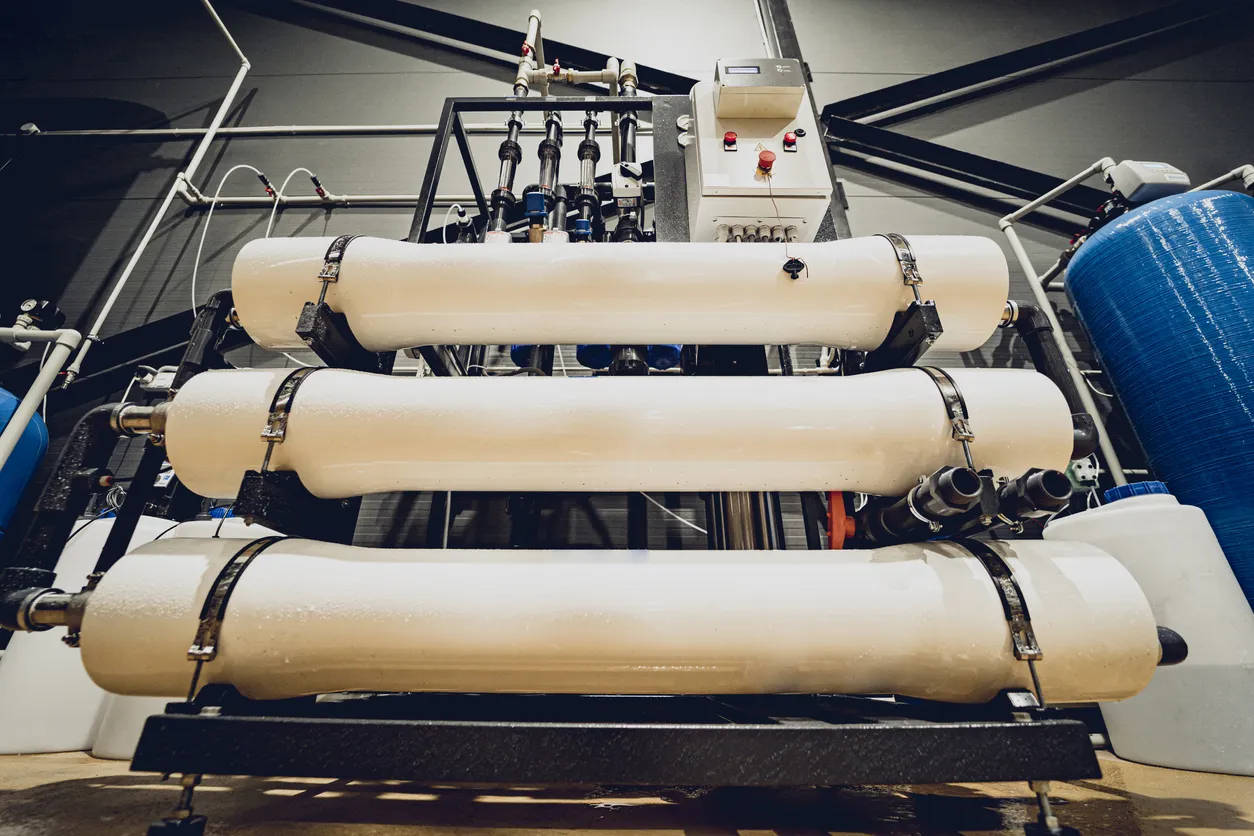
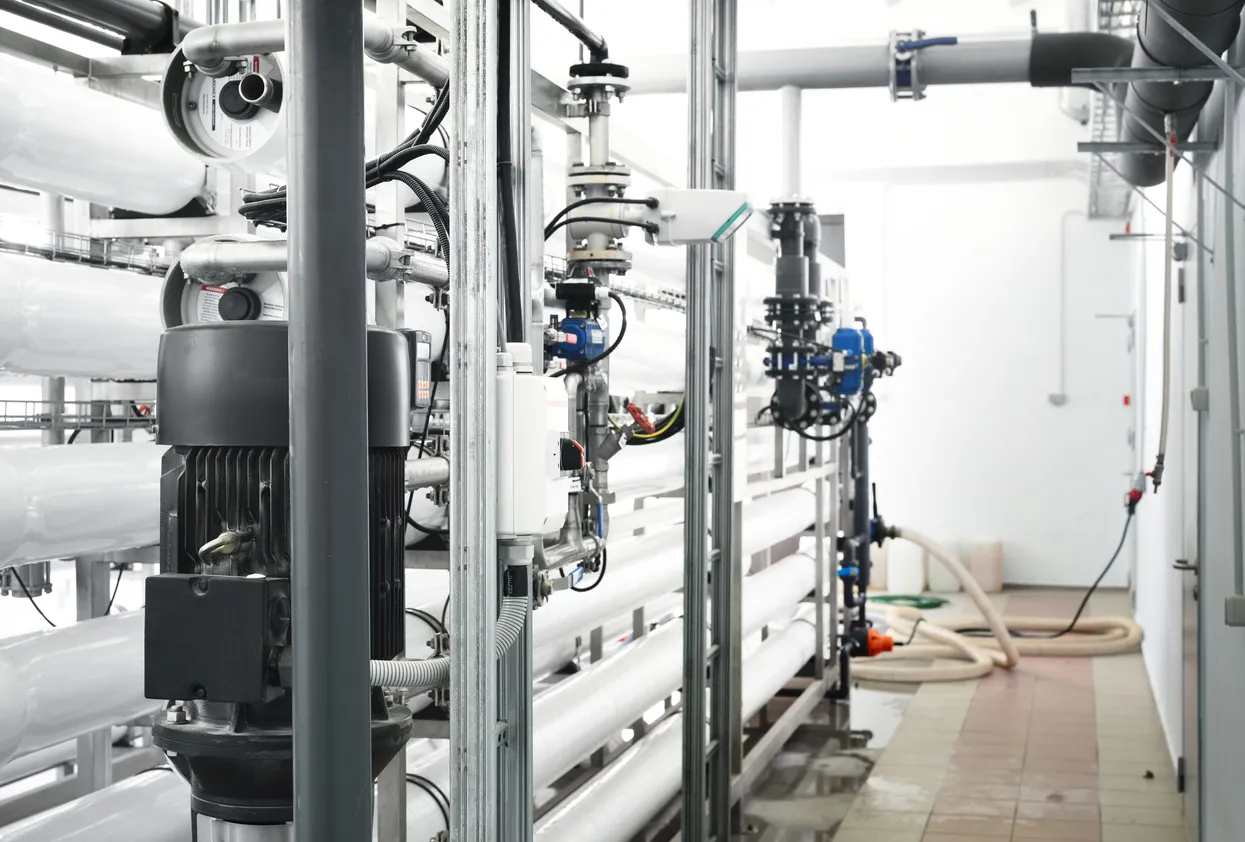
A robust configuration may include duty/standby pumps, staged membrane pressure vessels, permeate recirculation during start-up, automatic flush, conductivity monitoring, flow transmitters, differential pressure tracking and sample ports. These elements help operations teams identify abnormal conditions before permeate quality affects downstream polishing. For critical applications, the control philosophy should include alarms for high permeate conductivity, low feed pressure, excessive differential pressure, abnormal recovery and tank level deviations.
When a plant is growing, scalability matters. Semiconductor projects often evolve: one line becomes two, rinse demand increases, polishing skids are upgraded, or reclaimed water targets are added. For this reason, the RO platform should be designed with expansion paths, electrical capacity, skid access, drain capacity, chemical dosing space and compatible automation protocols. The lowest-cost skid is rarely the lowest-risk solution when the process requires continuity.
Interlinks in MarketB2B help the buyer evaluate the complete solution: a sistema de osmosis inversa defines the equipment platform, ingenieria de osmosis inversa validates sizing and integration, and servicios osmosis inversa support commissioning, maintenance and optimization.
Recovery balance
Avoids excessive concentration of salts and scaling species.
Automation
Uses alarms, sensors and control logic to protect quality.
Expansion path
Allows future capacity growth without redesigning the complete plant.
Integration
Connects RO with pretreatment, polishing, storage and distribution.
Operation, monitoring and maintenance practices
Contenido técnico para evaluar ingeniería, operación y compra de reverse osmosis semiconductores con enfoque industrial.
Operational excellence determines whether the RO system maintains semiconductor-grade consistency. Operators should trend normalized permeate flow, salt passage, feed conductivity, permeate conductivity, concentrate flow, recovery, differential pressure and chemical consumption. Raw readings are useful, but normalized data is stronger because it separates true membrane performance from changes caused by temperature or feed pressure.
Maintenance planning must include cartridge replacement criteria, membrane cleaning triggers, instrument calibration, pump inspection, valve verification, chemical tank control and microbial risk management. A plant that waits for low flow or poor conductivity before acting usually experiences higher downtime and greater chemical use. A plant that uses predictive indicators can schedule service before production risk increases.
Documentation is also part of quality control. Semiconductor environments often require traceability, repeatability and clear procedures. Operating logs, alarm histories, cleaning reports, water analysis, membrane serial numbers and service records help justify process decisions and support audits. Even when RO is not the final polishing stage, its stability affects the entire high-purity water chain.
Suppliers should provide more than replacement parts. The right technical partner helps interpret trends, adjust recovery, diagnose fouling, identify pretreatment weaknesses and validate cleaning chemistry. This is where servicio de osmosis inversa becomes a key factor in the purchasing decision.
Normalized trends
Separate real membrane change from temperature and pressure effects.
Cleaning triggers
Use flow, pressure and salt passage indicators to schedule CIP.
Calibration
Keeps conductivity, flow and pressure data reliable.
Service records
Support audits, troubleshooting and lifecycle decisions.
How to evaluate suppliers and proposals
Contenido técnico para evaluar ingeniería, operación y compra de reverse osmosis semiconductores con enfoque industrial.
To purchase reverse osmosis for semiconductor applications, the buyer should compare proposals using technical risk, not only equipment capacity. Important questions include: What feedwater assumptions were used? Which contaminants drive the design? What recovery is proposed and why? How will membranes be protected from oxidants? What alarms are included? How will cleaning be performed? What data will be available for operations? What happens if demand increases?
A strong proposal should include design basis, water analysis, process flow diagram, equipment list, membrane model, projected permeate quality, pretreatment strategy, controls, utility requirements, commissioning scope and maintenance recommendations. For semiconductor users, it is especially important to review sample ports, instrumentation accuracy, wetted materials, drain requirements and integration with polishing systems.
The best purchasing decision also considers lifecycle cost. Membrane replacement, chemical consumption, cartridge filters, antiscalant, energy, downtime, cleaning labor and troubleshooting can exceed the initial price difference between two systems. A better engineered RO skid often reduces unplanned service and protects high-value production areas.
Because applications vary widely, the selection should be aligned with the production process: wafer support utilities, component washing, microelectronics, PCB manufacturing, sensor production, battery electronics, laboratory water or cleanroom support. The phrase reverse osmosis semiconductores is broad; the engineering specification must convert it into measurable water quality, flow and reliability requirements.
Design basis
Confirms assumptions before purchase.
Lifecycle cost
Compares energy, consumables, membranes and downtime.
Support scope
Reviews commissioning, training and maintenance coverage.
Technical fit
Matches water quality targets with the actual semiconductor process.
Heat transfer fluids for data centers, HVAC and industrial applications
Omega Chemicals offers solutions such as DOWFROST™ LC, KOSTChill PG XL, OMEGA DO LC30 and OMEGA DO LC25 for reliable thermal performance in critical applications.
- DOWFROST™ LC for data centers.
- KOSTChill PG XL for HVAC and computing.
- PG fluids for heat transfer.
- OMEGA DO LC30 PG 30 heat transfer fluid.
- OMEGA DO LC25 for industrial engines.
- Guidance in selecting the right product.
Frequently asked questions about reverse osmosis for semiconductores
These questions support technical and purchasing decisions for semiconductor facilities that need reliable high-purity process water.
For a semiconductor project, the strongest technical path is to define measurable quality targets, validate the RO design against the actual water source and connect the system to a maintenance plan. This approach turns reverse osmosis semiconductores from a generic equipment purchase into a controlled process water strategy.
Temas que te pueden interesar
Estos productos podrian interesarte