



Defining the water quality objective before selecting equipment
In petrochemical operations, reverse osmosis must be specified around the water quality required by each use point. A system designed only around gallons per minute or cubic meters per hour may produce water, but it may not protect boilers, cooling systems, heat exchangers, chemical preparation areas or polishing equipment. The technical evaluation starts with the expected permeate conductivity, silica reduction, hardness removal, chloride control, organic load, microbiological risk and the tolerance of downstream equipment.
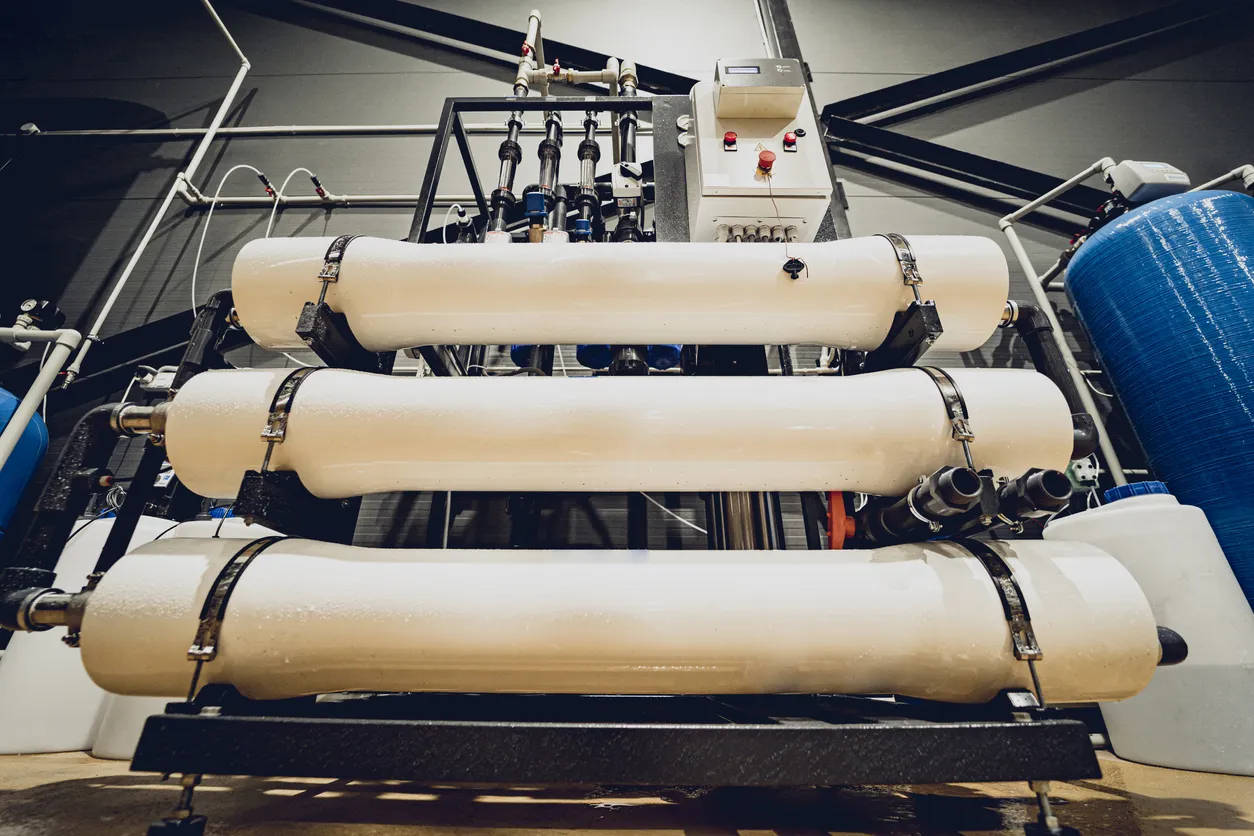
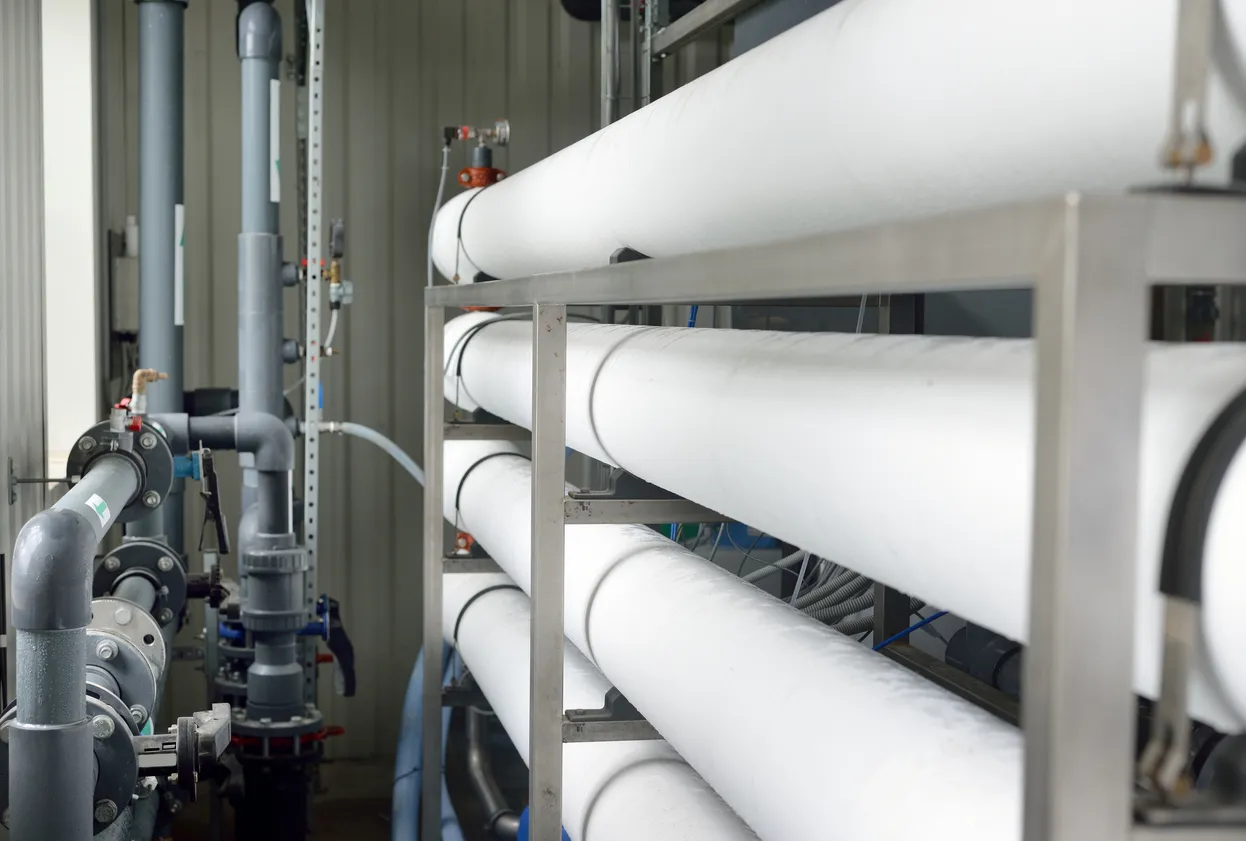
The phrase reverse osmosis industria petroquímica should therefore be understood as a complete engineering decision. Feed water can vary seasonally or because of upstream plant conditions, and that variability changes scaling tendency, fouling probability and chemical demand. A good project translates the water analysis into design limits: temperature correction, normalized permeate flow, salt passage, recovery percentage, concentrate disposal, pretreatment needs and clean-in-place frequency.
Critical parameters to review
| Parameter | Why it matters | Design impact |
|---|---|---|
| Conductivity / TDS | Indicates dissolved ion load and permeate quality expectation. | Membrane selection, staging and rejection verification. |
| Hardness | Calcium and magnesium can create scale at high recovery. | Softening, antiscalant, recovery limits and cleaning strategy. |
| Silica | Can limit recovery and cause difficult deposits. | pH control, recovery control and pretreatment evaluation. |
| Iron / manganese | Contribute to fouling and pressure differential increase. | Filtration, oxidation control and cartridge protection. |
| SDI / turbidity | Shows particulate fouling risk for membranes. | Multimedia filtration, ultrafiltration or improved pretreatment. |
A petrochemical buyer should ask whether the proposal includes design assumptions and expected performance under real feed conditions. When these values are missing, the system may be underspecified, oversized in the wrong area or vulnerable to operating instability.
The quality objective must also reflect the complete treatment train. For example, if reverse osmosis feeds electrodeionization, mixed bed polishing, boiler makeup or high-pressure steam service, the acceptable ionic leakage may be much lower than for general utility water. If the permeate is used in chemical dilution, washing or formulation support, consistency may matter as much as absolute conductivity. This is why industrial specifications should include minimum rejection, alarm limits, verification instruments and a sampling plan. The same reverse osmosis skid can behave very differently depending on pretreatment, operator discipline and hydraulic balance.
For projects that require a broader equipment overview, the internal resource on sistema de ósmosis inversa can help connect the main components of the treatment line with their function in the process. When the goal is engineering definition, ingeniería de ósmosis inversa becomes relevant because it focuses on design criteria, operating limits and integration with plant requirements.
↑ Regresar al índice