Keynotes and plenary sessions
Continuous multilingual interpretation helps international delegates follow presentations and executive addresses without interrupting the speaker.


Plan multilingual conventions in Mexico with professional interpretation services, booths and receivers. From keynote presentations to parallel sessions, the right interpreting team and audio infrastructure help international audiences follow each discussion clearly.
Explore simultaneous interpretation for conventions, compare service providers and understand the technical scope behind a reliable event quotation.



Large events often mix plenary sessions, specialized breakouts and informal business exchanges. Each setting may need a different language-service format and audio plan.
Continuous multilingual interpretation helps international delegates follow presentations and executive addresses without interrupting the speaker.
Parallel programs require separate room-by-room channel plans, interpreter teams and coordination with audiovisual operators.
Consecutive or liaison interpreters may be appropriate for negotiations, buyer-supplier conversations and smaller interactive sessions.
Interpreters receive the speaker's floor audio, deliver the target language and route it to delegates through dedicated channels. Service planning must account for session duration, language combinations and concurrent rooms.
Map the agenda, source languages, target languages and simultaneous sessions.
Assign qualified interpreters and plan team rotation for sustained simultaneous work.
Configure booths, consoles, language channels and attendee receivers for each room.
Rehearse the full audio chain and coordinate live support with the venue production team.
Simultaneous: well suited to uninterrupted plenary sessions and larger multilingual audiences.
Consecutive: useful for moderated discussions and smaller meetings with pauses.
Hybrid: requires validated streaming interfaces, remote audio routing and stable connectivity.
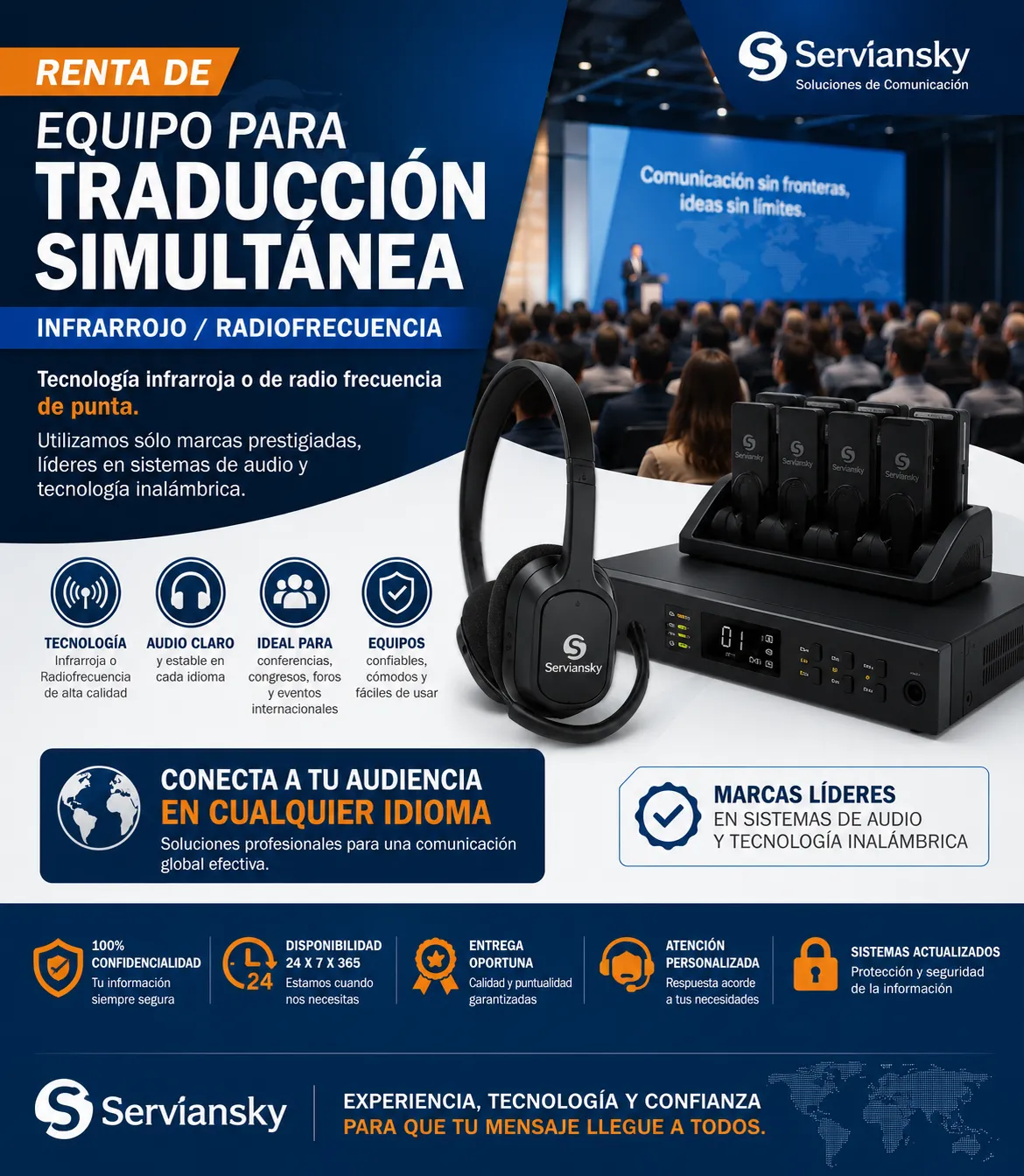
Interpretation quality depends on both the interpreter team and the event's audio infrastructure. Confirm these requirements with the venue and supplier before accepting a rental proposal.
| Requirement | What to verify | Why it matters |
|---|---|---|
| Language channels | Floor audio, interpreted languages and channel mapping | Avoids missing or incorrectly routed languages |
| Interpreter booths | Isolation, visibility, ventilation and safe placement | Supports clear audio and interpreter working conditions |
| Receivers and headsets | Attendee quantity, spare units, batteries and distribution | Helps every delegate access the correct language |
| Audio and RF/IR coverage | Microphone feed, transmitters, room layout and interference | Maintains intelligible audio across the venue |
| Parallel rooms | Independent equipment, teams, channels and coordination | Prevents conflicts between simultaneous sessions |
| Technical support | Installation windows, rehearsal, onsite staffing and backups | Reduces operational disruption |
Request itemized event quotes using the same scope of work. Compare interpreting expertise, technical deliverables and the full event schedule—not only the initial price.
Convention dates, city, venue, load-in windows and daily session schedules.
Language pairs, subject matter, expected attendees and presentation materials.
Plenary rooms, breakout spaces and overlapping sessions requiring interpretation.
Receiver quantities, booths, audio routing, streaming and recording requirements.
Technical rehearsals, onsite technicians, contingency equipment and overtime terms.
Verify relevant convention experience, interpreter language pairs and specialization, rotation plans, equipment specifications, support coverage and cancellation conditions.
Professional interpretation, translation, and language support services for businesses, conferences, and international events.
Practical answers about multilingual sessions, interpreter staffing, equipment, hybrid delivery and convention quotations.
Keynotes, plenary sessions, international panels and large multilingual presentations often benefit because speakers can continue without pauses.
The number depends on language pairs, session duration, technical complexity and simultaneous rooms. Extended sessions typically require coordinated teams and rotation.
Not necessarily. Some suppliers bundle booths, consoles, transmitters, receivers and technical operators, while others quote equipment and interpreters separately.
Yes, with suitable staffing and independent room configurations. Each simultaneous session needs a clear language-channel and audio-routing plan.
It may be possible when the streaming platform, language channels, audio interfaces and internet connectivity are tested in advance.
Begin planning as soon as dates, venue and language requirements are known. Larger events and specialized languages may require more lead time.
Provide the venue and dates, agenda, language combinations, expected attendance, parallel rooms, equipment needs, rehearsal times and onsite support requirements.