

- Simultaneous, consecutive, and whispered interpretation.
- Technical, legal, medical, financial, and IT translation.
- Planning and coordination of conventions and conferences.
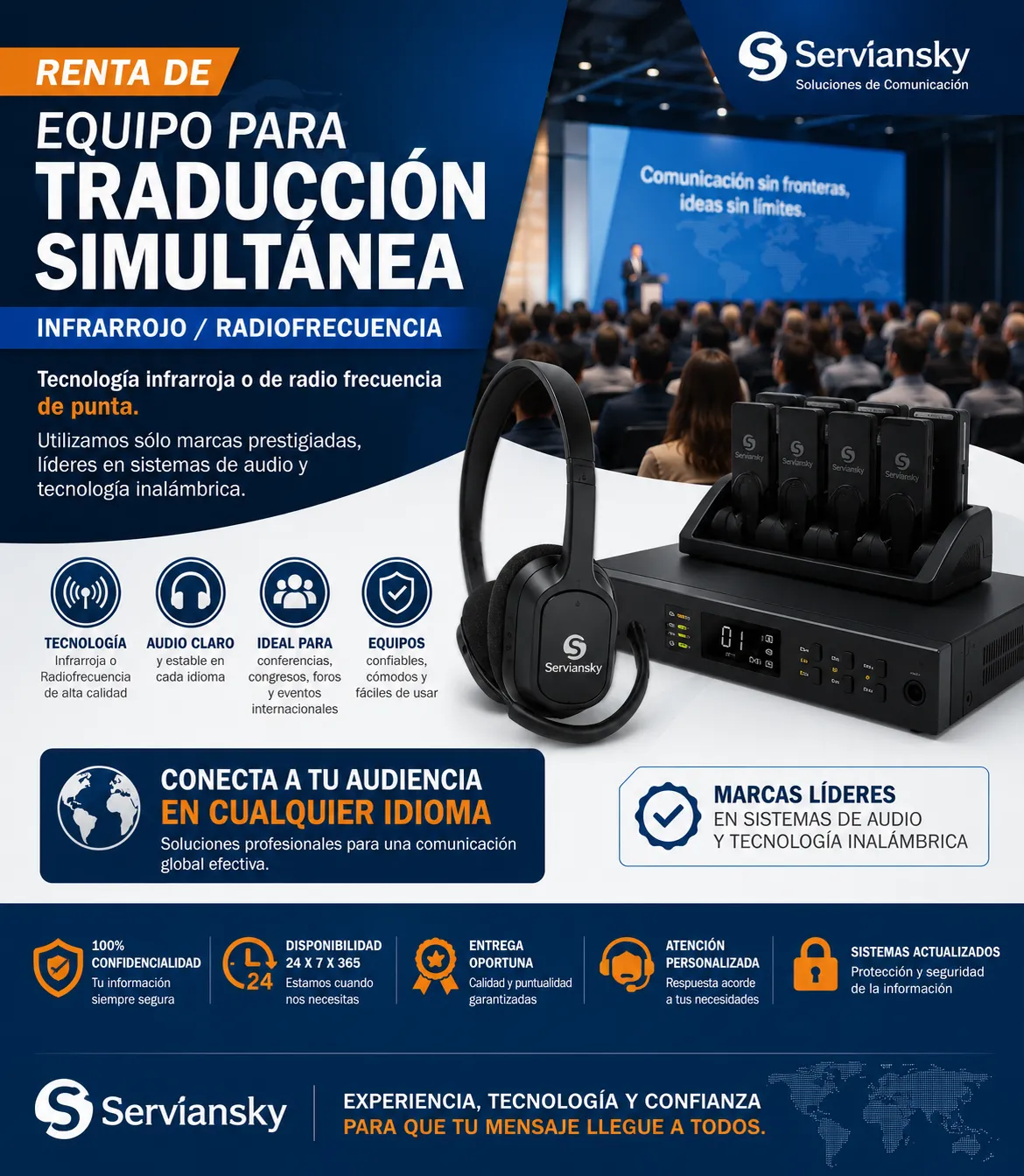
- Simultaneous interpretation equipment rental.
Professional simultaneous interpretation services help multilingual audiences follow presentations, participate in discussions, and make informed decisions in real time. Explore interpretation solutions in Mexico for conferences, executive meetings, conventions and corporate events.
Compare interpreter teams, language combinations, audio systems, event formats and operational support before requesting a tailored quotation.
Simultaneous interpretation enables multilingual communication without repeatedly interrupting the speaker. Professional interpreters, audio systems and language channels work together to deliver speech in near real time.
Microphones capture clear speech from presenters, speakers and panelists.
Professional interpreters listen and deliver the message in the target language.
Interpreted audio is transmitted through dedicated channels or an event platform.
Participants select their preferred language using receivers, headsets or digital devices.
The ideal interpretation format depends on the venue, audience location, number of languages and technical infrastructure. Compare the main options before selecting a service provider.
Professional interpreters work at the event venue, often using interpreter booths, consoles and audio receivers for attendees.
Interpreters connect through a suitable remote interpretation platform, allowing multilingual communication without being physically present.
Combines in-person and remote participants, connecting speakers, interpreters and audiences through integrated audio and digital platforms.
A reliable simultaneous interpretation setup requires more than qualified interpreters. Audio quality, equipment compatibility, language distribution and technical support directly affect the audience experience.
| Component | Purpose | What to verify |
|---|---|---|
| Interpreter booths and consoles | Provide a suitable working environment and language-channel controls. | Acoustics, visibility, applicable standards and installation space. |
| Transmitters and receivers | Deliver interpreted audio to participants. | Coverage, number of channels, battery life and spare receivers. |
| Microphones and audio routing | Capture and distribute intelligible source audio. | Microphone quality, mixer feeds, signal levels and audio testing. |
| Remote interpretation platform | Connect interpreters, speakers and audiences. | Language support, bandwidth, user access and contingency procedures. |
| Technical operator | Monitor equipment and resolve issues during the event. | Setup, rehearsal, live monitoring and backup procedures. |
Schedule a technical rehearsal using the actual microphones, interpretation channels and event platform. Clear source audio is essential for accurate interpretation, regardless of interpreter experience.
To compare interpretation providers in Mexico, prepare a consistent event brief. The scope should include language requirements, interpreter staffing, equipment, logistics and operational support.
Professional interpretation, translation, and language support services for businesses, conferences, and international events.
Interpretation conveys spoken communication in real time. Translation usually refers to written text. Although “simultaneous translation” is commonly searched online, “simultaneous interpretation” is the professional term for live spoken-language services.
Staffing depends on duration, language combinations, subject complexity and professional working conditions. Longer continuous assignments commonly require interpreters to alternate; confirm team size in the quotation.
Yes. Remote simultaneous interpretation can support virtual or hybrid events when the platform, audio feeds, interpreter workstations, connectivity and technical supervision are suitable.
Language combinations, schedule, number of interpreters, venue, equipment, technical personnel, travel and rehearsal requirements all affect the total proposal.
In-person conferences often use booths and audience receivers. Smaller events or remote formats may use different solutions. The right system depends on venue conditions, audience size and acoustic requirements.
Share dates, city, agenda, languages, attendee count, number of rooms, event format and technical details. Advance access to presentations and terminology improves interpreter preparation.